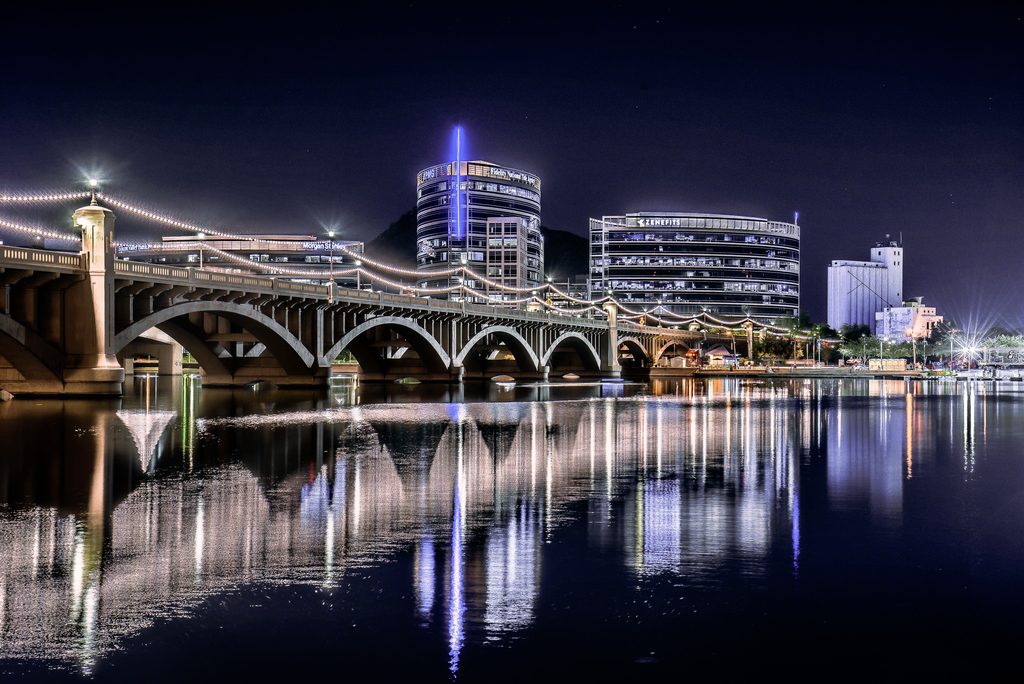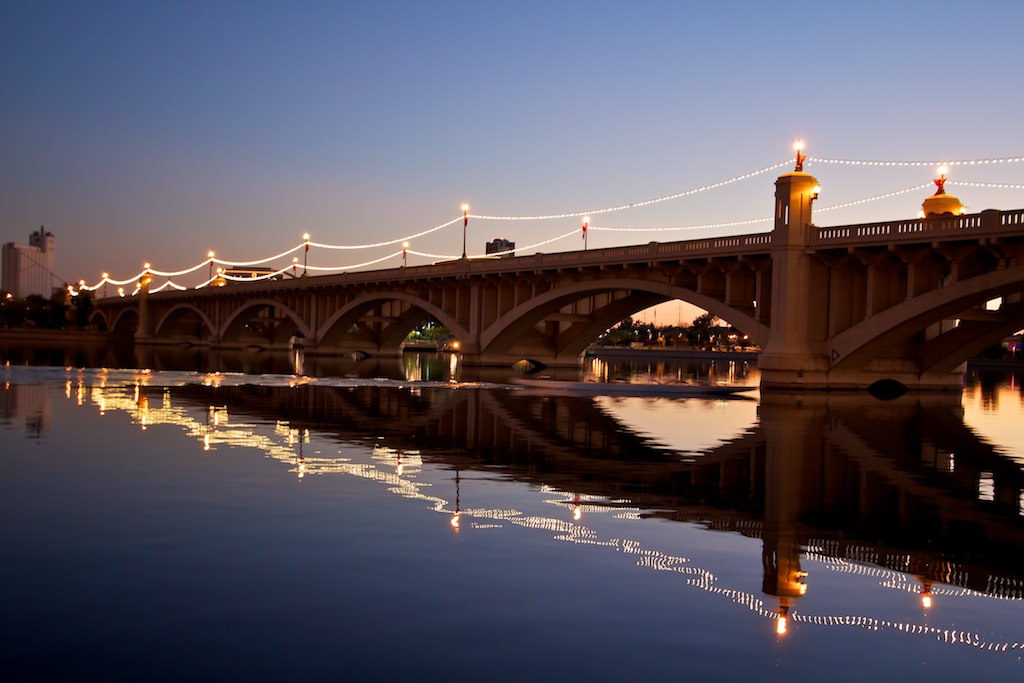
Photograph: Mill Avenue Bridge, Tempe, Arizona. Photo by Edward Brice, Scottsdale, USA, via Wikimedia Commons, licensed under CC BY 2.0.
Tempe, Arizona, has transformed dramatically over the years. What began as a small agricultural settlement along the Salt River has grown into a thriving city known for Arizona State University, downtown entertainment, and Tempe Town Lake.
One landmark has witnessed much of that transformation: the Mill Avenue Bridge.
Today, two bridges carry traffic across what was once the Salt River channel and is now home to Tempe Town Lake. The older bridge, completed in 1931, is more than a transportation route. It is a piece of Arizona history, connecting the modern city with the frontier settlement that helped establish Tempe.
But the story of this crossing began long before automobiles, concrete bridges, or even the name Tempe.
Before the Bridges: The Story of Hayden’s Ferry
In the early 1870s, crossing the Salt River was not always an easy undertaking. The river was subject to seasonal flooding, and its flow could make travel between communities on opposite banks difficult or impossible.
In 1871, entrepreneur and freighter Charles Trumbull Hayden established a ferry crossing near the location of today’s Mill Avenue Bridges.
Known as Hayden’s Ferry, the crossing became an important transportation and commercial point in the developing Salt River Valley. Hayden operated a store and freighting business, helping supply the settlers and agricultural communities growing throughout the region.
The ferry was cable-operated, allowing travelers, freight, and livestock to cross the river when conditions permitted. During periods of high water, it provided an important alternative to attempting a dangerous river crossing.
Hayden’s growing business attracted workers, settlers, and other merchants. A store, blacksmith facilities, warehouses, and other operations developed around the crossing.
The settlement became known as Hayden’s Ferry, and its location helped establish the commercial heart of what would eventually become Tempe.
The Hayden Flour Mill and the Growth of Tempe
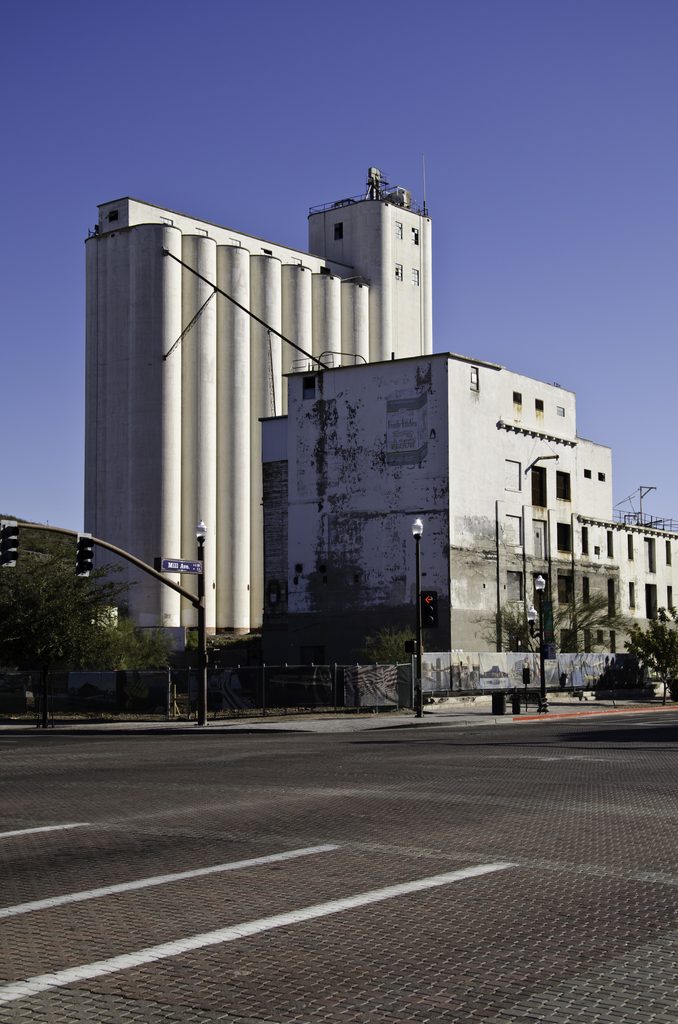
Another important part of the story began in 1874, when Charles Hayden established a flour mill near the ferry crossing.
The Hayden Flour Mill used water delivered through an irrigation canal to power its grinding operation. Wheat and other agricultural products grown throughout the Salt River Valley could be processed locally and transported to nearby settlements, military posts, and mining communities.
The mill became an important part of the local economy and gave Mill Avenue its name.
The original mill was an adobe structure, but fires destroyed earlier versions of the building. The present reinforced-concrete mill was constructed in 1918, following a major fire in 1917. Its distinctive grain elevator and concrete silos were added in 1951.
The mill continued operating for more than a century. Bay State Milling finally ended operations on April 1, 1998.
Today, the historic Hayden Flour Mill and its silos remain prominent landmarks near the Mill Avenue Bridges. The City of Tempe acquired the property in 2003 to help preserve the historic site.
The mill is a reminder that Tempe’s early growth was tied to agriculture, transportation, and the businesses that supported both.
The First Automobile Bridge: Ash Avenue
As Tempe grew, the old ferry crossing eventually gave way to more modern transportation.
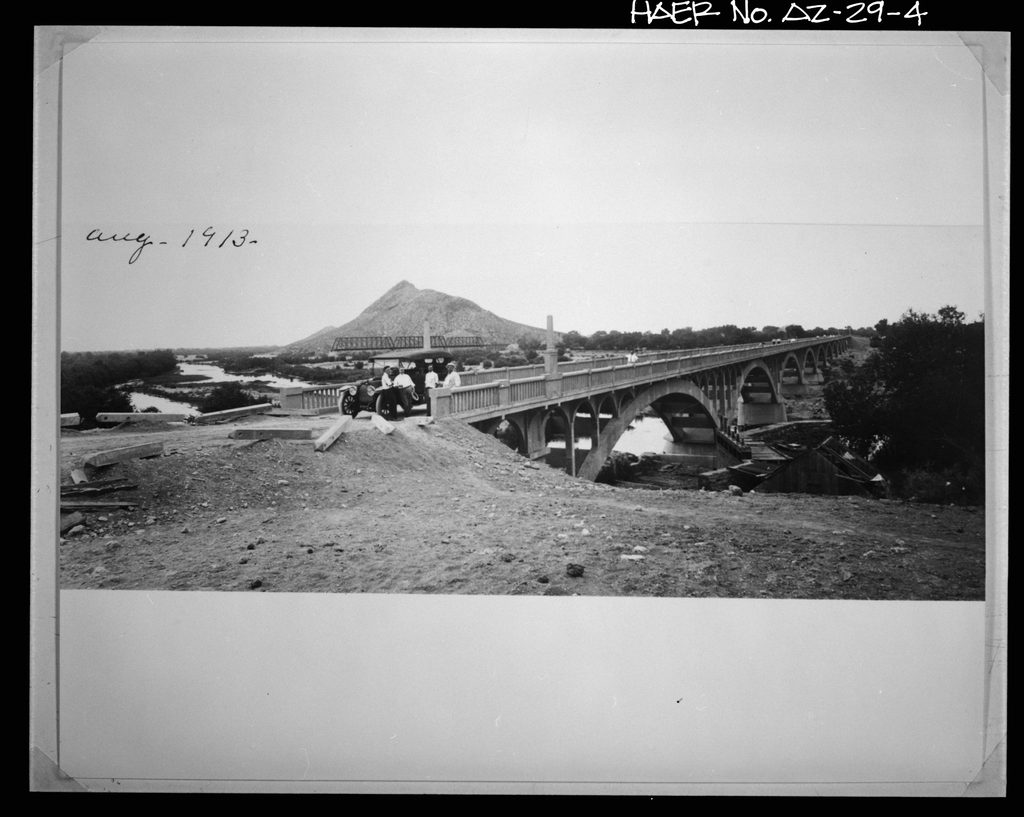
The Ash Avenue Bridge, completed in 1913, provided an automobile crossing over the Salt River. It was an important improvement, but traffic and vehicle sizes continued to increase.
By the late 1920s, the existing crossing could no longer adequately handle the demands of regional transportation.
Tempe business leaders recognized the need for a larger, more modern bridge. In 1928, they submitted a request to the Arizona Highway Commission to plan a replacement.
The Arizona Highway Department designed the new structure in 1929 under the direction of state bridge engineer Ralph Hoffman. Construction was awarded to the Lynch-Cannon Construction Company of Los Angeles as part of Federal Project 2-B.
The result would become one of the most recognizable historic bridges in the Phoenix metropolitan area.
The Original Mill Avenue Bridge Opens in 1931
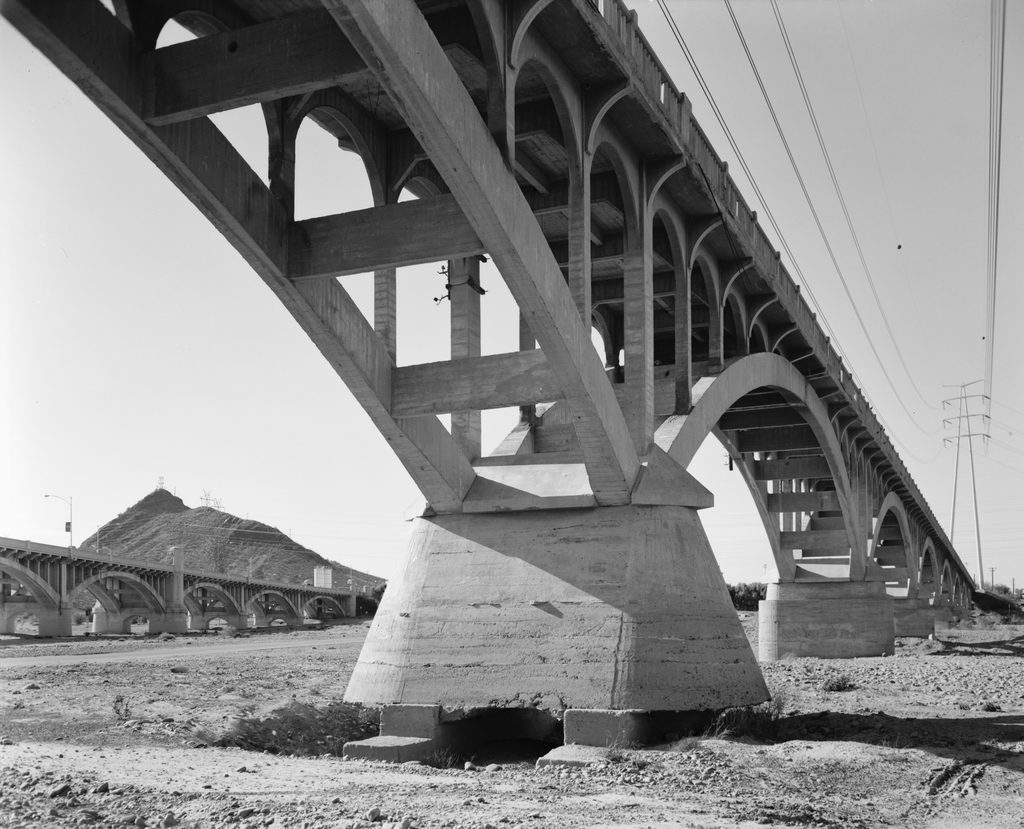
The original Mill Avenue Bridge opened to automobile traffic in August 1931.
Its engineering and appearance were impressive for the time. The structure featured ten spans of poured reinforced concrete, with open-spandrel arches supporting the roadway.
Its design included distinctive concrete pedestrian alcoves and architectural details that made it more than a basic transportation structure.
The bridge provided an important connection between communities north and south of the Salt River.
For decades, it carried major highway traffic, serving as a link for U.S. Routes 60, 70, and 80, as well as U.S. Route 89, Arizona’s principal north-south highway.
Before the interstate highway system transformed regional travel in the 1950s, the Mill Avenue Bridge was a major transportation corridor connecting Phoenix, Tempe, and communities throughout Arizona and beyond.
Although traffic began using the bridge in 1931, its formal dedication did not take place until May 1, 1933.
The ceremony was a major community event, with Arizona Governor Benjamin B. Moeur presiding. Moeur was particularly connected to Tempe, having practiced medicine in the community before becoming governor.
The dedication included a two-day celebration and parade, reflecting the importance of the new crossing to the growing region.
The original bridge was eventually recognized for its historic and architectural significance. It was listed on the National Register of Historic Places in 1981 and added to Tempe’s Historic Property Register in 1999.
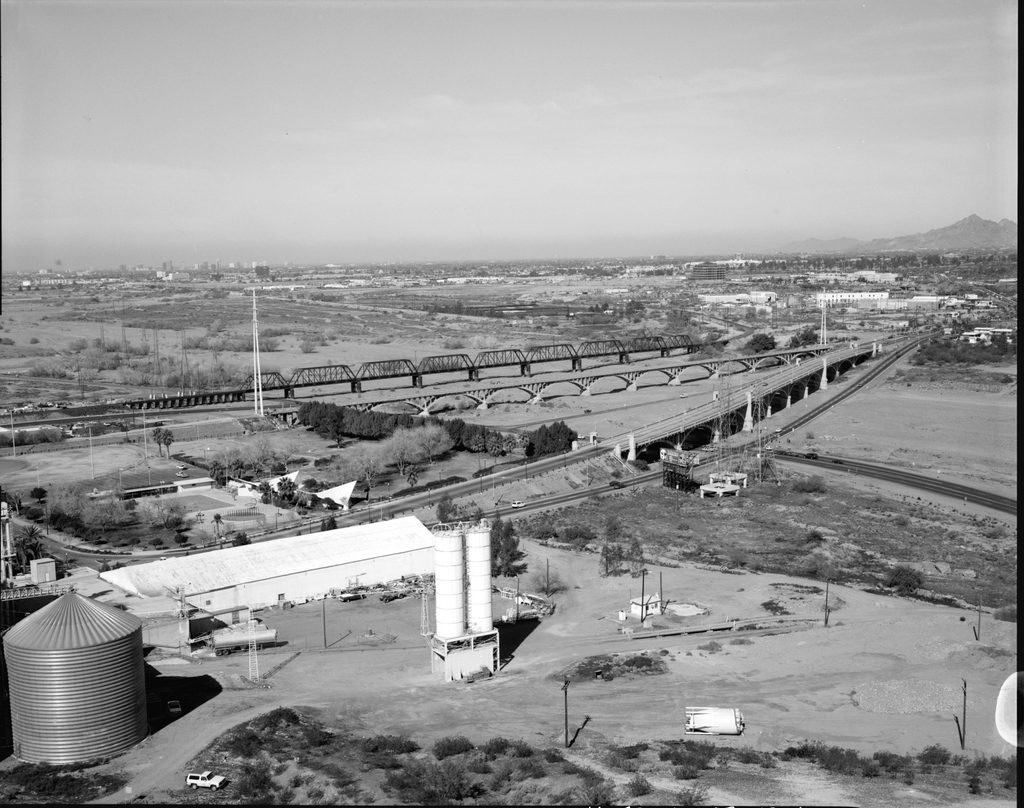
A Second Bridge and a Dramatic Flood in 1993
By the early 1990s, the Phoenix metropolitan area had grown considerably. The original Mill Avenue Bridge could no longer accommodate the volume of traffic moving through downtown Tempe.
A second bridge was planned alongside the original structure, allowing traffic to move in both directions with greater capacity.
Construction began in the early 1990s, but the project encountered an unexpected setback.
On January 8, 1993, heavy runoff sent floodwaters surging through the Salt River channel. The construction site was hit hard, and much of the temporary wooden formwork and scaffolding supporting the unfinished bridge was swept away.
News cameras captured dramatic footage of the flood tearing through the construction area.
Despite the damage, the permanent concrete piers and portions of the completed roadway remained. The project was delayed while construction crews repaired the damage and completed the remaining work.
The new bridge finally opened in February 1994.
With the two structures operating together, traffic could move more efficiently across the river corridor. The original 1931 bridge primarily carried southbound traffic, while the newer bridge handled northbound traffic.
From a Dry Riverbed to Tempe Town Lake
The story of the Mill Avenue Bridges took another interesting turn with the creation of Tempe Town Lake.
For much of the 20th century, the Salt River channel through Tempe was often dry. Upstream dams, including Roosevelt Dam, helped regulate the river’s flow and provide water for agriculture and growing communities.
The idea of transforming the river corridor into a recreational and urban centerpiece had been discussed for decades.
In 1966, Arizona State University architecture students developed a vision for the Rio Salado corridor that included lakes, parks, and public spaces.
It took many years for the concept to become reality, but the City of Tempe eventually moved forward with its own project.
Construction of Tempe Town Lake began in 1997. Water from the Central Arizona Project began filling the lake on June 2, 1999, and the lake was officially full by July 14.
The public opening and dedication celebration took place on November 6 and 7, 1999.
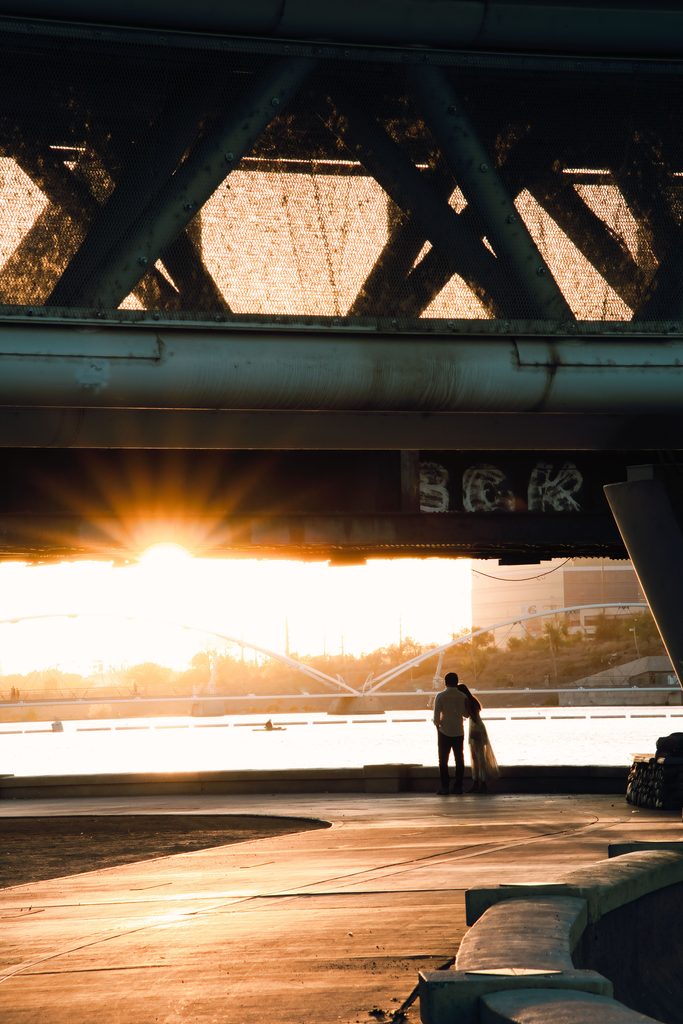
The transformation brought a new identity to the river corridor. What had once been a largely dry channel became a destination for recreation, walking, cycling, boating, and community events.
The Mill Avenue Bridges became an important visual centerpiece of this new urban landscape.
There was another dramatic chapter in 2010 when one of the lake’s inflatable rubber dam sections ruptured, allowing the lake to drain into the river channel. The city subsequently replaced the original inflatable system with a steel gate dam system designed to better withstand the Arizona climate and seasonal flood conditions.
A Bridge Connecting Tempe’s Past and Present
Today, the Mill Avenue Bridges are much more than a way to cross Tempe Town Lake.
They connect the city’s historic downtown with its modern waterfront, while standing near landmarks that tell the story of Tempe’s earliest years.
Nearby, the Hayden Flour Mill recalls the agricultural businesses that helped establish the community. Hayden Butte, often called A Mountain, rises above downtown and provides a reminder of the natural landscape that shaped the settlement.
And beneath the bridges lies the history of Charles Hayden’s ferry crossing, which helped bring commerce and settlement to the Salt River’s south bank more than 150 years ago.
The original 1931 bridge has survived changing transportation needs, regional growth, and the transformation of the Salt River corridor. Its newer neighbor has helped carry the city into another era.
Next time you cross the Mill Avenue Bridges, take a moment to appreciate the history. You’re traveling over more than a stretch of water. You’re crossing a landmark that connects the frontier beginnings of Tempe with the modern city that stands here today.
Curious Perro — Live the Life Less Traveled. Stay Curious.