
Sometimes history is hiding in plain sight. You don’t need to enter a museum, read a historical marker, or even step inside a building to discover it. Sometimes all you have to do is look up.
During a visit to Bisbee, Arizona, I came across two fascinating examples of what are commonly called ghost signs. Faded advertisements painted directly onto building walls, these remnants of an earlier era are easy to overlook. But take a closer look, and you’ll discover something more than old paint. You’ll find pieces of the businesses, products, and everyday life that once made up a community.
I had never heard the term ghost signs before discovering these examples. Now, I find myself looking at old buildings a little differently. Bisbee turned out to be a wonderful place to discover this unusual piece of commercial and architectural history.
What Are Ghost Signs?
Ghost signs are old, hand-painted advertisements that remain on the exterior walls of buildings long after the businesses or products they promoted have disappeared.
You might also hear them called fading advertisements, wall ads, or brickads. Most surviving examples in the United States date from the late 19th century through the middle of the 20th century, when painting an advertisement directly onto a building was a common way to reach customers.
Before modern billboards, digital advertising, and today’s crowded storefronts, a large painted message on a brick wall could be one of the best ways for a business to get noticed.
These signs advertised everything from soft drinks and tobacco to clothing, hardware, hotels, restaurants, and local merchants. Some promoted national brands, while others advertised businesses that served a particular neighborhood or town.
The advertisements were usually painted by skilled sign painters, sometimes called wall dogs. These tradesmen worked directly on masonry, often high above the street, using carefully planned lettering and designs. Their work combined commercial advertising with a considerable amount of artistic skill.
Why Have These Old Signs Survived?
You might wonder how a painted advertisement could remain visible for generations.
Many were applied directly to brick, stone, or masonry using durable paints. Some signs were covered by newer advertisements or layers of paint, while others were protected by neighboring buildings. When those buildings were later altered or demolished, portions of the older advertisements became visible again.
Weather, sunlight, and time gradually wore away the paint, leaving behind the faded lettering and colors we see today.
There is an interesting irony here: advertisements designed to catch someone’s attention for a few years have sometimes survived for a century or more.
The fading is also part of their appeal. A ghost sign doesn’t always reveal its entire message. Sometimes a few letters, a partial logo, or a familiar brand name are all that remain. The missing pieces invite a little detective work.
Bisbee, Arizona: A Town Full of Signs from the Past
Bisbee is particularly interesting for anyone who enjoys historic buildings and vintage advertising. Once a major copper-mining center, the town developed a substantial collection of commercial buildings during its mining boom.
As the local economy changed, many of those buildings remained. Their brick and masonry walls preserved advertisements from businesses and products that had once been part of everyday life.
Today, faded advertisements can be spotted around Old Bisbee, particularly along Main Street and Brewery Gulch. The nearby Lowell Historic District, especially Erie Street, is another place to discover vintage commercial signs and mid-century roadside character.
Bisbee’s steep streets and narrow alleys make the search even more interesting. Some signs are easy to spot, while others are tucked high above storefronts or partially hidden by newer paint.
Two examples caught my attention during my visit.
Myers, Darling & Hinton Co.: A Glimpse of Bisbee’s Beverage Trade
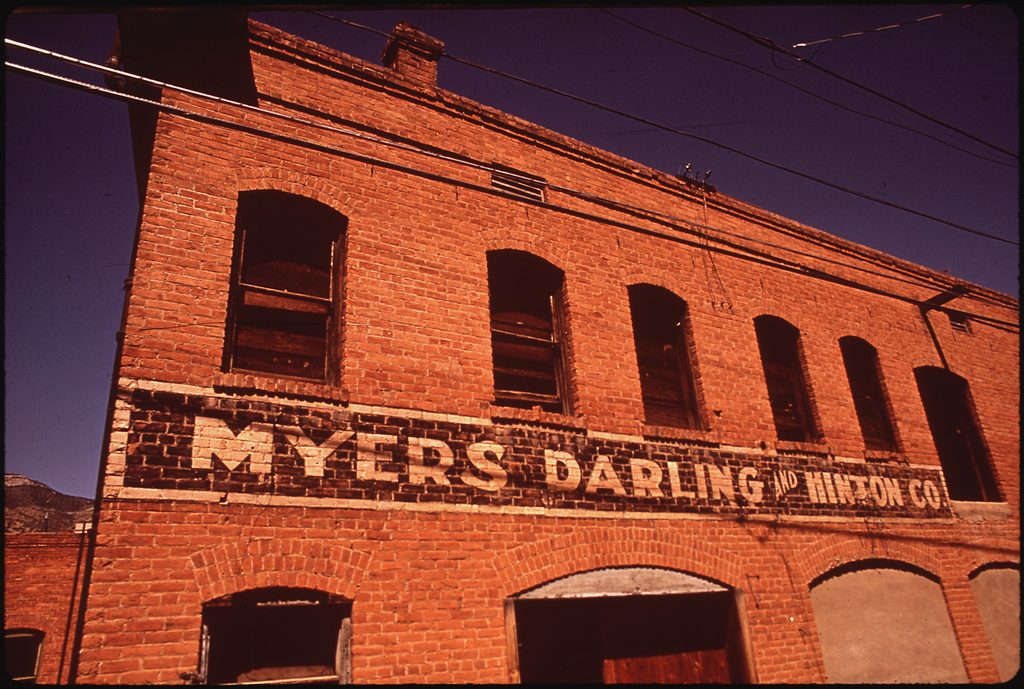
One of the signs I photographed features the name Myers, Darling & Hinton Co.
This is an especially interesting example because it offers a connection to Bisbee’s commercial history during the copper-boom years of the early 20th century.
A November 4, 1917, advertisement in the Bisbee Daily Review identifies Myers, Darling & Hinton Co. in connection with the distribution of a beverage called Ambrosia. The product was described as a non-intoxicating cereal beverage.
That date is worth considering in the context of Arizona history. Arizona’s statewide prohibition law took effect on January 1, 1915, several years before national Prohibition began in 1920. The period newspaper reference provides a small but fascinating glimpse into how businesses and beverage products operated during that era.
The painted sign is a reminder that Bisbee was more than a mining town. It had wholesalers, distributors, merchants, and a commercial network serving residents and workers throughout the area.
What makes this particular advertisement so interesting is that it connects a surviving piece of paint on a wall with a business name that can still be found in a historical newspaper.
A little research can turn a faded sign into a much bigger story.
Pepsi-Cola & Nesbitt’s Orange: A Taste of Mid-Century Advertising
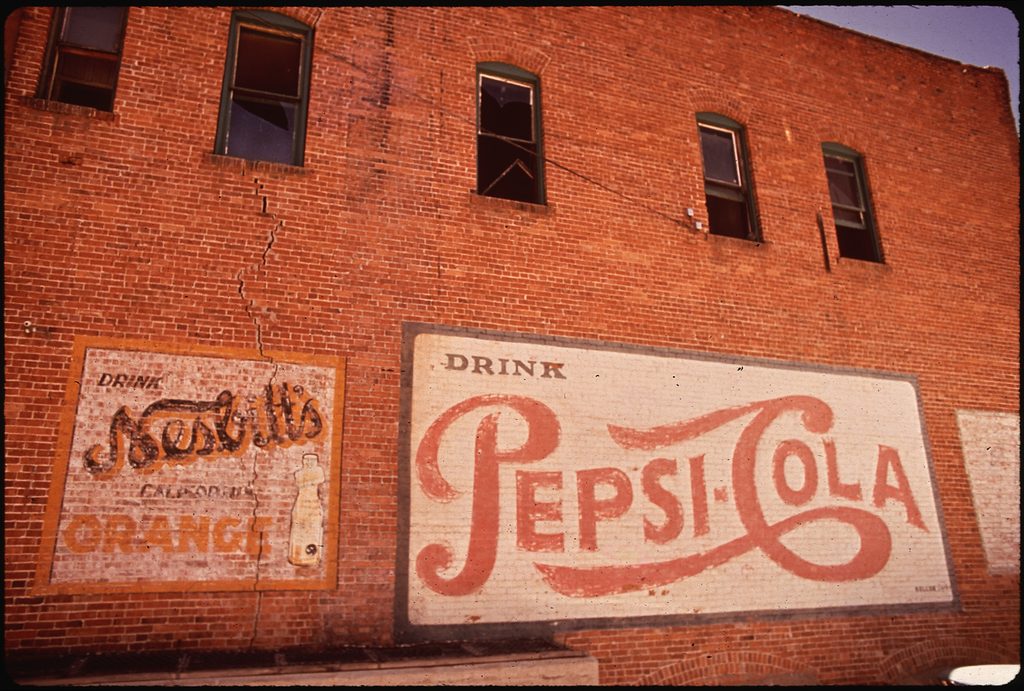
The second photograph offers a different kind of discovery: two familiar soft drink names sharing a wall.
The faded advertisements for Pepsi-Cola and Nesbitt’s Orange are reminders of a time when beverage companies used painted walls to promote their products in communities across America.
Pepsi-Cola was already a well-established brand by the early 20th century. Nesbitt’s has its own interesting history. The Nesbitt Fruit Products Company was founded in 1924, began producing orange-flavored syrup in 1927, and started bottling its orange drink in 1938.
Nesbitt’s California Orange became a recognizable soft drink, marketed through independent bottlers in different parts of the country.
These painted advertisements reflect the importance of local stores, restaurants, and neighborhood businesses as places where customers encountered national and regional brands.
The two advertisements on this wall also make us wonder about their original appearance. Were they painted at the same time? Was one added over the other? Did the wall advertise other products before these two appeared?
Without additional records, we can’t establish the exact dates or sequence of the paintings. But the surviving lettering gives us a fascinating look at the advertising styles and products of an earlier generation.
The Art of the Wall Dog
One of the things I find most interesting about ghost signs is the work that went into creating them.
These weren’t simply printed posters attached to a wall. They were large-scale paintings that required planning, lettering skills, knowledge of materials, and the ability to work in challenging locations.
Sign painters had to consider the size of the wall, the distance from which the advertisement would be viewed, and how the lettering would look against the brick or masonry.
Some worked from carefully prepared drawings and patterns, transferring the designs to the building before applying the paint. Others used the brickwork itself as a guide for spacing and lettering.
The result was a form of public art created for a commercial purpose. The painters probably never imagined that people generations later would stop to photograph their work.
Preserving the Faded Past
There is an interesting debate surrounding the preservation of ghost signs.
Should a faded advertisement be repainted to make it easier to read, or should it be left alone so that its weathered appearance remains authentic?
Repainting can make a sign more visible, but it can also change the historic character of the original work. On the other hand, leaving a sign exposed to the elements means it may eventually disappear altogether.
Historic preservation organizations often encourage careful evaluation before any restoration is attempted. A weathered sign is not necessarily a sign that needs repainting. Its age, original materials, and surviving layers of paint are part of its historical value.
In Bisbee, the old commercial buildings provide an especially interesting setting for these remnants. The town’s historic character allows visitors to discover advertisements that might otherwise have vanished during redevelopment.
Looking Up: A Different Way to Discover Bisbee
My discovery of Bisbee’s ghost signs was a reminder that travel doesn’t always have to involve visiting a famous landmark or following a well-known tourist route.
Sometimes the most interesting discoveries are found by looking a little closer at something ordinary.
An old painted advertisement can reveal the name of a forgotten business, introduce us to a product that once filled store shelves, or lead us to a newspaper advertisement from more than a century ago.
The next time you’re walking through a historic downtown, take a moment to look above the storefronts. Check the side walls, the narrow alleys, and the upper floors of older buildings. You may find a piece of advertising history that has been quietly waiting for someone to notice it.
Bisbee certainly gave me a new appreciation for these fading messages from the past. I arrived unfamiliar with the term ghost signs and left with two photographs and a new subject to explore.
And that’s part of the fun of curiosity: one discovery often leads to another.
Live the Life Less Traveled. Stay Curious! 🐕
Further Reading & Discover More
Want to explore the history behind Bisbee’s signs and the advertising traditions that created them? Here are four useful resources.
1. Bisbee 101 – Bisbee’s Best Signs
A local guide to vintage and historic signage throughout Bisbee, including Old Bisbee, Main Street, Brewery Gulch, Warren, and Lowell. A great resource for anyone interested in finding more signs.
2. Bisbee Daily Review – November 4, 1917
A period newspaper reference that offers a glimpse into Myers, Darling & Hinton Co. and its connection to the Ambrosia beverage trade.
3. Preservation Texas – Painted Advertising Signs aka Ghost Signs
An introduction to the history of hand-painted wall advertisements, the sign painters who created them, and the challenges of preserving these fading pieces of commercial history.
4. The Henry Ford – Nesbitt’s Orange Advertising History
Learn about the history of Nesbitt’s Orange, including the company’s early syrup production and the introduction of its bottled orange drink.
Photo Credits:
- “Building in the Downtown Area of an Old Mining Town – Bisbee, Cochise County, Arizona, 1972.” National Archives and Records Administration (NARA), Photo No. 544077.
- “Ubiquitous Advertising Signs in an Old Mining Town – Bisbee, Cochise County, Arizona, 1972.” National Archives and Records Administration (NARA), Photo No. 544081.