

Round Rock, Texas, has come a long way from the days when wagons and cattle crossed Brushy Creek over a large limestone rock. Today, it’s a thriving Central Texas city known for its restaurants, shopping, sports, parks, and growing business community.
But beneath the modern city is a fascinating history filled with frontier settlers, cattle drives, railroad expansion, legendary outlaws, and generations of change.
The story of Round Rock is also a story of transportation and opportunity. Let’s take a look at how a small settlement along Brushy Creek became one of Central Texas’s best-known cities.
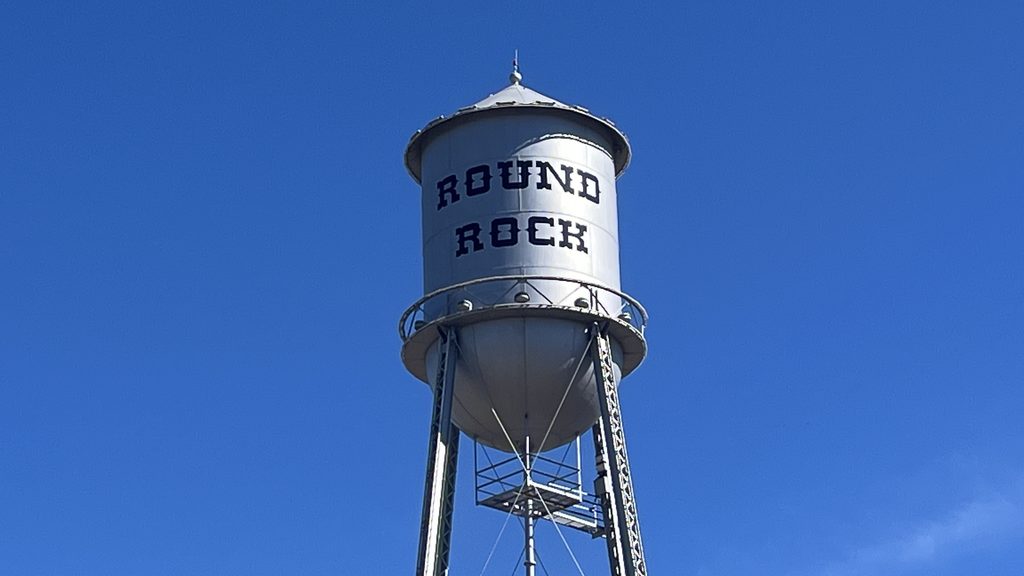
The Beginnings of Round Rock
Long before Round Rock appeared on a map, Indigenous peoples traveled through and lived in the Central Texas region. Brushy Creek and the surrounding landscape provided water and natural resources that made the area attractive for settlement.
By the 1840s, new settlers were establishing homes and businesses near the creek. One of them was Jacob M. Harrell, who arrived in 1848.
The location offered fertile land, fresh water, and something especially valuable in frontier Texas: a natural low-water crossing.
A large, rounded limestone rock in Brushy Creek marked the crossing. Wagons, horses, and livestock could use it to cross the water more safely.
In 1851, a post office opened at a local store under the name Brushy Creek. Three years later, the community received a new name.
According to local history, postmaster Thomas C. Oatts suggested Round Rock after the distinctive limestone formation that had become a familiar landmark.
On August 24, 1854, the name Round Rock officially took hold. The original rock remains in Brushy Creek, near Chisholm Trail Road, marking the spot where the city’s story began.
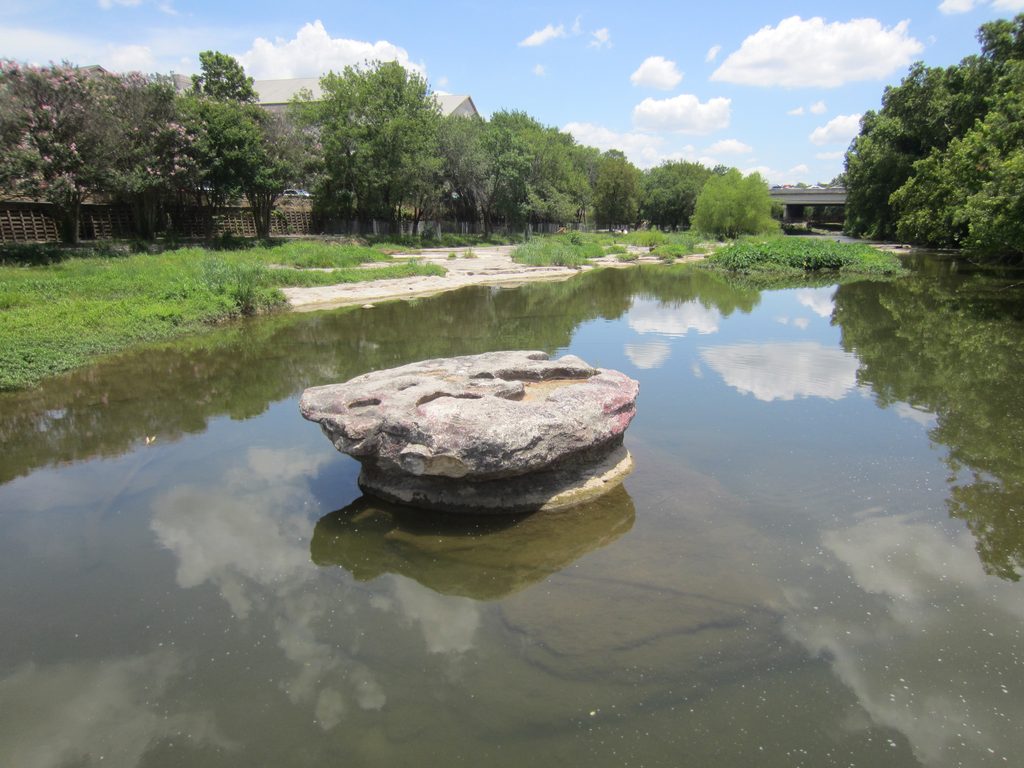
Source: Wikimedia Commons – Original photograph.

Old Town and the Stagecoach Era
The earliest settlement developed near Brushy Creek and eventually became known as Old Town.
During the mid-1800s, stagecoaches and travelers moved through the area along an important military and transportation route. Travelers needed places to rest, eat, and change horses.
One surviving reminder of this period is the Old Stagecoach Inn, a limestone building constructed between approximately 1848 and 1853. It served travelers moving through the region and is among the area’s oldest surviving structures.
Another historic building is the Palm House, built around 1873. It originally stood in the Palm Valley area before being moved to its present location on East Main Street during the 1970s.
Together, these buildings help tell the story of Round Rock before railroads and modern highways transformed the community.
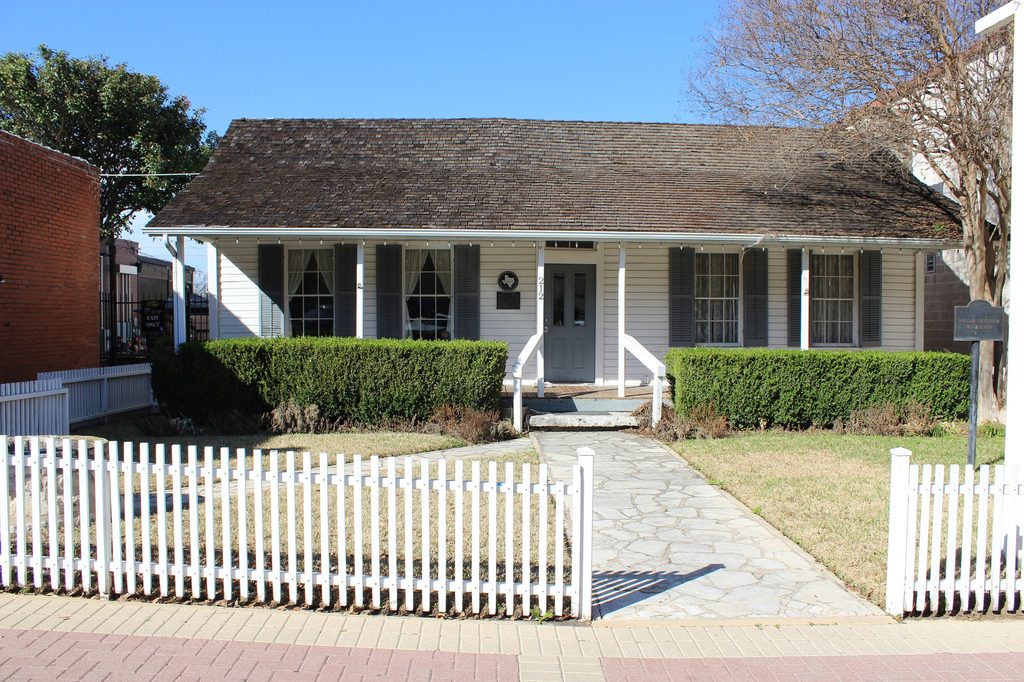
Original photograph: Wikimedia Commons – Andrew J. Palm House.

The Chisholm Trail and the Texas Cattle Drives
After the Civil War, Texas ranchers needed a way to move enormous cattle herds to markets farther north. The Chisholm Trail became one of the most important routes.
Named for trader and frontiersman Jesse Chisholm, the trail network carried Texas longhorns toward Kansas railheads, where cattle could be shipped to eastern markets.
The major cattle drives began in 1867 and continued into the 1880s.
Round Rock was located along routes used by cattle drivers, and the natural crossing at Brushy Creek provided a convenient passage for herds moving north.
Imagine the scene: thousands of longhorns moving across the countryside, cowboys riding alongside them, and clouds of dust rising over the trail.
The cattle drives brought business and activity to communities throughout Texas. They also helped create the cowboy traditions that remain part of the state’s identity today.
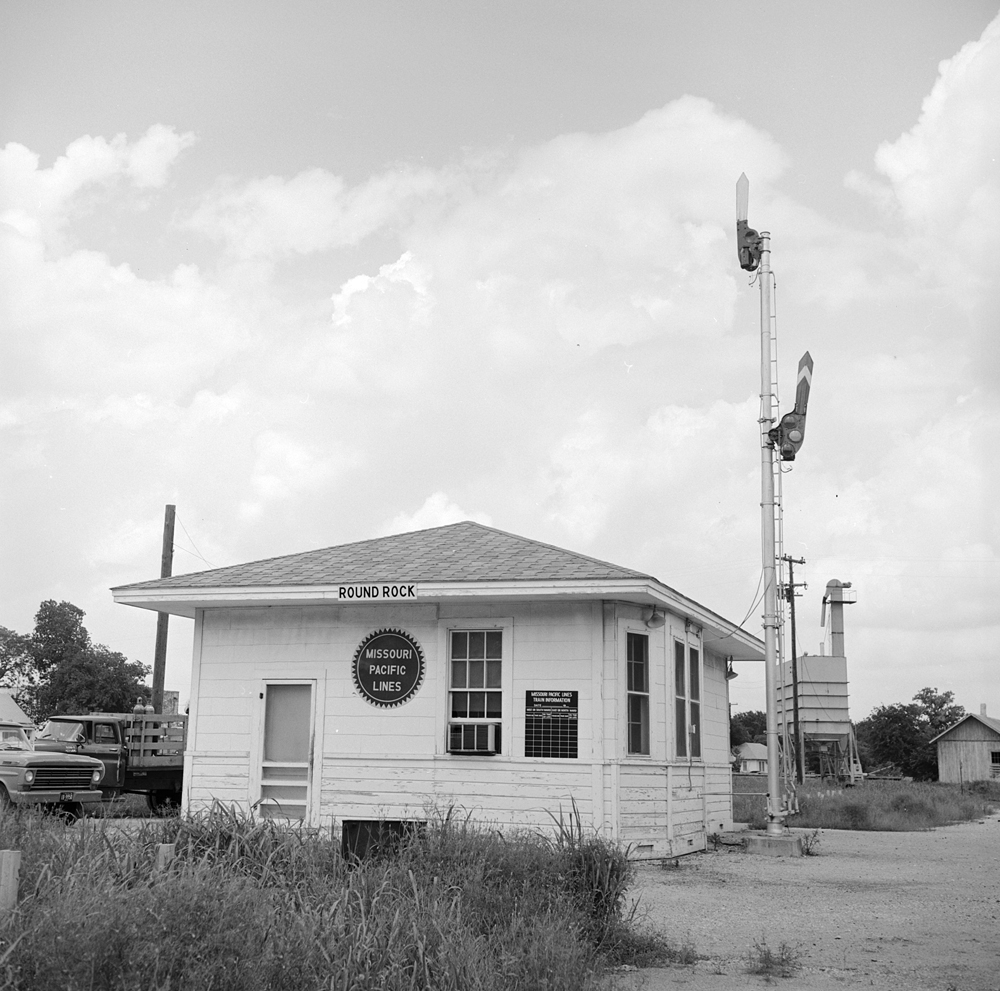
Original photograph: DeGolyer Library Digital Collections.
1876: The Railroad Creates New Town
In 1876, the International and Great Northern Railroad reached the Round Rock area. However, the railroad established its station south of Brushy Creek rather than in Old Town.
A new commercial district developed around the depot. Businesses followed the railroad, and the town’s center of commerce shifted toward the tracks.
This new settlement became known as New Town, which is now historic downtown Round Rock.
The railroad made it easier to transport agricultural products and other goods to larger markets. General stores, hotels, lumberyards, and other businesses followed.
One notable local industry was the Round Rock White Lime Company, whose lime was used in construction of the Texas State Capitol during the 1880s.
The railroad changed more than transportation. It changed the direction of Round Rock’s future.
The Sam Bass Shootout of 1878
No history of Round Rock would be complete without the story of Sam Bass.
Bass was a notorious train robber whose activities had attracted the attention of Texas law enforcement and the Texas Rangers.
On July 19, 1878, Bass and several members of his gang arrived in Round Rock. They were reportedly planning to rob the local bank.
Their plans quickly unraveled.
Deputy Sheriff A.W. “High” Grimes confronted the men near a local store. Gunfire erupted, and Grimes was killed. Texas Rangers and other lawmen became involved in the battle.
Ranger Richard “Dick” Ware rushed into the street and joined the gunfight. Another gang member, Seaborn Barnes, was killed, and Sam Bass was seriously wounded.
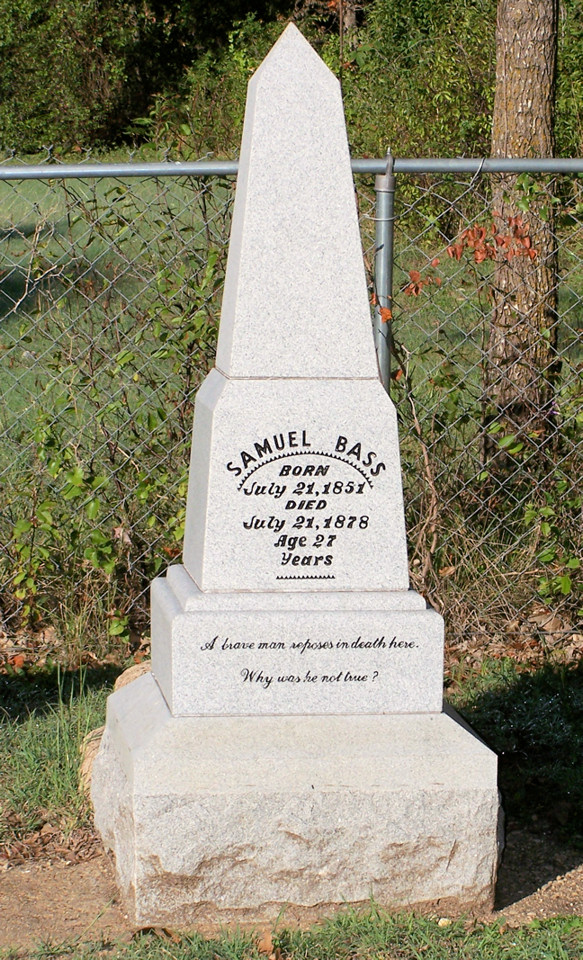
Bass escaped with help from Frank Jackson but was captured the following day. He died from his injuries on July 21, 1878, just two days after the shootout.
He was buried in Round Rock Cemetery.
The event became one of the most famous episodes in Texas outlaw history. Today, visitors can explore locations associated with the shootout and visit the cemetery where Bass is buried.
Round Rock also celebrates its frontier heritage through its annual Frontier Days festivities, which have included reenactments of the famous gunfight.
Agriculture and the Growing Town
Following the cattle-drive era, agriculture continued to support Round Rock and the surrounding Williamson County community.
The fertile Blackland Prairie soils east of town were especially suitable for cotton and other crops. Cotton became an important part of the local economy, supported by agricultural businesses and services.
Ranching remained important in the western portions of the county.
Round Rock gradually developed into an established community with schools, churches, businesses, and local institutions. The city was officially incorporated in 1913.
By the early twentieth century, the town was also adapting to a new era of transportation.
Mays Street and the Automobile Era
During the 1930s, Mays Street became part of U.S. Highway 81, an important north-south route through Texas.
Automobiles and trucks were replacing the stagecoaches and cattle drives that had once defined travel through the area.
The highway brought new travelers and commercial opportunities to downtown Round Rock. Buildings from the 1930s through the 1950s reflect the architectural styles and business changes of this period.
Once again, transportation helped shape the town’s development.
From Small Town to Modern Central Texas City
For much of the early twentieth century, Round Rock remained a relatively small agricultural community.
That began to change as nearby Austin expanded. During the 1960s and especially the 1970s, new neighborhoods, schools, businesses, and infrastructure brought significant growth.
The city’s population increased from 2,811 in 1970 to 11,812 in 1980. By 1990, it had reached more than 30,000.
Technology companies and other major employers helped diversify the local economy. Round Rock became an important center for manufacturing, healthcare, education, retail, and business.
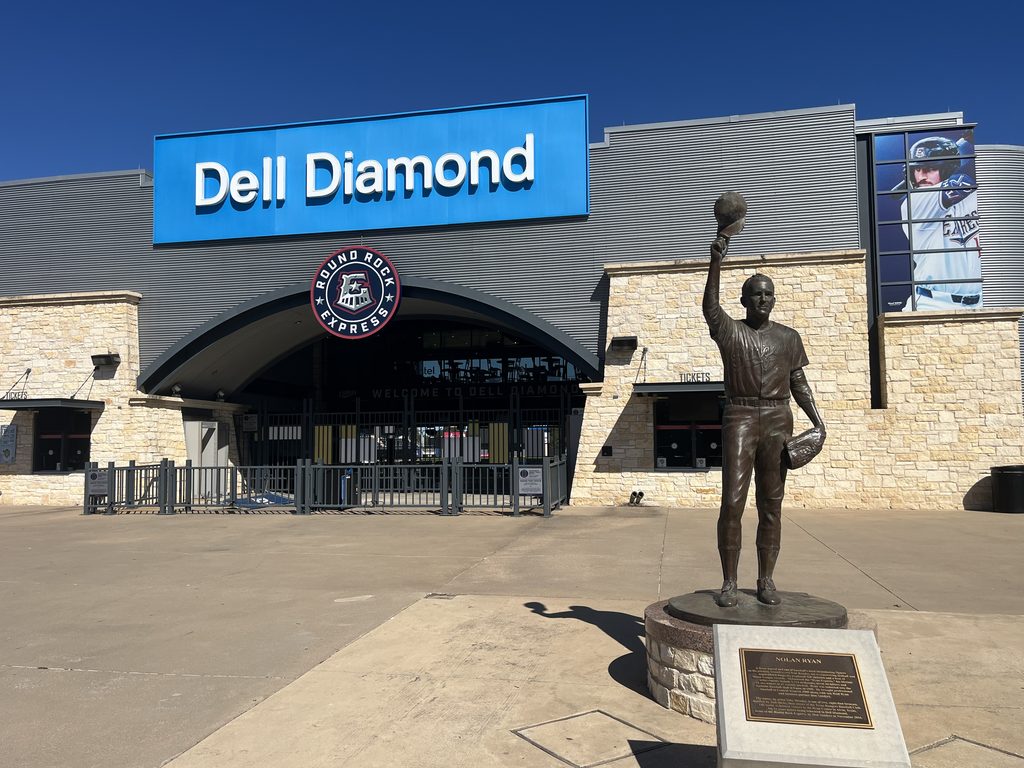
Today, the city is one of the largest communities in the Austin metropolitan area. Attractions such as Dell Diamond, home of the Round Rock Express, add to its modern identity.
Yet historic downtown and Old Town still offer reminders of the community’s earlier days.
Round Rock Today: A City With a Story to Tell
Round Rock has changed dramatically since the days of stagecoaches and cattle drives, but its history is still visible throughout the city.
You can visit the original limestone rock in Brushy Creek, explore historic downtown, see the Old Stagecoach Inn and Palm House, or discover the places connected to the Sam Bass shootout.
You can also enjoy the modern side of Round Rock, from its parks and trails to its restaurants, shopping, and sporting events.
From a natural creek crossing to a frontier settlement, from a railroad town to a growing Central Texas city, Round Rock has always been shaped by movement, opportunity, and change.
Next time you’re exploring Round Rock, take a moment to look beyond the familiar streets and modern attractions. There’s a lot more history here than you might expect.
Live the Life Less Traveled. Stay Curious.