
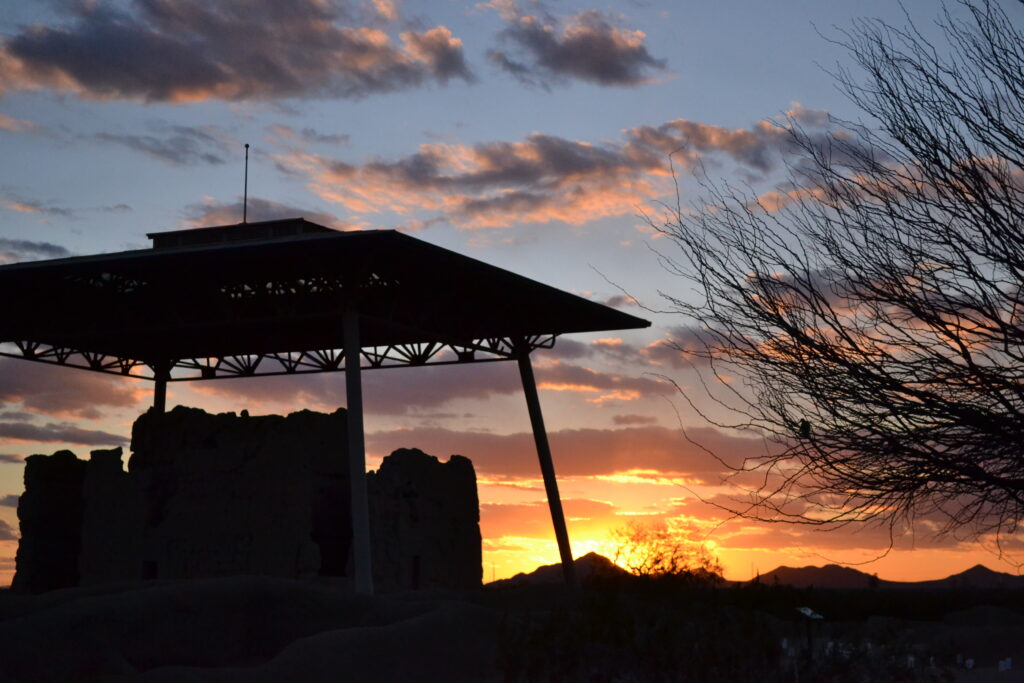
What if I told you that in the middle of Arizona’s Sonoran Desert stands a four-story structure built more than 650 years ago—long before Europeans arrived in this part of North America?
No modern construction equipment. No concrete trucks. Just generations of knowledge, skilled hands, and an understanding of how to make the most of the desert’s natural resources.
Welcome to Casa Grande Ruins National Monument, near Coolidge, Arizona, where an extraordinary ancient structure continues to inspire questions about the people who built it and the world they called home.
I love discovering places like this. At first, you might see an old building standing in the desert. Look a little closer, though, and you begin to uncover a much bigger story about engineering, agriculture, community, and the enduring legacy of Indigenous peoples in the American Southwest.
So, what makes Casa Grande so remarkable? Let’s take a closer look!
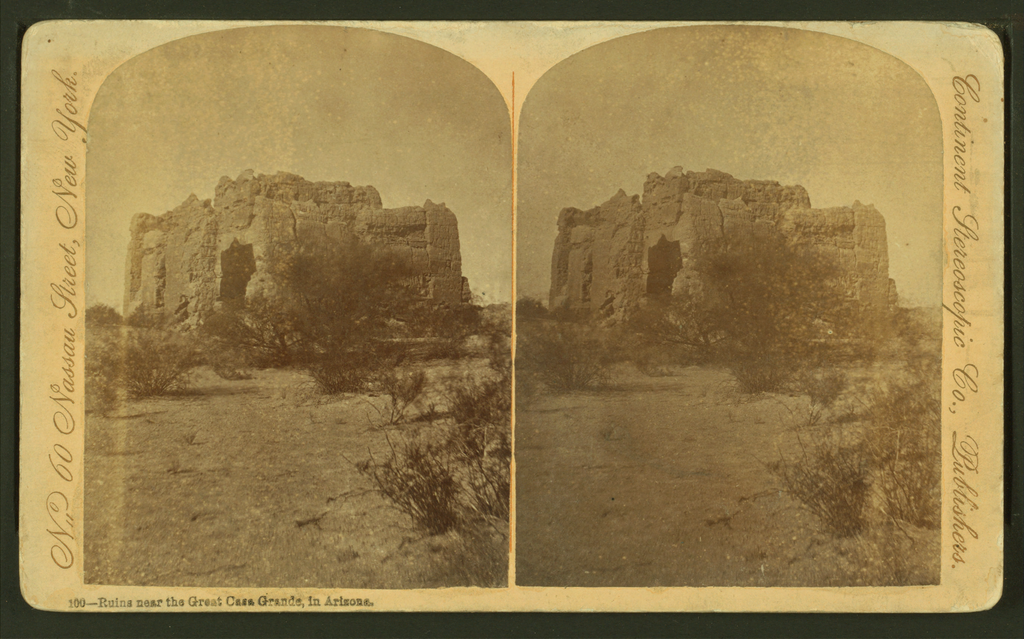

A Great House in the Middle of the Desert
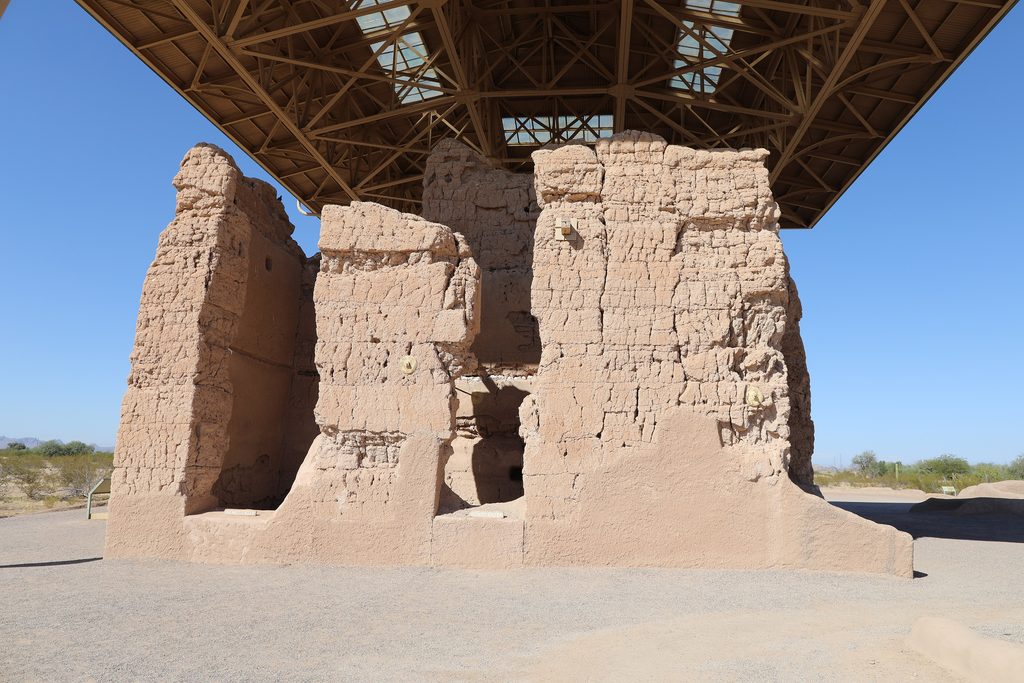
The centerpiece of Casa Grande Ruins National Monument is the Great House, a massive, four-story structure built around 1350 CE.
Its name comes from the Spanish words casa grande, meaning “great house.” The name was recorded centuries after the structure was built, but it certainly fits. Even today, the building stands out against the broad, open landscape of the Sonoran Desert.
The Great House was constructed by people archaeologists have traditionally called the Hohokam. Today, the term Ancestral Sonoran Desert People is also used to describe these ancient communities and their archaeological tradition.
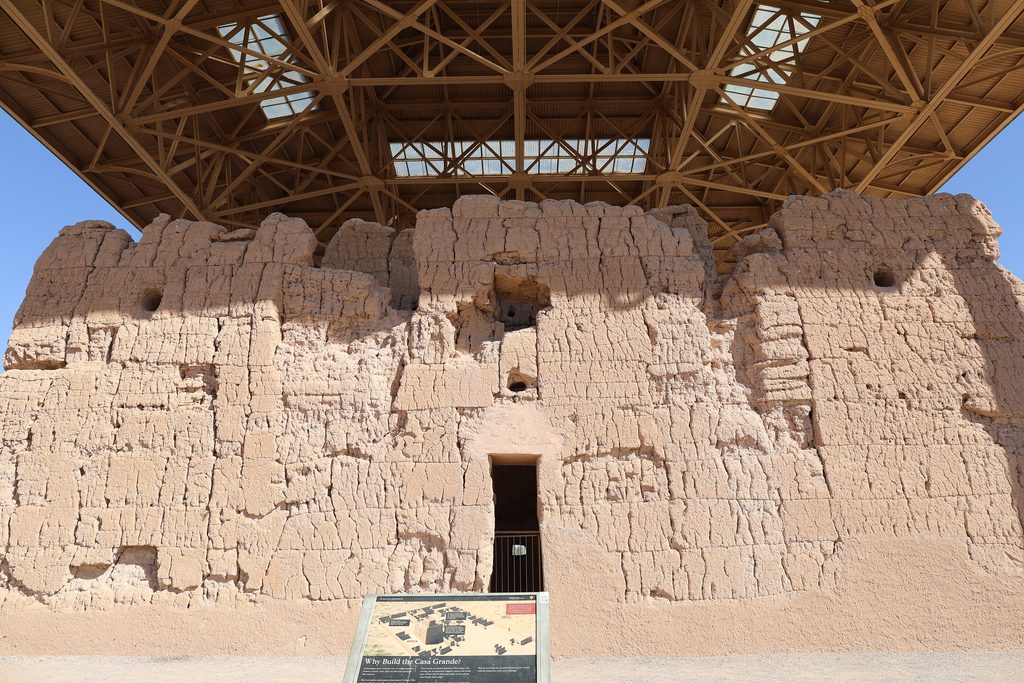
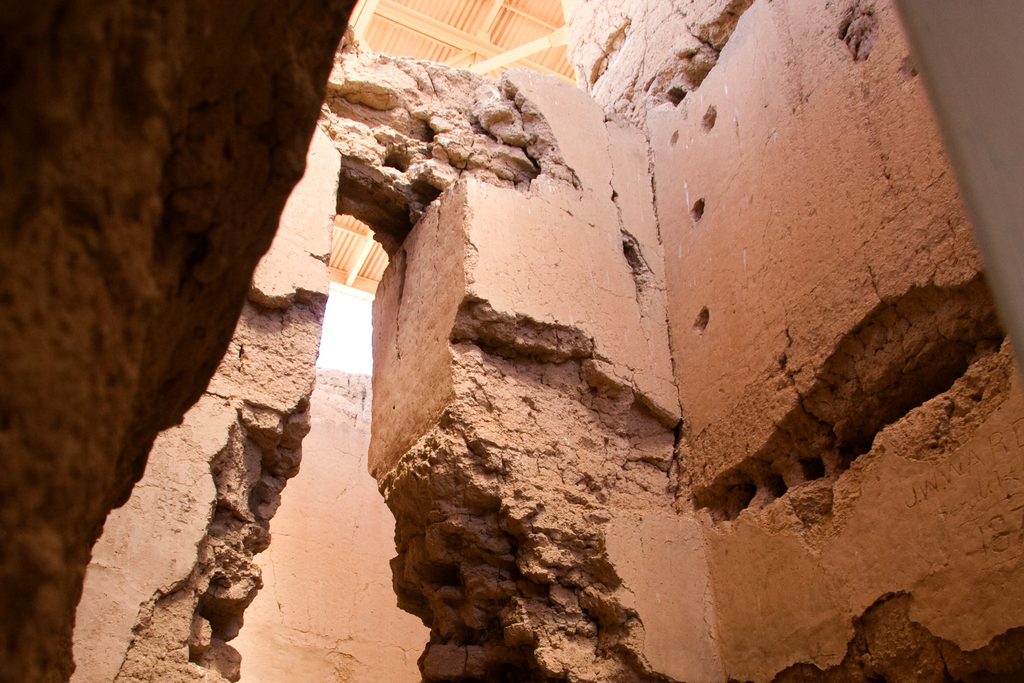
They built the structure using caliche, a naturally occurring desert material made from soil and mineral deposits that can form a hard, concrete-like substance. Rather than hauling in modern building materials, they made use of what the surrounding environment provided.
Think about the challenge involved. The builders had to gather materials, prepare them, move them into place, and construct a multistory building that could withstand the harsh desert climate. They accomplished this without the machinery and construction technology we take for granted today.
And somehow, more than six centuries later, the Great House is still standing.
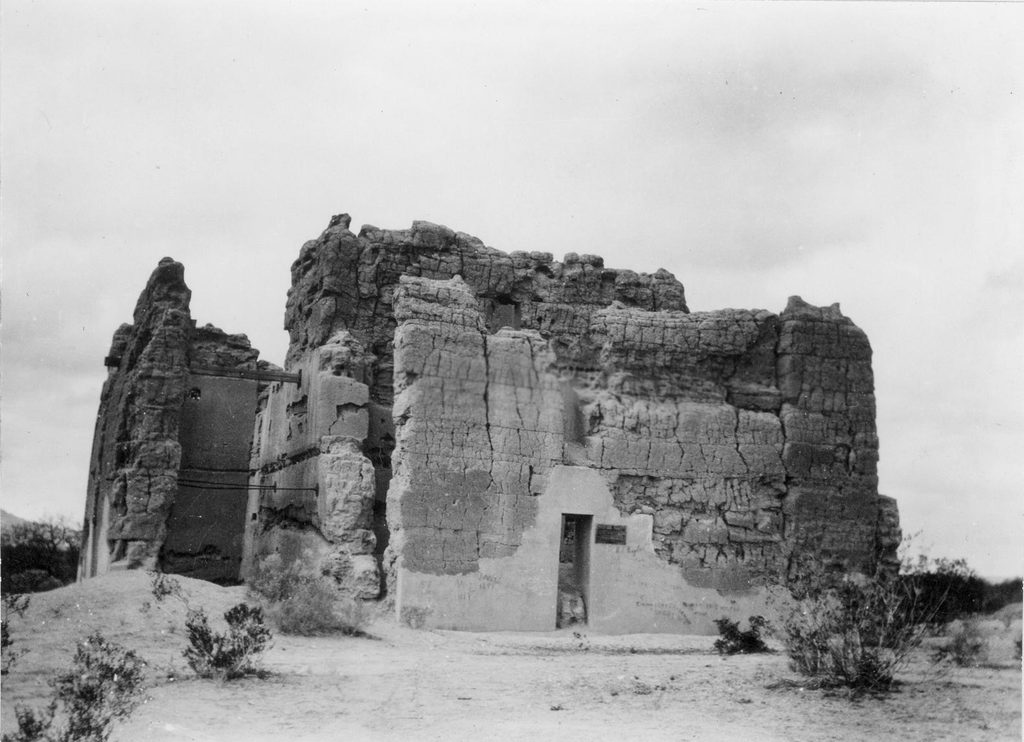
Of course, it has needed protection and preservation over the years. Its survival isn’t simply a matter of the original builders getting everything right. It is also a story of conservation and the efforts made to protect this extraordinary site.
Who Built Casa Grande—and Why?
This is where the mystery gets interesting.
Archaeologists know that the Great House was part of a much larger community. They have studied the ruins, surrounding settlements, artifacts, and agricultural systems to better understand the people who lived here.
However, the exact purpose of the Great House remains uncertain.
Was it used for community gatherings? Did it serve an administrative, ceremonial, or other important role? Could it have supported several purposes over time?
Researchers continue to investigate the evidence, but there isn’t one universally accepted answer that explains everything about the building.
That uncertainty is part of Casa Grande’s appeal. We can admire the structure and learn a great deal about the society that created it, while still recognizing that some questions may never receive a definitive answer.
The Great House wasn’t simply an isolated building in an empty desert. It belonged to a landscape shaped by generations of people who knew how to live in a challenging environment.
And that brings us to one of their most impressive achievements.
The Irrigation System That Made Desert Farming Possible
When you picture Arizona’s Sonoran Desert, what comes to mind? Perhaps towering saguaro cacti, rocky hills, intense sunshine, and long stretches of dry land.
Now imagine trying to grow enough food to support a community in that environment.
The ancient communities associated with Casa Grande developed extensive irrigation canals that brought water from nearby rivers to agricultural fields. These systems helped transform portions of the desert into productive farmland.
The engineering involved was remarkable. Canals had to be planned and maintained so water could travel from its source to the fields where crops were grown. Their construction required practical knowledge of terrain, water flow, and the needs of the community.
Agriculture supported settlements where people could grow crops, raise families, make tools, create pottery, and develop traditions that connected generations.
These communities also participated in trade networks that extended beyond their immediate surroundings. Archaeological evidence shows that goods and ideas moved between communities across the Southwest and beyond.
In other words, these were not isolated people struggling to survive without knowledge or innovation. They developed sophisticated ways to manage water, cultivate crops, build settlements, and make use of their environment.
The irrigation systems are an especially powerful reminder that human ingenuity doesn’t depend on modern technology. Knowledge, observation, cooperation, and experience can accomplish extraordinary things.
The People Behind the Ruins
One of the most important things to understand about Casa Grande is that the people who built it did not simply disappear.
The community at this particular site changed over time, and the Great House was no longer in use around 1450 CE. But the end of activity at one archaeological site does not mean that an entire people vanished.
The word Hohokam is an archaeological label used to describe a regional cultural tradition. It should not be treated as the name of a single historic Native American tribe or assumed to be the name these communities used for themselves.
Living Indigenous peoples maintain ancestral, cultural, and spiritual connections to this landscape. The National Park Service recognizes relationships between Casa Grande and Native communities, including O’odham, Hopi, and Zuni peoples.
This connection matters because archaeological ruins are not merely remnants of a distant civilization. They are part of a much longer story of Indigenous life in the Southwest—a story that continues today.
When we visit places like Casa Grande, we should appreciate the engineering and artistry while also remembering the people, descendants, and living communities connected to this history.
The ruins may be ancient, but Indigenous history in Arizona is not confined to the past.
How Casa Grande Got Its Name
Centuries after the Great House was no longer in use, European visitors began documenting the remarkable ruins.
In 1694, Jesuit missionary Eusebio Francisco Kino visited the site and recorded it in his accounts. The Spanish name Casa Grande, or “Great House,” became associated with the structure.
Imagine encountering this enormous building in the desert during the late seventeenth century. Even without knowing who constructed it or precisely why, its scale and appearance would have made a powerful impression.
By that time, the Great House had already stood for centuries.
Unfortunately, recognition did not always lead to protection. Over the years, the ruins suffered damage from weather, vandalism, and people removing materials and artifacts as souvenirs.
What makes the site fascinating also makes it vulnerable. Every piece removed or damaged can mean the loss of information that helps archaeologists and descendant communities understand the past.
Eventually, efforts to protect Casa Grande led to an important milestone in American preservation history.
Source: https://commons.wikimedia.org/wiki/File:Casa_Grande_Sivan_Vahkih_Interior_(24698787768).jpg

From Ancient Ruins to a National Monument
In 1892, President Benjamin Harrison issued an executive order protecting Casa Grande as a federal archaeological reserve. It is widely recognized as the nation’s first prehistoric and cultural reserve.
This was a significant step at a time when archaeological sites across the country faced damage and destruction.
In 1918, Casa Grande received designation as a national monument, providing a lasting framework for federal protection and preservation.
Today, Casa Grande Ruins National Monument is managed by the National Park Service. Visitors can explore the grounds, view the Great House, and learn about the ancient communities whose knowledge and labor shaped this part of Arizona.
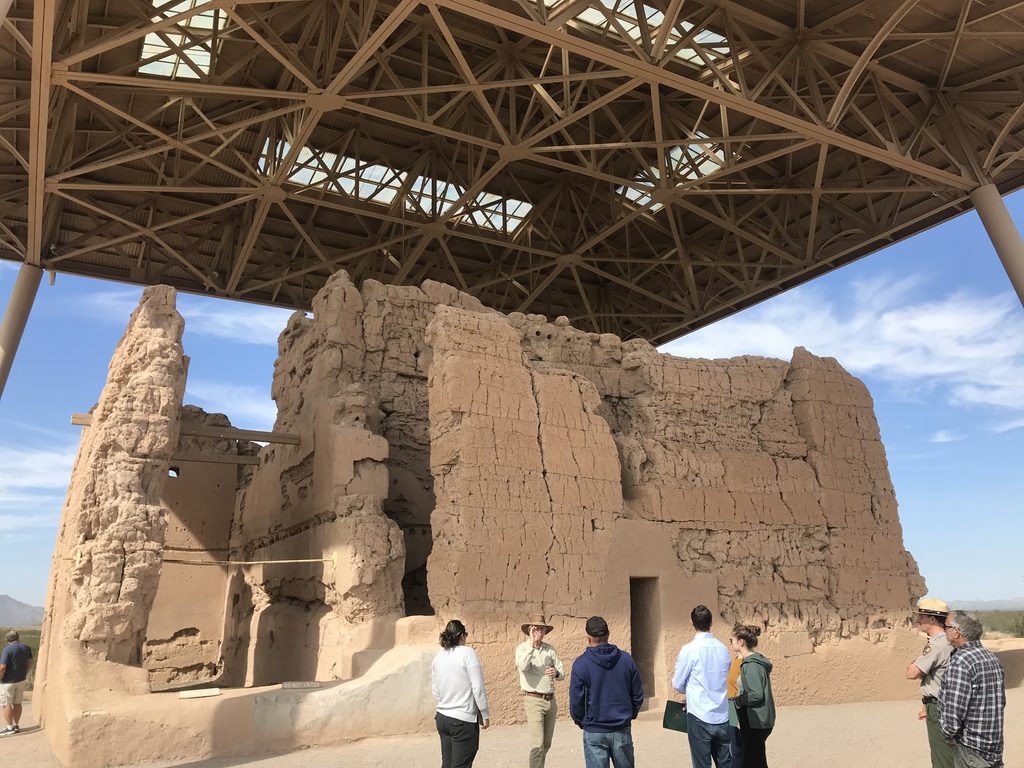
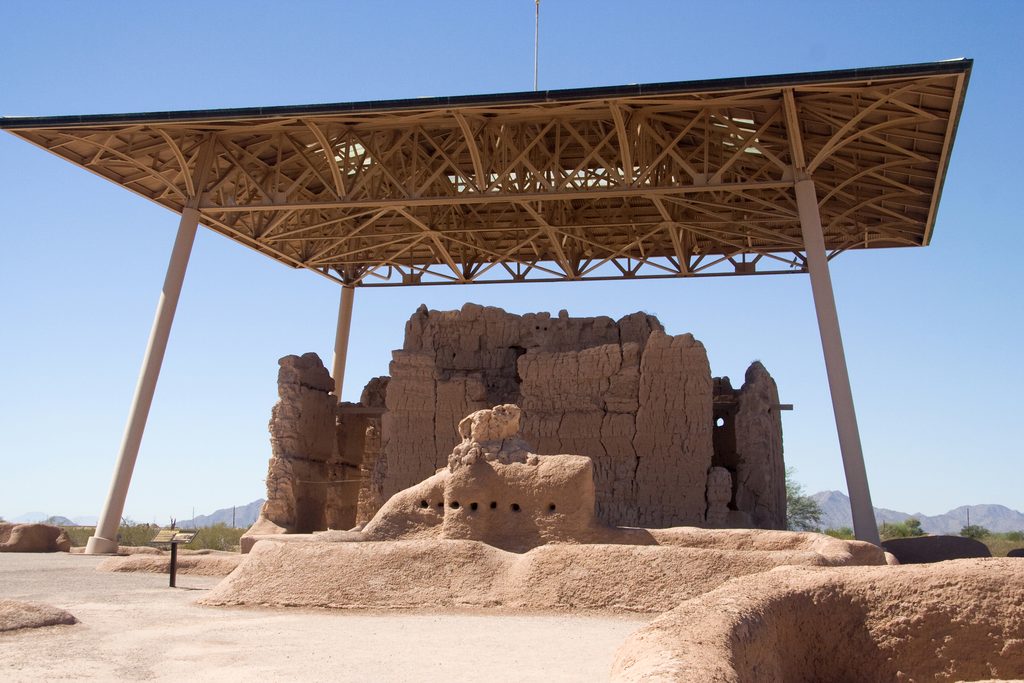
The protective structure that now shelters the Great House helps shield it from the elements. It also provides a striking contrast between modern preservation efforts and the ancient building beneath it.
The goal is not to make the ruins look brand-new. It is to protect what remains so future generations can continue learning from it.
That is an important distinction. Historic preservation is about safeguarding evidence of the past, not erasing the passage of time.
What Still Makes Casa Grande a Mystery?
Even after decades of archaeological study, the Great House invites questions.
Why was it built to this particular height? How was the space inside used? What activities took place around it? What can the surrounding canals and settlements tell us about daily life?
Some questions can be explored through archaeological evidence. Others remain open to interpretation.
And perhaps that is the best reason to visit.
Casa Grande reminds us that history isn’t always a neat story with a beginning, middle, and end. Sometimes it is a collection of clues—buildings, artifacts, landscapes, and traditions—that help us understand part of a much larger picture.
The more we learn, the more we appreciate how much knowledge these communities developed long before modern engineering and agricultural technology.
For me, that’s what makes places like this so rewarding. A photograph might capture the Great House, but it cannot fully convey the ingenuity behind its construction or the generations of people whose lives were connected to this landscape.
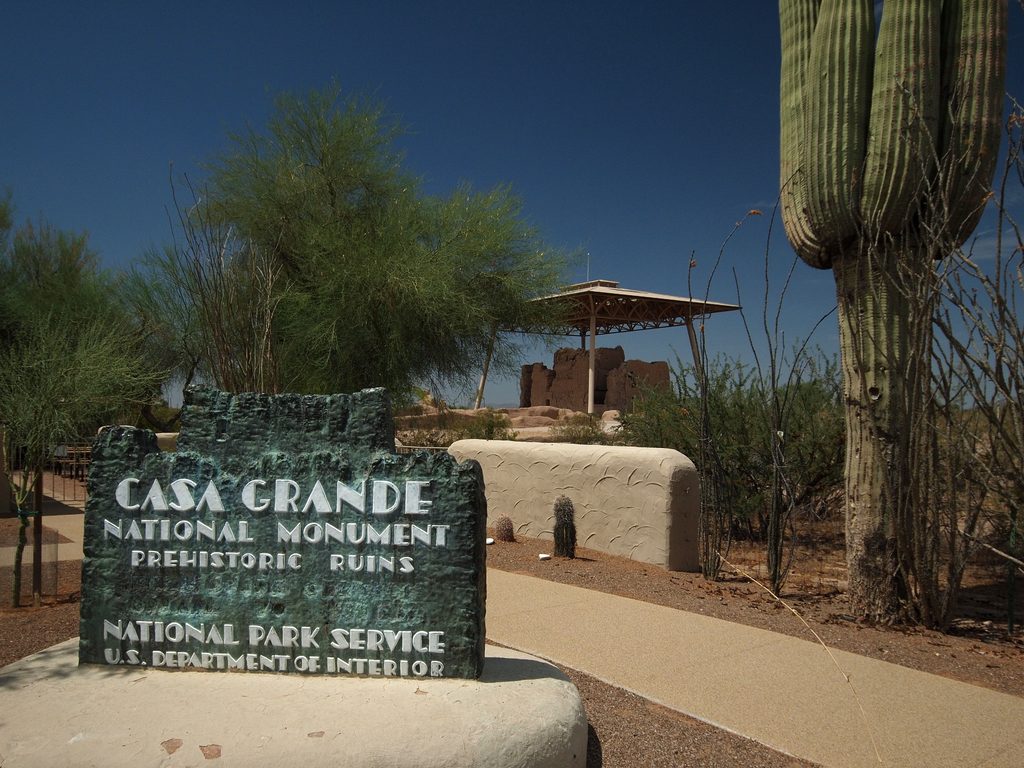
Visiting Casa Grande Ruins National Monument
If you’re exploring Arizona’s history, Casa Grande Ruins National Monument is well worth adding to your itinerary.
Located near Coolidge, southeast of the Phoenix metropolitan area, the site offers an opportunity to see an extraordinary ancient structure up close and learn about the people who built it.
Take time to look beyond the Great House itself. Consider the surrounding desert, the agricultural challenges faced by its ancient inhabitants, and the irrigation systems that helped support their communities.
The ruins are impressive, but the wider story is even more fascinating.
Before visiting, check the National Park Service website for current hours, visitor information, and any temporary restrictions.
Official website: https://www.nps.gov/cagr/
A Desert Mystery—and a Lasting Legacy
Casa Grande Ruins National Monument is much more than an ancient building standing in the Arizona desert.
It represents generations of knowledge, ingenuity, agricultural skill, and community life. Its Great House has endured for more than 650 years, but the people and cultures connected to this landscape have a story that reaches far beyond the structure itself.
We may never know every detail about why the Great House was built or exactly how every room was used. But we can appreciate the remarkable achievement it represents and continue learning from the evidence its builders left behind.
The next time you find yourself exploring Arizona, consider taking a detour to Coolidge. You might arrive expecting to see an old ruin. You may leave thinking about the people who built it, the canals that sustained their communities, and the Indigenous histories that continue today.
That’s the beauty of exploring the past. Sometimes the more you discover, the more curious you become.
Live the Life Less Traveled. Stay Curious!