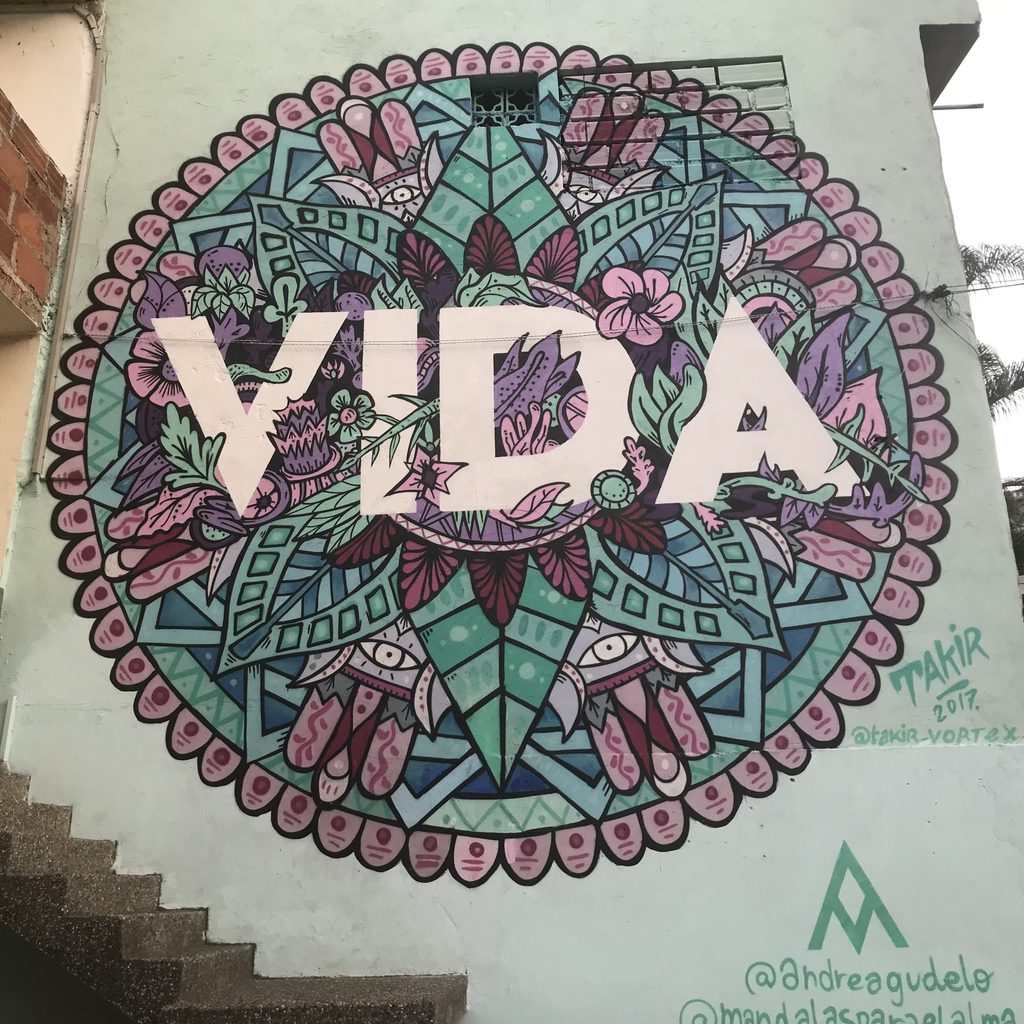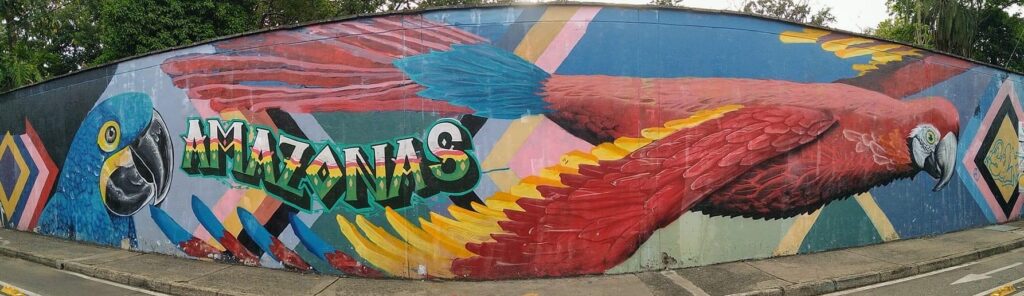
There are plenty of ways to explore a city. You can visit its museums, wander through historic plazas, sample its local cuisine, or take in the architecture that tells the story of generations past.
But in Colombia, there’s another way to discover a city’s character: look at its walls.
In Bogotá and Medellín, street art transforms ordinary buildings, alleyways, staircases, and public spaces into enormous outdoor galleries. Some murals are bursting with color and fantastical characters. Others are powerful political statements, tributes to Indigenous heritage, or reminders of painful chapters in Colombia’s history.
And that’s what makes Colombian street art so fascinating. It isn’t simply decoration. It’s a form of communication, a reflection of cultural identity, and, in many places, an expression of a community’s determination to tell its own story.
I’ve been fortunate to see some of this artwork during travels in Colombia, and I’ve also collected photographs taken by a friend who explored these cities. Looking through the images, I wanted to learn more about the artists, the history behind the movement, and why street art has become such an important part of Colombia’s modern cultural landscape.
What I discovered is that the walls of Bogotá and Medellín have plenty to say.
Bogotá: A City That Turned Its Walls Into Canvases
Bogotá is one of Latin America’s most recognizable destinations for urban art. Its street-art scene stretches across numerous neighborhoods, with particularly notable concentrations around La Candelaria, the historic center, and other parts of the city.
Walking through Bogotá, you might encounter enormous portraits, intricate stencil work, surreal animals, Indigenous-inspired imagery, political cartoons, and colorful abstract compositions.
The styles are diverse because the artists are diverse. Some use walls to question government policies, social inequality, violence, and economic power. Others explore Colombian identity, cultural traditions, environmental concerns, or simply the freedom of artistic expression.
To understand why Bogotá developed such a distinctive street-art culture, however, it’s worth looking at a controversial chapter in its recent history.
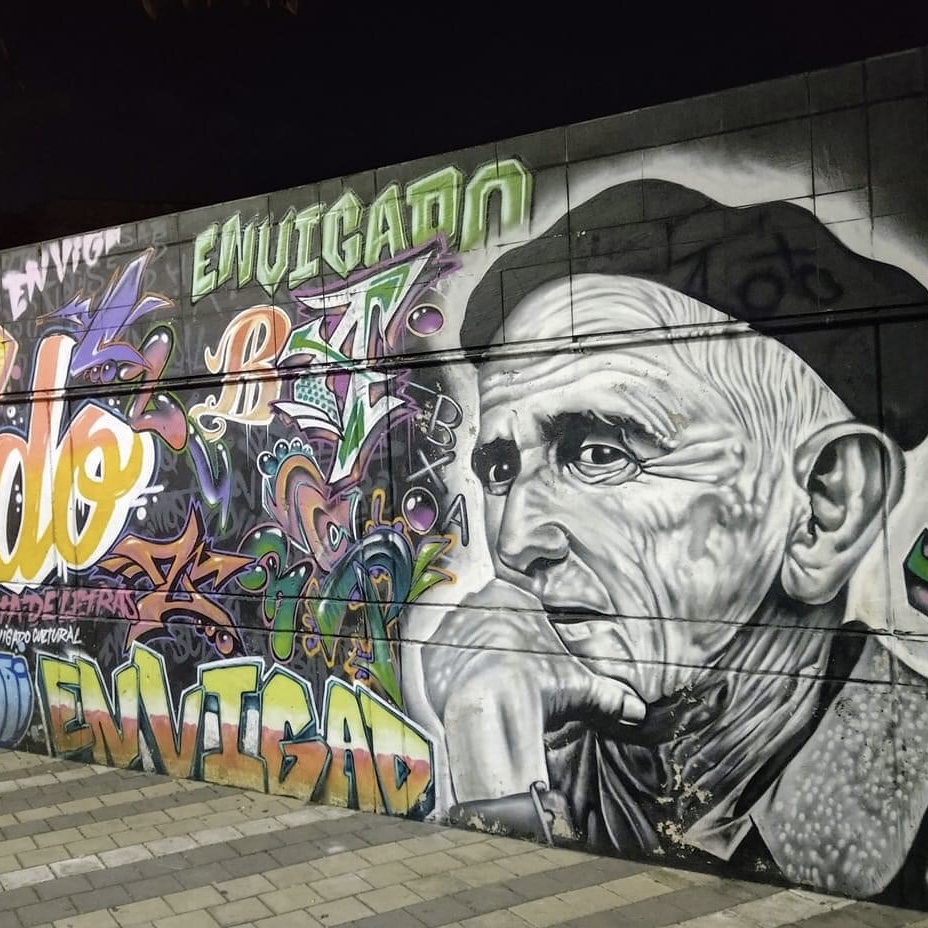
The death that changed Bogotá’s relationship with graffiti
For many years, graffiti artists in Bogotá faced a difficult relationship with local authorities. Painting public walls could lead to fines, confrontation, and, in some circumstances, much more serious consequences.
Then came August 2011.
Sixteen-year-old graffiti artist Diego Felipe Becerra, known in the graffiti community as Trípido, was shot and killed by a police officer while painting graffiti in Bogotá.
The circumstances surrounding his death became even more disturbing when evidence emerged that the crime scene had been manipulated in an attempt to portray the teenager as an armed criminal.
His death sparked public outrage and became a defining moment in the city’s discussion about graffiti, police conduct, and artistic freedom.
Bogotá’s City Council passed Agreement 482 in December 2011, establishing a regulatory framework for graffiti. In February 2013, Decree 75 further developed the city’s approach to responsible graffiti practice, including authorized locations and support for artistic expression.
Then came another unusual chapter.
In 2013, Canadian pop star Justin Bieber visited Bogotá and spray-painted graffiti while receiving police protection. The apparent difference in how a famous visiting musician and local artists were treated caused widespread frustration.
Local artists responded with demonstrations and mass painting events, bringing additional attention to the issue.
The Bieber incident became part of the city’s graffiti folklore, but it wasn’t the beginning of Bogotá’s regulatory changes. Those had already started following Becerra’s death.
Today, Bogotá recognizes street art as an important cultural expression, although artists must still follow regulations concerning property permission, public spaces, and protected buildings.
The city has continued updating its policies, including a new regulatory framework in 2025.
The result is a street-art scene that has developed into an important part of Bogotá’s cultural identity.
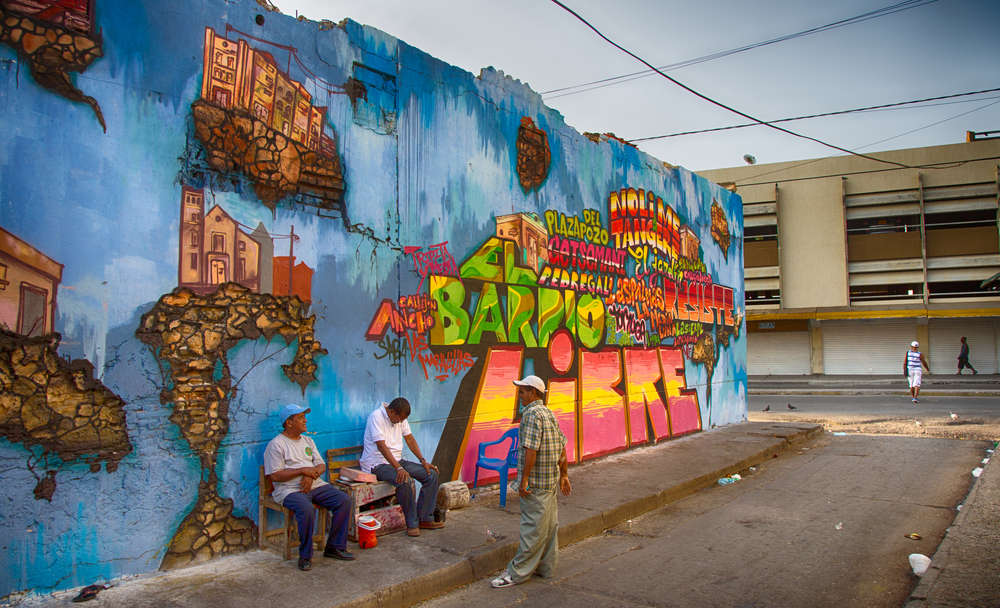
Medellín: When Street Art Became Part of a Neighborhood’s Transformation
If Bogotá’s street art is a broad conversation about identity, politics, and artistic freedom, Medellín offers a particularly moving example of how art can become part of a community’s recovery and transformation.
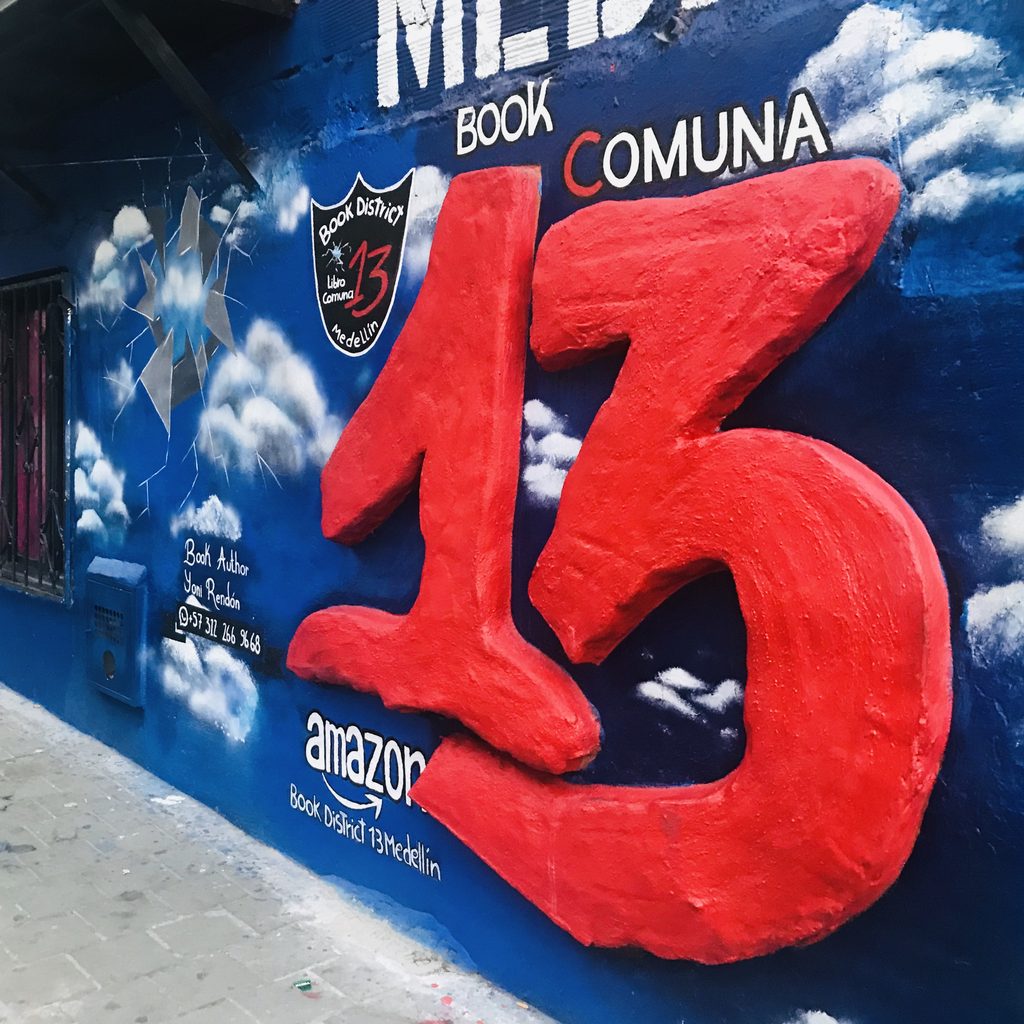
The best-known example is Comuna 13, officially part of the San Javier district on the western hillsides of Medellín.
Today, visitors encounter colorful murals, hip-hop performances, breakdancers, small galleries, local businesses, and guided walking tours.
It’s an energetic place, full of creativity and activity.
But the neighborhood’s history is considerably more complicated than the vibrant tourist destination visitors see today.
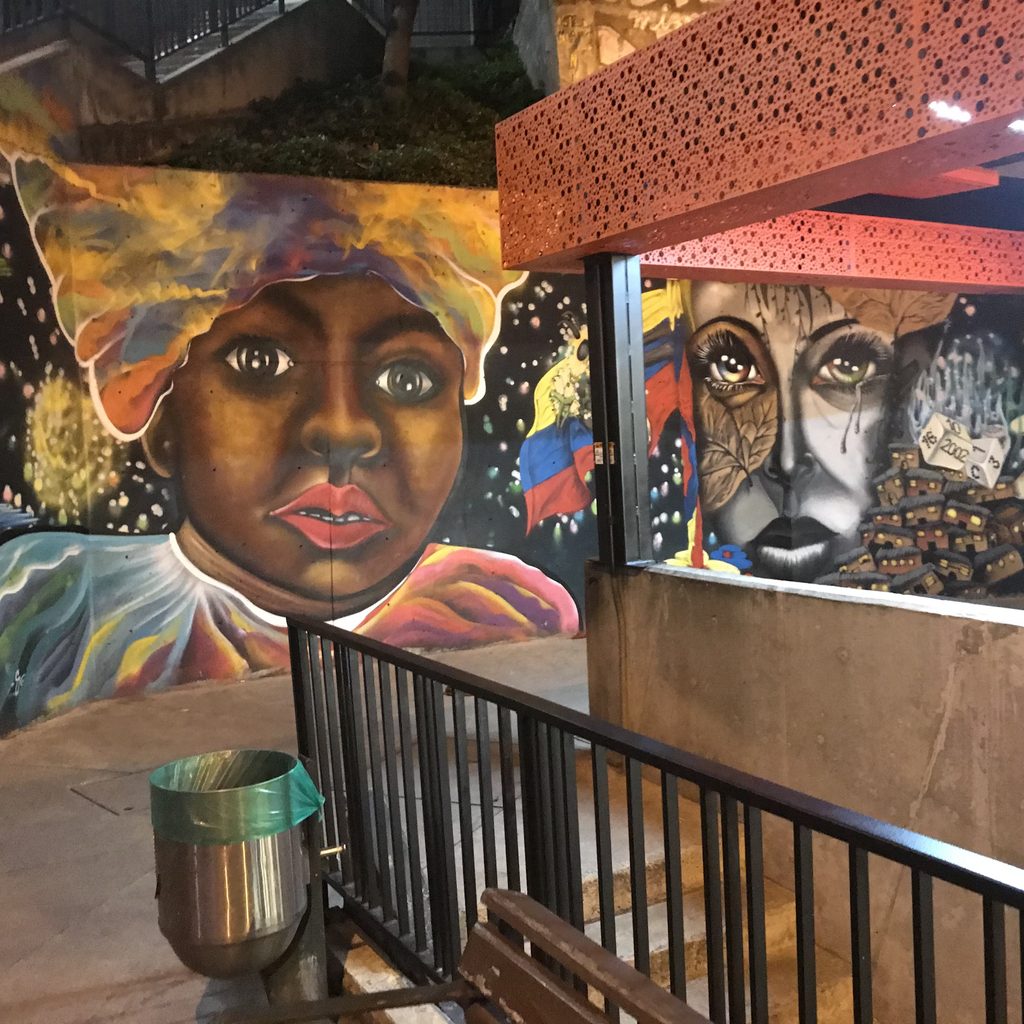
Remembering the difficult years
During the late 20th century and early 2000s, Comuna 13 became a contested area in Colombia’s internal armed conflict.
Its strategic location and hillside geography made it important to several armed groups, including guerrillas and paramilitary organizations.
Residents found themselves caught in the middle of the violence.
One of the most significant events occurred in October 2002, when the Colombian government launched Operation Orion (Operación Orión), a large-scale military and police intervention intended to regain control of the neighborhood.
Beginning October 16, the operation involved more than 1,500 members of the security forces and judicial institutions. The operation also involved paramilitary collaboration, according to Colombia’s National Center for Historical Memory.
The civilian population experienced tremendous hardship. Deaths, injuries, forced disappearances, displacement, and other human rights violations left lasting scars on the community.
And the end of the military operation did not mean the end of violence or armed control.
For residents, the memories of those years remain an important part of Comuna 13’s identity.
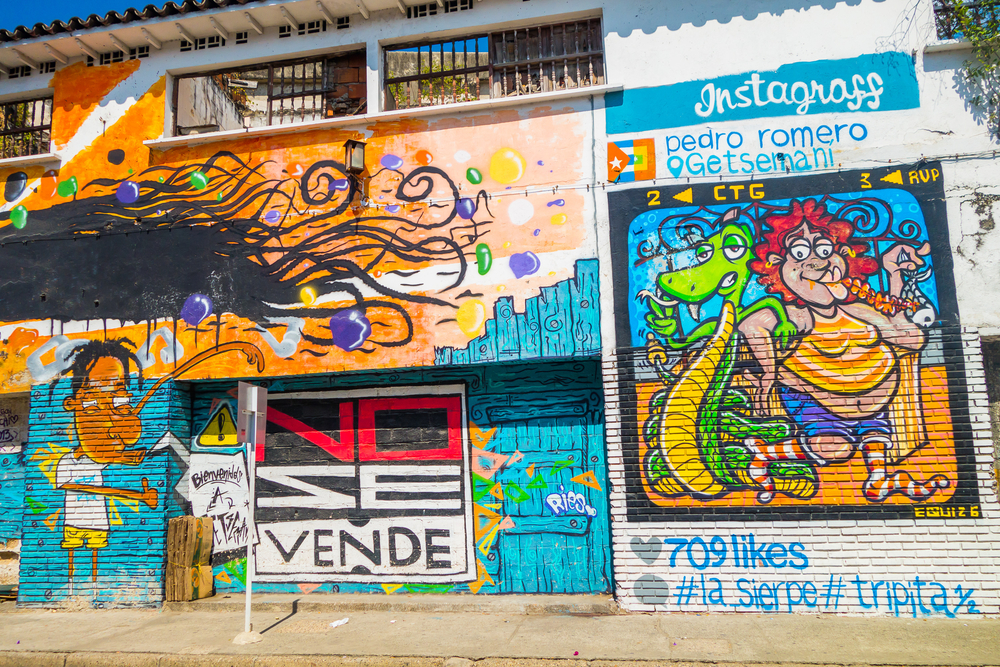
The rise of art, hip-hop, and community expression
Over time, young people and community organizations increasingly turned to cultural expression as a way to create opportunities and build a different future.
Hip-hop became particularly important.
Its four traditional elements—rap, DJing, breakdancing (breaking), and graffiti—provided young people with ways to express themselves, develop skills, and connect with their community.
Rather than allowing the neighborhood’s identity to be defined exclusively by violence, local artists began using public spaces to communicate stories of remembrance, hope, resistance, and belonging.
One important organization in this movement is Casa Kolacho, a cultural center associated with local artists and activists. Through workshops and cultural initiatives, it has helped develop opportunities for young people and promote hip-hop as a tool for social change.
The murals of Comuna 13 are part of that larger story.
Some commemorate people and events from the neighborhood’s past. Others celebrate nature, community pride, and the determination to move forward.
The artwork is not a single coordinated message. Every artist has a different perspective, style, and story to tell.
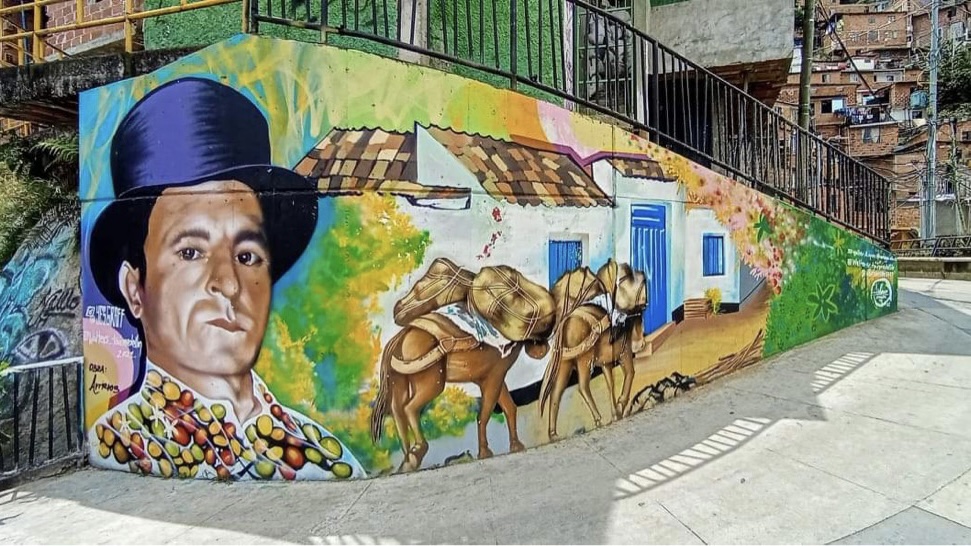
The famous outdoor escalators
Another important part of Comuna 13’s transformation is its system of outdoor public escalators.
Inaugurated in 2011, the escalators help residents navigate the steep hillside terrain. What was once a difficult climb becomes considerably easier, improving mobility and access for people living in the neighborhood.
They also became a recognizable symbol of Medellín’s efforts to improve connections between communities and public services.
As the escalators brought more visitors into the area, the surrounding walls increasingly became a canvas for local artists.
Street art, music, dance, galleries, restaurants, and neighborhood businesses gradually became part of a growing cultural tourism experience.
Today, Comuna 13’s Graffitour is one of Medellín’s best-known visitor experiences.
But perhaps the most important part of the story is that the transformation wasn’t simply something done for the neighborhood. Local residents and cultural leaders played an important role in creating it.
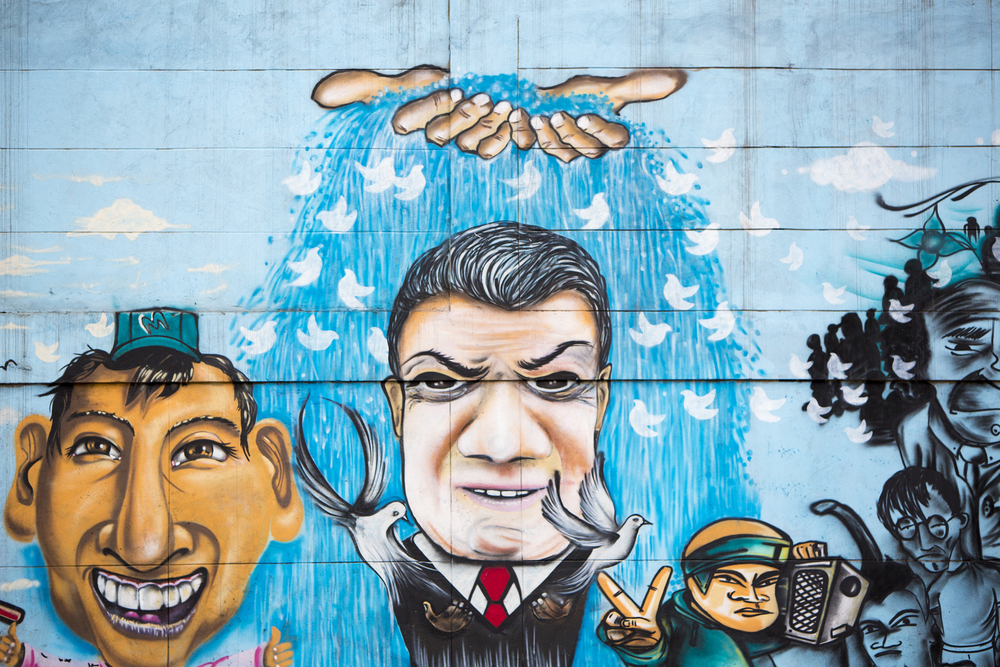
Four Colombian Street Artists Worth Knowing
One of the most interesting aspects of Colombia’s street-art movement is the variety of artistic voices represented on its walls.
The following four artists offer a glimpse into that diversity. Their work ranges from political commentary to Indigenous symbolism and imaginative, colorful muralism.
1. DjLu (Juegasiempre) – The Art of Visual Commentary
Bogotá-based artist DjLu, also known as Juegasiempre, is recognized for thought-provoking imagery that uses visual symbolism, irony, and social commentary.
An architect by training and a university professor, he became an important figure in Colombia’s urban-art movement.
His earlier work became particularly recognizable for its pictograms and stencil-based compositions. Rather than relying on lengthy explanations, he often combines familiar images in unexpected ways to make viewers question what they’re seeing.
A camera, a weapon, a corporate symbol, or an everyday object can take on an entirely different meaning when placed in a new context.
His work addresses subjects including violence, inequality, racism, power, and social injustice.
There’s often an element of visual humor or irony, but the underlying messages can be serious.
It’s the kind of artwork that makes you stop walking, look twice, and think about what the artist is trying to communicate.
2. Guache (Oscar González) – Celebrating Ancestral Identity
Oscar González, better known as Guache, is a Colombian visual artist and muralist whose work draws inspiration from Indigenous culture, traditional Latin American muralism, and contemporary graphic design.
Born in Sogamoso, in the historic Muisca region of Colombia, Guache incorporates ancestral imagery, nature, animals, and cultural symbolism into his compositions.
His work often features vibrant colors, geometric patterns, and stylized human figures.
The name Guache is particularly interesting. The word has a complicated history in Colombia, where it has acquired derogatory meanings, while also being associated with Indigenous Muisca warriors.
The artist’s use of the name connects with a broader interest in reclaiming cultural identity and recognizing the Indigenous heritage that remains an important part of Colombia’s story.
His murals remind viewers that Colombian identity did not begin with Spanish colonization. The country’s cultural roots extend much further back, through Indigenous civilizations, traditions, and communities that continue to influence modern Colombian life.
3. Chota 13 (John Alexander Serna) – Comuna 13’s Stories on the Walls
For an artist whose work is closely connected to Comuna 13, Chota 13 is a particularly interesting name to know.
John Alexander Serna, known as Chota 13, grew up in the neighborhood and experienced its difficult years firsthand.
His art reflects the relationship between personal memories, neighborhood identity, and the community’s changing image.
Chota and other local artists began working together to bring color and artistic expression to the neighborhood’s buildings and public spaces. Their efforts helped establish the visual identity that visitors recognize today.
His murals frequently incorporate human figures, nature, and symbolic imagery.
Some works directly address the neighborhood’s history, including the painful legacy of Operation Orion. Others express hope, resilience, and the importance of remembering where the community came from.
His artwork is a reminder that Comuna 13’s street art isn’t simply an attraction created for visitors. It developed from the experiences and creative efforts of the people who live there.
4. Ledania (Diana Ordóñez) – A World of Color and Imagination
Diana Ordóñez, known professionally as Ledania, is one of Colombia’s prominent female muralists and an internationally recognized figure in Latin American street art.
Based in Bogotá, she has developed a distinctive style built around vivid colors, expressive forms, imaginary creatures, and imaginative compositions.
Her background in visual and plastic arts helped shape her artistic approach, which combines formal artistic training with years of experience in graffiti and mural painting.
Her work frequently features animals, fantastical characters, and dreamlike environments. Rather than focusing primarily on political commentary, she often creates imaginative worlds that celebrate nature, movement, and creativity.
Ledania’s work has appeared in international exhibitions and mural projects, taking her artistic language well beyond Colombia.
In a street-art scene that has historically included many more male artists, her success also represents an important contribution by women to contemporary Colombian urban art.
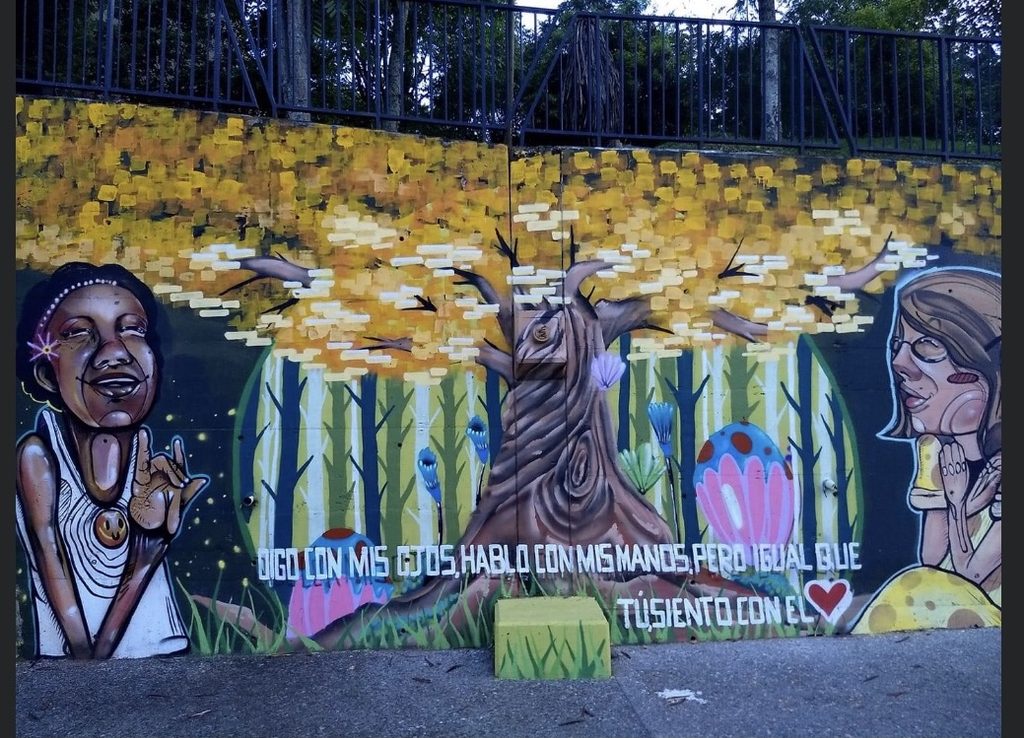
What Colombian Street Art Tells Us About Colombia
It’s tempting to look at street art as something separate from a country’s broader cultural history.
In Colombia, that would be a mistake.
The country’s murals and graffiti reflect several important themes that help explain its identity.
Indigenous heritage and cultural pride
Colombia’s Indigenous heritage is visible in the work of artists such as Guache and in the imagery found throughout the country’s public art.
Traditional patterns, ancestral figures, animals, and references to the natural world help reconnect contemporary audiences with cultural traditions that existed long before the arrival of Europeans.
Memory and the search for peace
Colombia’s internal armed conflict affected generations of families and communities.
For many artists, public art offers a way to remember victims, preserve stories, question injustice, and encourage conversations about peace.
The walls of Comuna 13 are particularly meaningful in this respect.
They provide a public space where residents can communicate their own experiences rather than having their neighborhood defined exclusively by outside accounts of its past.
Afro-Colombian and regional identity
Colombia is an extraordinarily diverse country, with strong regional traditions and significant Afro-Colombian and Indigenous communities.
Its urban art reflects that diversity through portraits, cultural symbols, music, traditional patterns, and references to everyday life.
Street art can help make these identities visible in places where public representation has not always been equal.
Creativity and the influence of hip-hop
Colombian street art also demonstrates how international cultural movements can develop their own local identities.
Hip-hop originated in the United States, but Colombian artists and communities have adapted its music, dance, graffiti, and cultural traditions to their own experiences.
In Comuna 13, hip-hop became particularly important as a means of youth expression and community organization.
The result is something distinctly Colombian: an international artistic movement shaped by local history, language, culture, and circumstances.
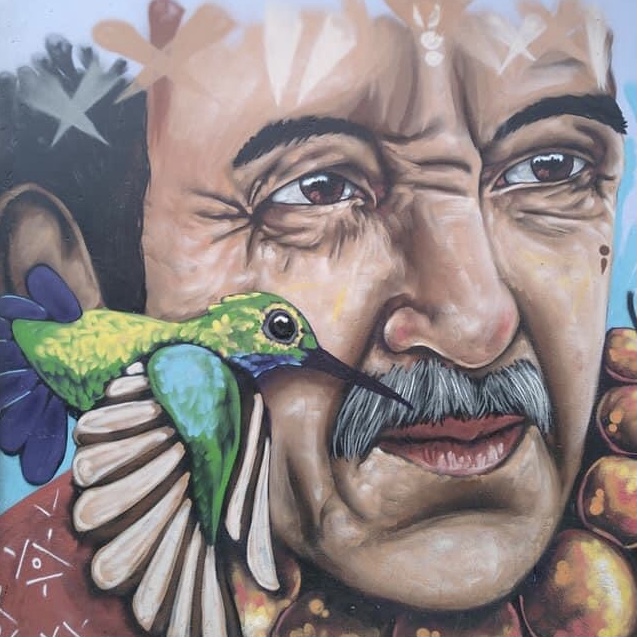
Where to Experience Colombia’s Street Art
For anyone planning a visit, both Bogotá and Medellín offer guided experiences that provide considerably more context than simply walking around taking photographs.
A knowledgeable local guide can explain the symbolism, identify artists, discuss the history behind particular murals, and introduce visitors to the communities that created them.
Here are several tour providers worth investigating.
Bogotá Graffiti Tours
Bogotá Graffiti Tour
One of the established street-art walking tours in Bogotá, operating since 2011. Its experiences explore La Candelaria, with public walking tours, private tours, and hands-on spray-painting workshops.
Website: https://bogotagraffiti.com/
Capital Graffiti Tours
Offers street-art experiences in Bogotá, including walking tours, workshops, and graffiti bicycle tours. Its workshops provide an opportunity to learn directly about the techniques used by local artists.
Website: https://www.capitalgraffititours.com/
Beyond Colombia
Offers a graffiti walking tour that explores Bogotá’s urban art and the historical and political stories behind it. Its tours are offered on a tip-based basis.
Website: https://www.beyondcolombia.com/
Medellín Graffiti Tours
Comuna 13 Travel
A locally focused tour provider offering different ways to explore Comuna 13, including graffiti tours, neighborhood history, food, and cultural experiences.
Website: https://comuna13travel.com/
Medellín Tourism – Comuna 13 Tour
Offers a guided experience exploring the history and transformation of Comuna 13, including murals, the outdoor escalators, and the four elements of hip-hop.
Website: https://medellintourism.com.co/tour-comuna-13/
Tourism Medellín – The Real Comuna 13 Graffiti Tour
An experience emphasizing local stories and community perspectives, with a route that explores more than the main tourist corridor.
Website: https://tourismmedellin.com/experiences/the-real-comuna-13-graffiti-tour-w-local-flavors
Tour availability, prices, languages, and schedules can change, so check each provider’s website before making plans. I’d also recommend looking for tours led by local residents and artists, since supporting the people who created and maintain these cultural spaces makes the experience more meaningful.
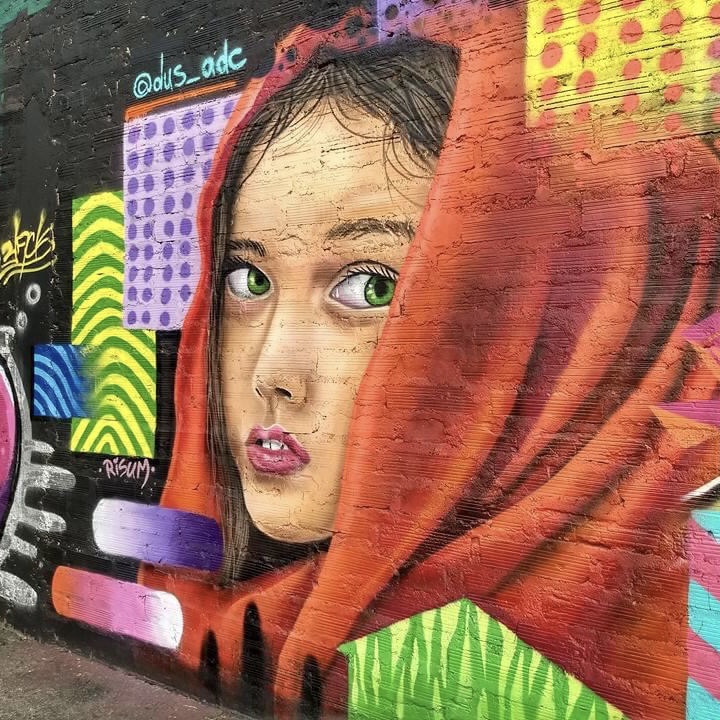
A Different Way to Explore Colombia
Looking at these photographs, it’s easy to be drawn first to the colors, the enormous portraits, and the incredible artistic detail.
But the more you learn about the artists and the communities behind the work, the more you realize that these walls are doing something important.
They’re preserving memories, celebrating cultural heritage, challenging social conventions, and giving people a way to express themselves.
Bogotá and Medellín have different street-art personalities, but both demonstrate how public art can become an important part of a city’s identity.
And that’s what makes exploring Colombia so rewarding. There’s always another story waiting to be discovered, sometimes in a museum, sometimes in a historic plaza, and sometimes painted across the side of an ordinary building.
On a future visit, I’d love to spend more time exploring these neighborhoods with local guides and artists, learning the stories behind the murals and discovering some of the artwork that might otherwise go unnoticed.
After all, when a city turns its walls into an open-air gallery, you never know what you’ll discover around the next corner.
Live the Life Less Traveled. Stay Curious. 🐕