
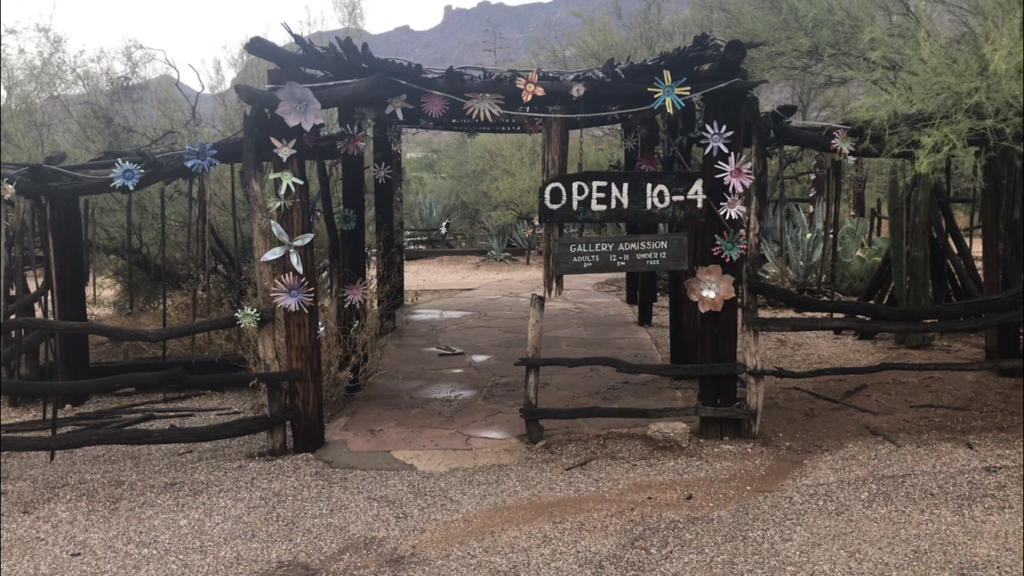
Some places are more than museums.
You walk through the door and feel like you’re stepping into someone’s life, their imagination, and their connection to a place.
That’s exactly how I felt visiting the DeGrazia Gallery in the Sun in Tucson, Arizona.
If you’ve spent much time in Arizona, you’ve probably seen the work of Ettore “Ted” DeGrazia without even realizing it. His colorful paintings of Native children, Mexican families, desert landscapes, cowboys, dancers, horses and everyday life became some of the most recognizable images associated with the Southwest.
But there was a lot more to DeGrazia than colorful paintings.
Born in 1909 in the mining town of Morenci, Arizona, the son of Italian immigrants, DeGrazia grew up surrounded by the cultures of the Southwest. His childhood experiences in that diverse mining community helped develop his lifelong interest in the Native cultures and people of the region.
And then came Mexico.
In 1942, DeGrazia traveled to Mexico City, where an unexpected encounter with legendary Mexican muralist Diego Rivera led to an internship working with Rivera and José Clemente Orozco.
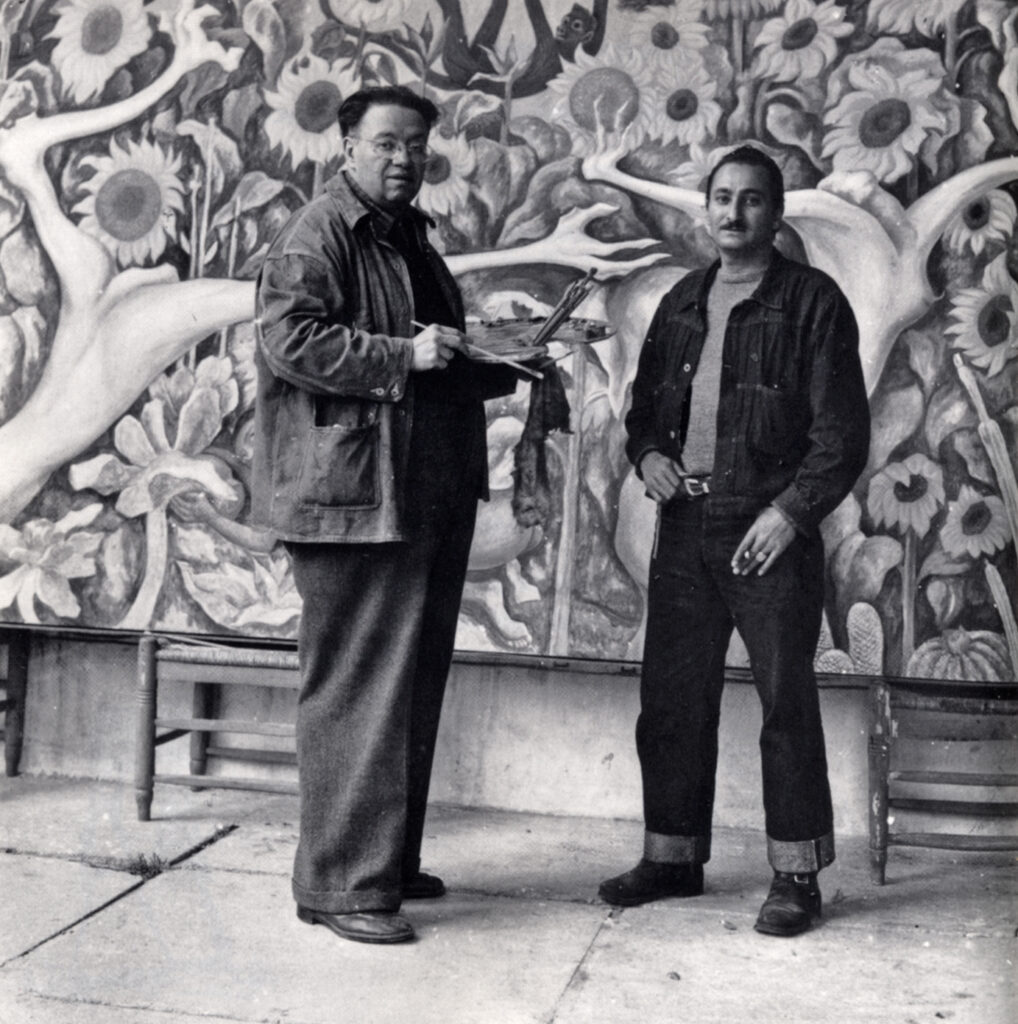
That’s an extraordinary chapter in the story.
DeGrazia wasn’t simply studying art in a classroom. He was immersing himself in Mexican art and culture and learning from two of the most influential muralists of the 20th century. Rivera and Orozco ultimately sponsored a solo exhibition of DeGrazia’s paintings at Mexico City’s prestigious Palacio de Bellas Artes.
When DeGrazia returned to Arizona, his art increasingly became a visual expression of the Southwest he knew.
He painted the desert.
He painted Mexican culture.
He painted Native American life and traditions.
He traveled through Arizona and Mexico observing people, ceremonies and landscapes that became subjects for his work.
His relationship with the region’s Indigenous cultures is particularly evident in collections devoted to the Yaqui, Tohono O’odham, and other Native peoples of the Southwest. His work wasn’t simply about the desert scenery—it was about the people and traditions that made the region what it was.
One example is his work depicting Yaqui Easter traditions, inspired by ceremonies he observed in Southern Arizona and northern Mexico.
Another is his later work documenting the Comcaac, or Seri, people of coastal Sonora, Mexico. In the late 1960s, DeGrazia spent time documenting aspects of their traditional daily life, producing drawings, watercolors and paintings that later became the basis for his 1970 book The Seri Indians.
And then there is the place where I was standing.
DeGrazia Gallery in the Sun.
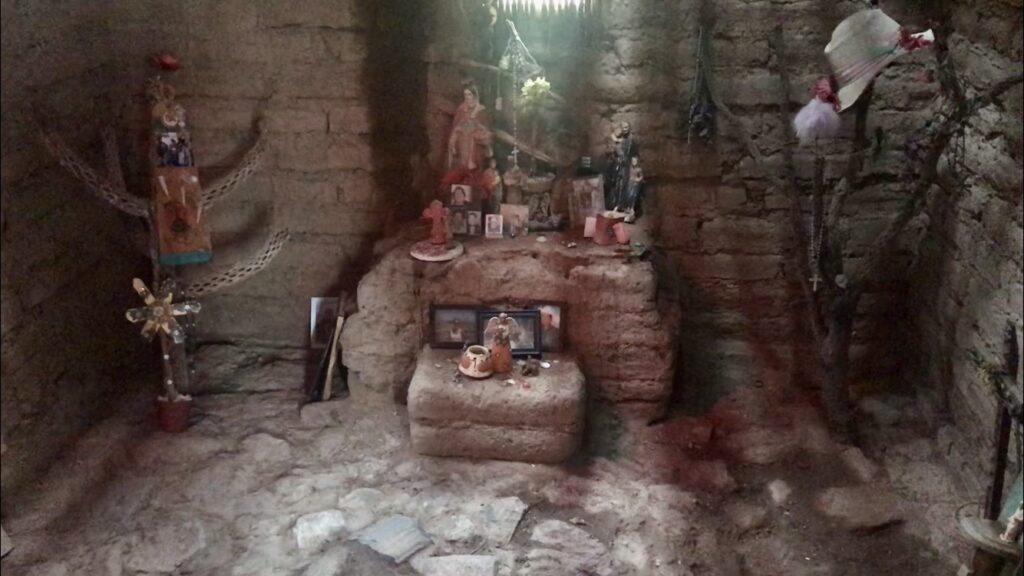
What began as a small construction project in the early 1950s eventually became a 10-acre historic artistic compound in the foothills of Tucson.
DeGrazia designed it himself.
Adobe walls.
Desert gardens.
Mountain views.
Studios.
Galleries.
And the Mission in the Sun, which he built in honor of Padre Eusebio Kino and dedicated to the Virgin of Guadalupe.
The result doesn’t feel like a conventional museum.
It feels like entering DeGrazia’s world.
Today, the Gallery houses thousands of his original works, including paintings, watercolors, sketches, sculptures, ceramics and jewelry. Its permanent collections explore the history and cultures of the Southwest, while rotating exhibitions provide another look at different chapters of his career.
But what stayed with me most wasn’t simply the artwork.
It was the sense of place.
DeGrazia understood that Arizona wasn’t just cactus, mountains and sunshine.
It was—and still is—a meeting place of cultures.
Native American.
Mexican.
Spanish.
Anglo.
And all the people who have made the Southwest their home.
His art helped bring those cultures and stories to audiences far beyond Arizona.
Standing there among his paintings, adobe buildings and desert landscape, I couldn’t help but think about how much of Arizona’s identity is contained in the work of one artist.
Ted DeGrazia once said, “My paintings are my life. They are my experience.”
After visiting the Gallery in the Sun, I think that’s probably the best way to understand his work.
He wasn’t simply painting Arizona.
He was painting the Arizona he knew.
And that’s what makes places like this so interesting to me.
You can visit a museum and look at art.
Or you can get curious about the person behind the art—and suddenly you’re learning about the history, cultures and people of an entire region.
That’s the kind of discovery I love.
I’m Curious Perro – Live the Life Less Traveled. Stay Curious!