
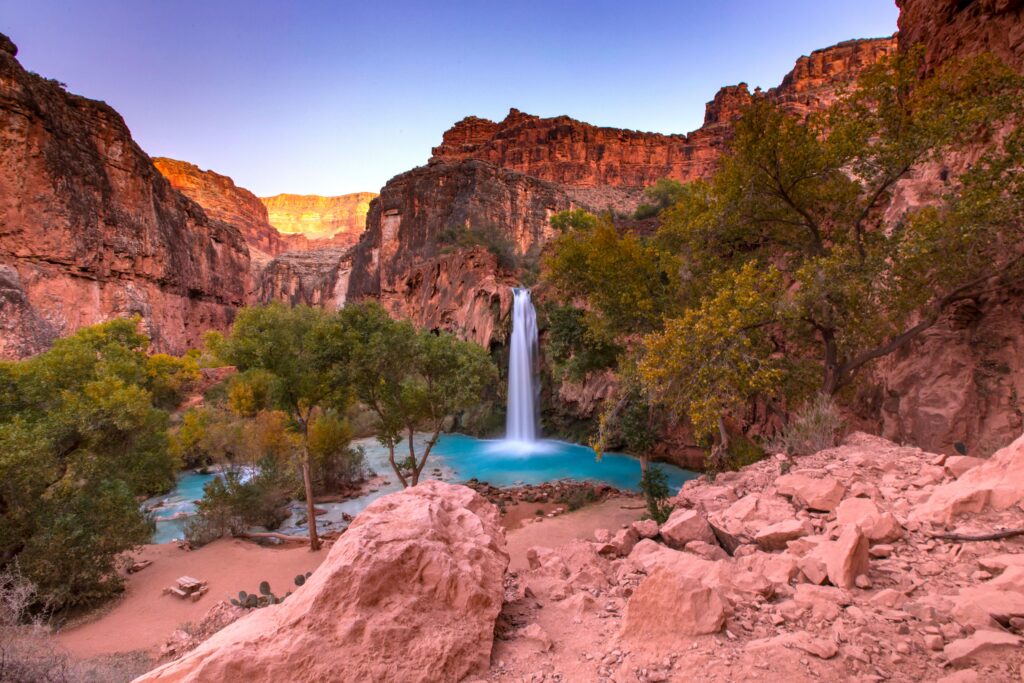
There are places you visit, places you remember, and a few that stay with you long after you’ve packed up your gear and headed home. Havasupai, tucked deep inside the Grand Canyon region of northern Arizona, is one of those places.
Imagine brilliant blue-green water flowing through a rugged red-rock canyon. Waterfalls spill into clear pools, cottonwood trees provide welcome shade, and the desert landscape seems to open up around a hidden oasis. It’s a remarkable contrast to the dry, rocky country above.
I’ve had the opportunity to experience this corner of Arizona three times. My first visit came while rafting the Colorado River through the Grand Canyon, when we made our way into the lower reaches of Havasu Creek. My other two visits were organized hiking and camping trips that began at Hualapai Hilltop and took us down into the canyon.
Each trip offered a different perspective, but the feeling was much the same: this is a truly special place.
And while the waterfalls are spectacular, there’s a much bigger story here—one that belongs to the Havasupai people, whose homeland this has been for generations.
The People of the Blue-Green Water
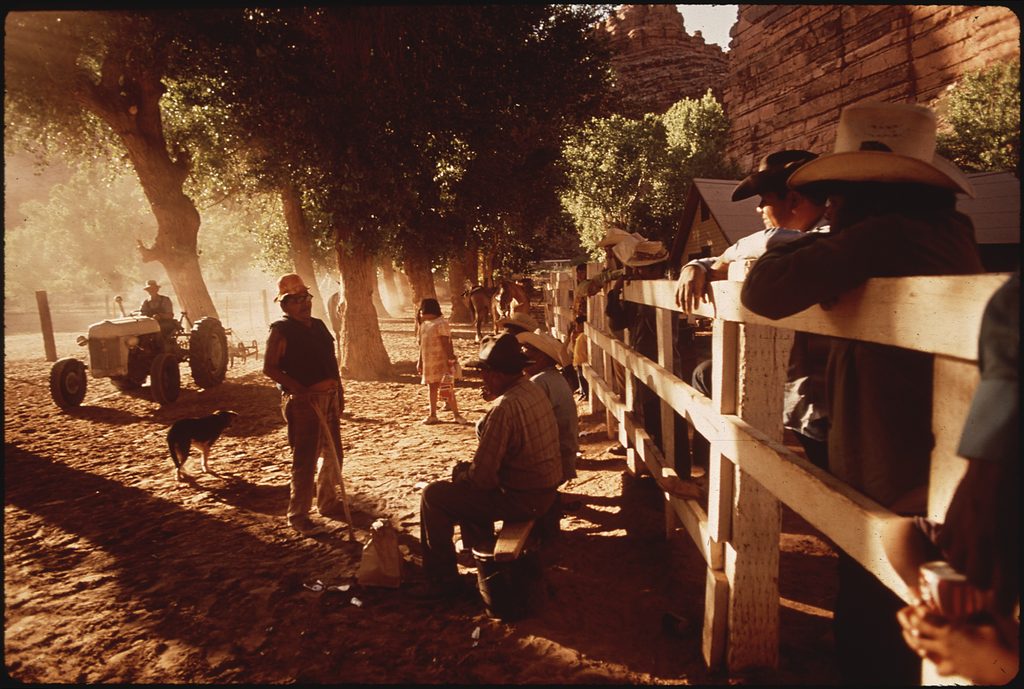
The Havasupai, whose name is commonly translated as the People of the Blue-Green Water, have lived in and around the Grand Canyon for more than a thousand years. Their traditional homeland includes Havasu Canyon and extensive areas of the surrounding plateau.
The relationship between the Havasupai and this landscape is much more than a connection to a beautiful place. The canyon’s water, fertile soil, plants, wildlife, and surrounding high country supported a way of life carefully adapted to the seasons.
Traditionally, Havasupai families moved between two very different environments. During the warmer months, they lived in the canyon, where the dependable water of Havasu Creek made farming possible. Corn, beans, squash, and other crops could be cultivated in the fertile ground. As the seasons changed, families traveled up to the plateau, where hunting and gathering provided additional food and resources.
They also developed skilled traditions of basket weaving and traded with neighboring Indigenous communities.
This seasonal rhythm connected the people to a much larger homeland than the small canyon settlement visitors see today.
A History of Land Loss and Restoration
The history of the Havasupai is also a story of displacement and perseverance.
As American settlement expanded across northern Arizona in the late nineteenth century, pressure on Indigenous lands increased. In 1880, the federal government established a reservation for the Havasupai. Just two years later, its boundaries were dramatically reduced, leaving the Tribe with only about 518 acres around the village of Supai.
Much of the surrounding plateau—land that had supported generations of Havasupai families—was no longer available for them to occupy as before.
The creation and expansion of Grand Canyon National Park added further restrictions. Havasupai families continued to maintain connections to traditional areas, but those relationships were increasingly limited by federal policies. In 1928, Havasupai residents were forcibly removed from the area now known as Havasupai Gardens along the Bright Angel Trail.
The Tribe did not give up its efforts to regain its ancestral lands.
After decades of advocacy, Congress passed the Grand Canyon National Park Enlargement Act. President Gerald Ford signed the legislation on January 3, 1975. The law placed approximately 185,000 acres in trust for the Havasupai Tribe and recognized an additional 95,300 acres within the national park for traditional uses.
It was a significant restoration of land and an important chapter in the Tribe’s continuing history.
Today, the Havasupai Tribe remains a sovereign, federally recognized nation, and the reservation is home to the community of Supai. Visitors who travel into the canyon are entering tribal lands and should approach the experience with respect for the people who live there.
Supai: A Village Deep in the Grand Canyon
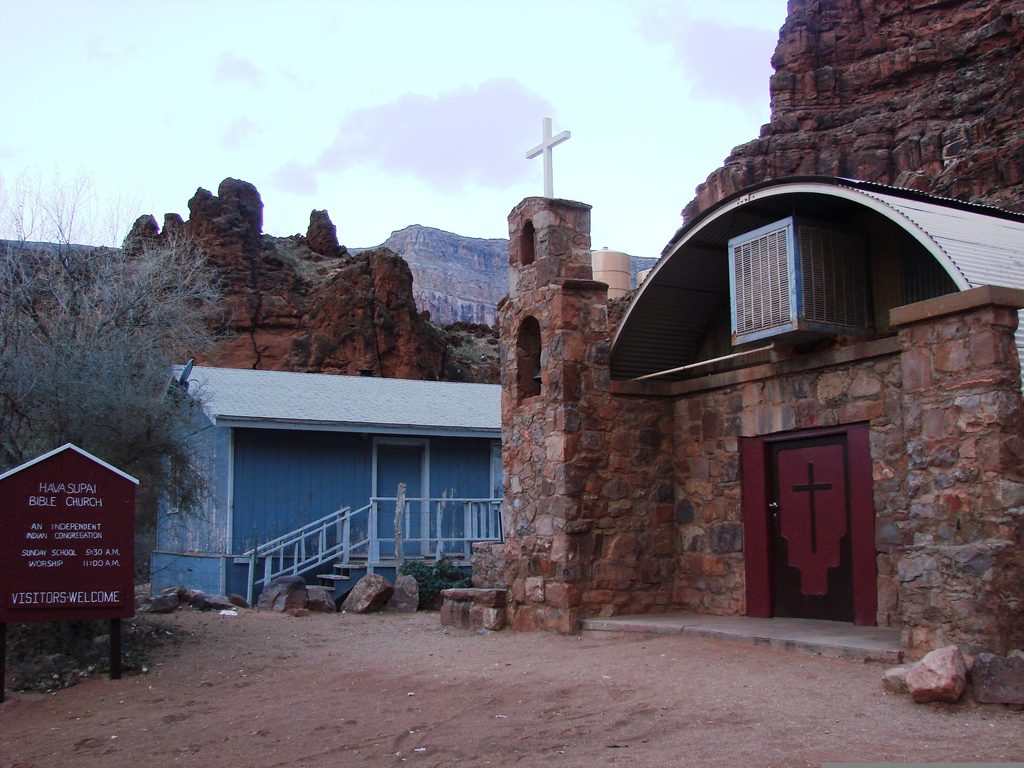
The village of Supai is the administrative and community center of the Havasupai Reservation. It sits deep inside Havasu Canyon, surrounded by steep canyon walls and the greenery sustained by the creek.
One of the things that makes Supai so remarkable is its isolation. There is no road connecting the village to the outside world. Access is by trail, helicopter, or other authorized means.
For most visitors arriving by land, the journey begins at Hualapai Hilltop. From there, the trail descends approximately eight miles to Supai Village. The campground and main waterfall area are another two miles farther down the canyon.
That means reaching the campground involves roughly ten miles of hiking one way—and another ten miles to get back out.
It’s not a casual stroll, but the landscape changes dramatically along the way. The rocky desert terrain gradually gives way to a greener canyon environment, and the sound of flowing water becomes part of the experience.
Supai is not a theme park or a resort town. It is a living community and the home of the Havasupai people. Visitors should respect residents’ privacy, stay on authorized routes, and follow the Tribe’s photography restrictions. The village is a place to pass through respectfully, not a backdrop for tourist photographs.
Havasu Creek: An Unbelievable Shade of Blue
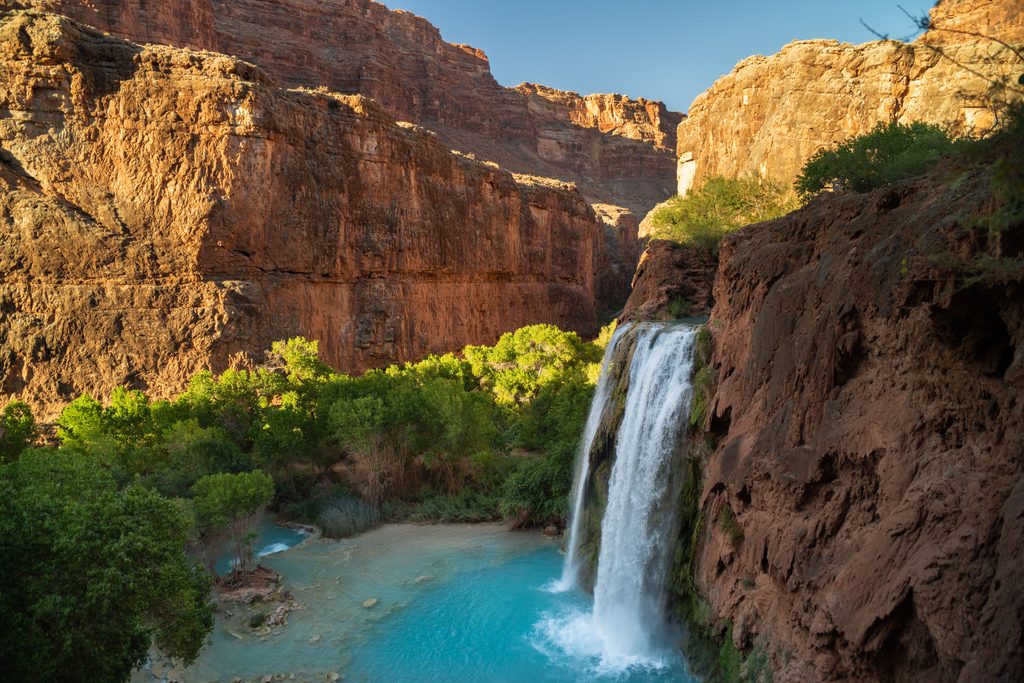
The first thing that catches your attention when you reach Havasu Creek is the water.
It’s an almost unreal shade of turquoise and blue-green, especially against the deep red and brown canyon walls. The water is remarkably clear, and the contrast between the desert surroundings and the lush creek corridor is something you don’t forget.
But there’s a scientific explanation behind the color.
The spring-fed water contains dissolved minerals, including calcium, magnesium, and bicarbonate. As the water flows through the canyon, these minerals contribute to the formation of tufa and travertine—pale mineral deposits that build up along the creek and around its waterfalls.
The mineral-rich water and these formations interact with sunlight to create the distinctive blue-green appearance.
Over time, the deposits have helped shape the creek itself, creating natural terraces, pools, and cascading waterfalls. It’s a beautiful example of geology at work, and the formations continue to change as water flows through the canyon.
The Waterfalls of Havasupai
Havasu Creek is famous for its series of waterfalls, each with its own character and setting.
Little Navajo Falls and Fifty Foot Falls
These waterfalls are among the upper falls along the creek. Their cascades and pools offer a wonderful introduction to the scenery that makes Havasupai so popular. The water moves through a green canyon corridor that feels worlds away from the dry plateau above.
Havasu Falls
This is the waterfall most people recognize. Havasu Falls plunges over a dramatic red-rock ledge into a broad blue-green pool. The contrast of the white falling water, vivid turquoise pool, and surrounding canyon walls makes it one of Arizona’s most recognizable natural landmarks.
It’s easy to understand why photographs of Havasu Falls have captured the imagination of travelers around the world.
Mooney Falls
Farther down the canyon, Mooney Falls makes an impressive appearance. The waterfall drops dramatically into a rugged canyon setting, surrounded by towering rock walls and lush vegetation.
Historically, reaching the lower area involved a steep route with chains, ladders, and exposed sections. Conditions and access can change, so visitors should follow current tribal directions and restrictions rather than relying on old trip reports.
Beaver Falls
Continue farther downstream and you’ll find Beaver Falls, known for its series of cascading pools and travertine formations. The water moves through a landscape of natural terraces, creating a succession of smaller falls and swimming areas.
Beyond the main waterfalls, Havasu Creek continues toward its meeting with the Colorado River. The confluence is another remarkable point in the canyon, where the blue-green creek meets the mighty river flowing through the Grand Canyon.
Three Visits, Three Different Experiences
I’ve been fortunate enough to experience Havasupai in three different ways.
My first visit came during a Colorado River rafting trip through the Grand Canyon. Rather than approaching from the rim, we entered the lower reaches of Havasu Creek from the river. It was a completely different way to experience the canyon, and the contrast between the Colorado River and the blue-green creek was unforgettable.
My other two visits were organized hiking and camping trips. Those journeys began at Hualapai Hilltop, followed the trail down to Supai, and continued toward the waterfalls and campground.
There is something special about earning your way into a place like this. The hike takes effort, the canyon is remote, and once you arrive, the landscape rewards you at every turn.
I remember the crystal-clear water, the beautiful pools, and the fun of getting into the creek. On earlier visits, I also remember a rope swing and opportunities to explore behind the falling water. Those are memories from my trips, not a description of what visitors should expect today. The Tribe’s current rules prohibit jumping from and climbing on waterfalls or canyon walls, and conditions and permitted access can change.
What stands out most is the feeling of being surrounded by such extraordinary natural beauty. It’s a place where you can slow down, appreciate the water, look up at the canyon walls, and realize just how remarkable this landscape really is.
Visiting Havasupai Today: What You Should Know
Havasupai is not a destination where you simply show up and start hiking. The Tribe manages access to its reservation, and visitors must make arrangements in advance.
Here are a few important things to understand before planning a trip:
- Permits and reservations are required. All visitors need an advance reservation through the official Havasupai reservation system. Day hiking is not permitted.
- The hike is substantial. From Hualapai Hilltop, it’s approximately eight miles to Supai Village and another two miles to the campground. Be prepared for a strenuous desert hike.
- The area is remote. There are limited services and no reliable cell service in much of the reservation. Visitors need to bring appropriate supplies and be prepared for changing conditions.
- Flash floods are a real concern. Havasu Canyon can experience dangerous flooding, particularly during monsoon season. Pay attention to weather forecasts, closures, and tribal instructions.
- Respect the community. Supai is the home of the Havasupai people. Follow the Tribe’s rules concerning photography, access, wildlife, and private property.
- Leave no trace. Everything you bring into the canyon must be carried back out. Help protect this remarkable environment for the community and future generations.
The official reservation website and the National Park Service are the best places to check current access information, reservations, and safety notices before making plans.
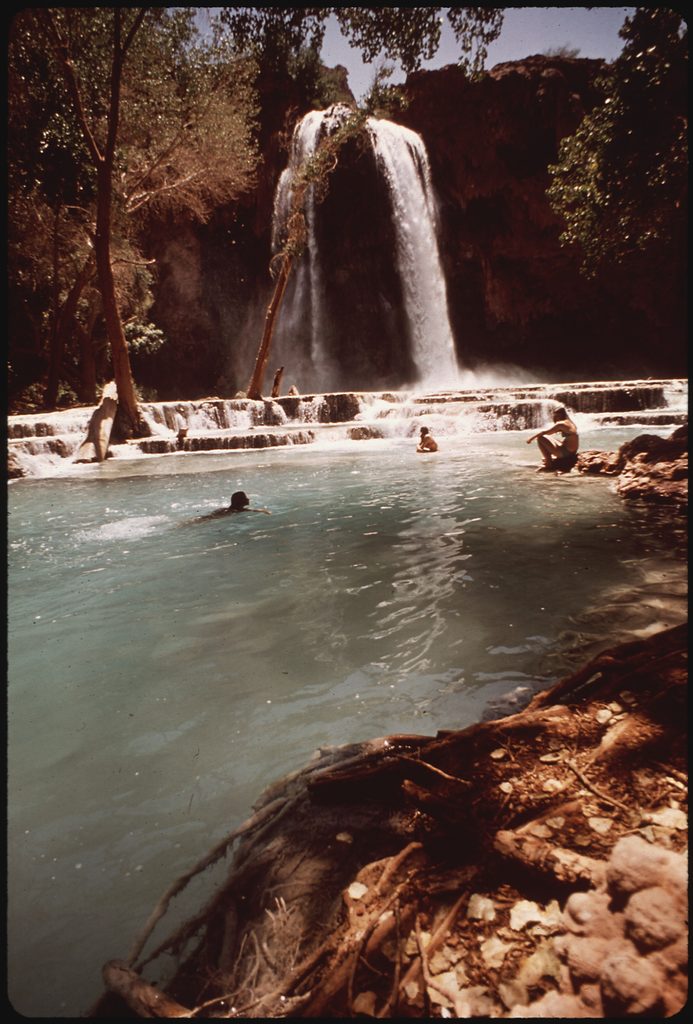
Photo of Havasu Falls in Havasu Canyon, Arizona, photographed in May 1972.A Place Worth Remembering
Havasupai is one of those rare destinations where natural beauty and human history are inseparable.
The waterfalls are spectacular. The blue-green water is unlike anything you expect to find in the Arizona desert. The canyon is peaceful, dramatic, and full of surprises. But the story of the Havasupai people gives this place a meaning that goes well beyond its scenery.
After three visits, I can say that the experience stays with you. Whether arriving from the Colorado River or hiking down from Hualapai Hilltop, Havasupai offers a perspective on the Grand Canyon that is entirely its own.
It’s a reminder that some of the most extraordinary places aren’t just destinations to check off a list. They’re places to learn about, appreciate, and respect.
Live the Life Less Traveled. Stay Curious.