
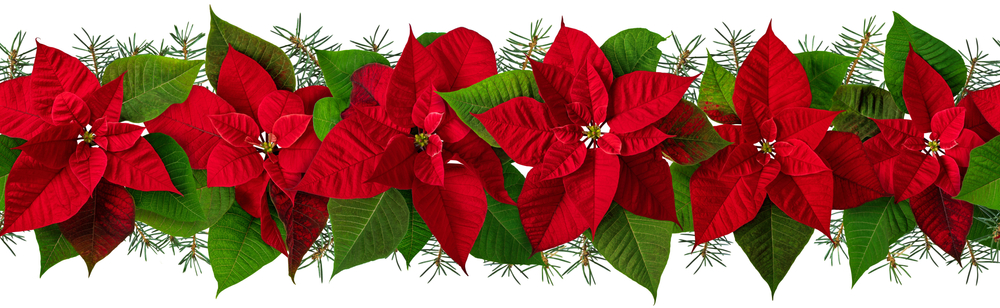
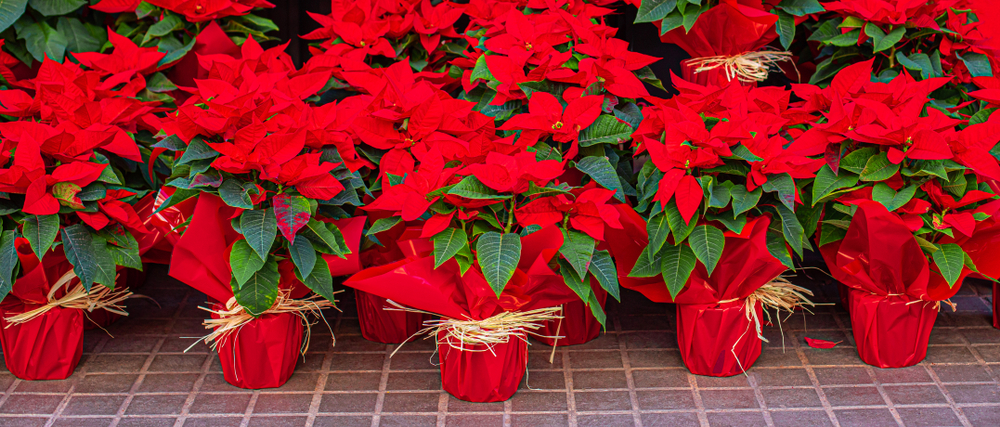
Every December, they seem to appear everywhere: on front porches, in store windows, decorating church altars, and adding a splash of red and green to homes for the holidays. The poinsettia has become one of the most recognizable symbols of Christmas. But its story began long before it became a familiar holiday decoration in the United States.
Known in Mexico as the flor de Nochebuena, or Christmas Eve flower, the poinsettia has roots in Indigenous Mexican culture, a charming Christmas legend, and an interesting connection to the early relationship between Mexico and the United States. Its journey from a native Mexican plant to an international holiday favorite is quite a story!
Before Christmas: The Poinsettia’s Mexican Roots
The poinsettia, botanically known as Euphorbia pulcherrima, is native to southern Mexico and parts of Central America. Long before Europeans arrived in the Americas, the Aztecs cultivated this striking plant, which they called cuetlaxochitl.
Rather than being an unwanted weed, the plant was valued for its practical and cultural uses. Its colorful parts were used to produce a reddish-purple dye for textiles, while its milky white sap, known as latex, was used in traditional remedies for treating fevers.
And here’s something many people don’t realize: the poinsettia isn’t actually a flower in the way most of us imagine it.
Those brilliant red, pink, or white displays are modified leaves called bracts. The plant’s true flowers are the much smaller yellowish structures clustered in the center of the colorful bracts. What we commonly call the poinsettia flower is really a spectacular arrangement of leaves!
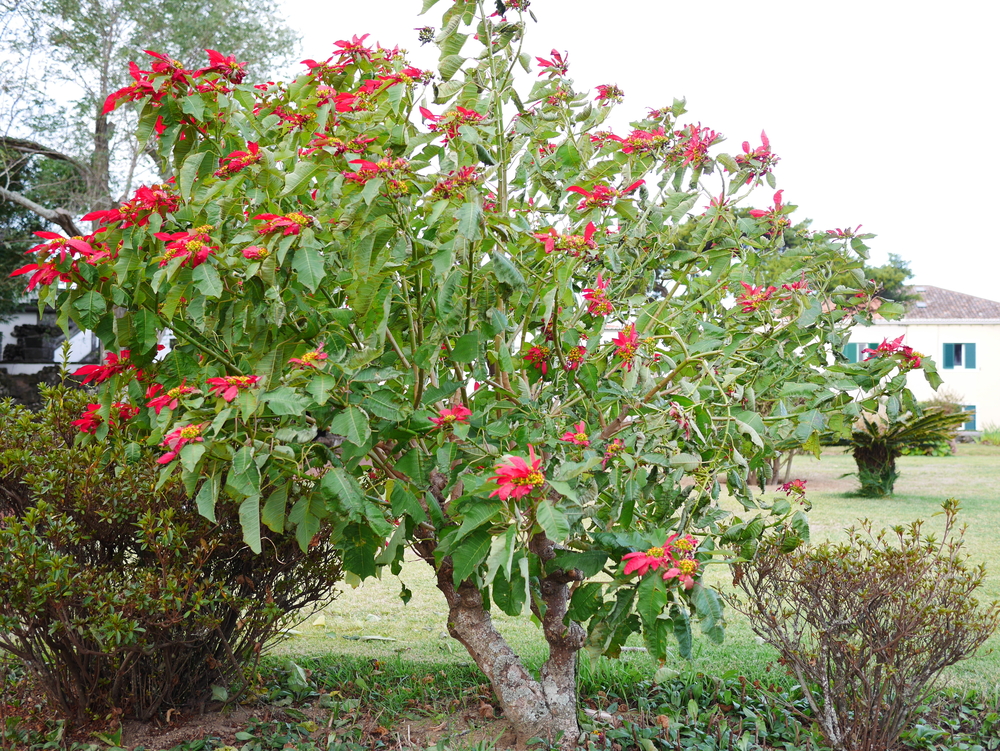
In its natural environment, the poinsettia is also much larger than the familiar potted plants we bring home for Christmas. It grows as a woody shrub or small tree and can reach heights of 10 to 15 feet under favorable conditions.
The Mexican Legend of the Nochebuena Miracle
So how did this native Mexican plant become associated with Christmas?
One popular Mexican legend offers a heartwarming explanation.
The story tells of a poor young girl named Pepita who wanted to bring a gift to the baby Jesus during a Christmas Eve church service. Unfortunately, she had no money and nothing special to offer.
On her way to church, Pepita gathered a humble bundle of roadside plants and weeds. She was embarrassed by her simple offering, but her cousin reminded her that a gift given with love was more important than its value.
When Pepita placed her little bouquet before the nativity scene, the humble plants miraculously blossomed into brilliant red flowers.
According to the legend, this miracle gave the poinsettia its special place in Christmas celebrations and helped establish its association with the name flor de Nochebuena, meaning Christmas Eve flower.
It’s a lovely story, although it is folklore rather than a documented historical event.
There is, however, a historical connection between the poinsettia and Christmas. During the 17th century, Franciscan friars near Taxco, Mexico, began incorporating the plant into religious celebrations and nativity processions. Because the poinsettia naturally displays its colorful bracts during the winter season, it was a natural addition to Christmas traditions.
Over time, the plant became closely associated with the holiday throughout Mexico and other parts of Central America.
Its appearance also inspired Christian symbolism. The star-shaped arrangement of the bracts is sometimes compared to the Star of Bethlehem, while the traditional red color is associated with the blood of Christ. White varieties are often interpreted as symbols of purity.
These interpretations are part of the plant’s later Christian symbolism, adding another layer to its fascinating history.
How the Poinsettia Got Its Name in the United States
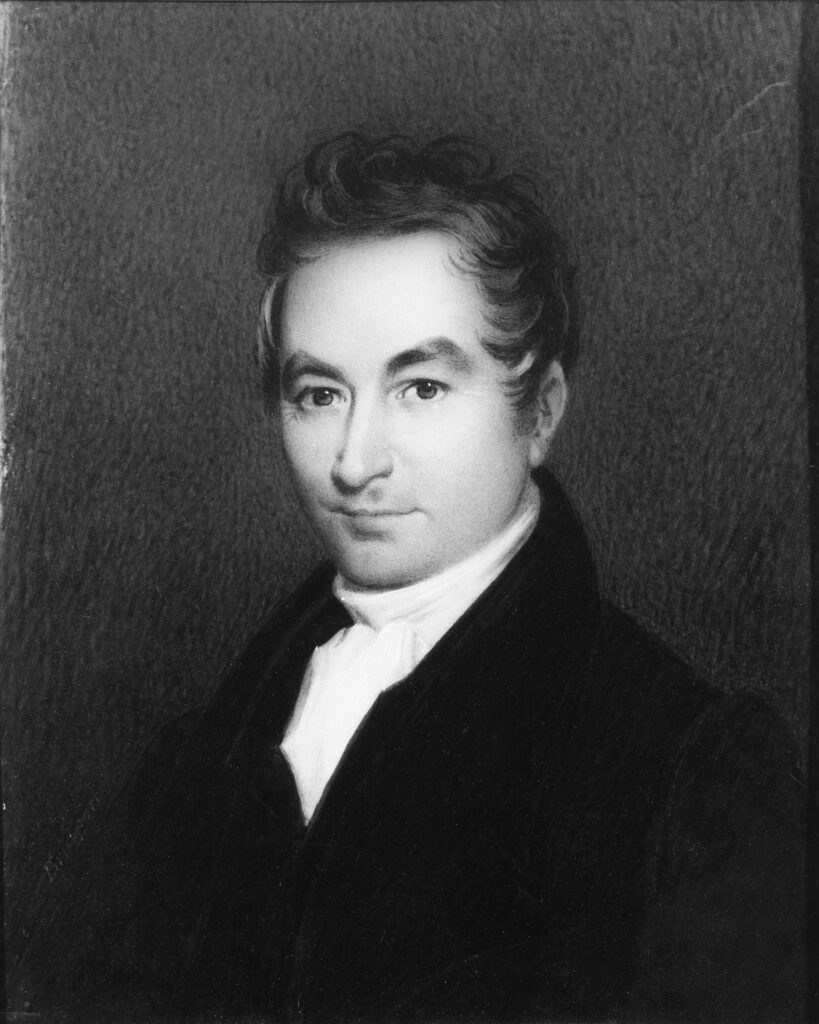
The poinsettia’s journey into American homes began in the 1820s with a man named Joel Roberts Poinsett.
Poinsett was appointed the first United States minister to Mexico in 1825. He was also a physician, politician, and enthusiastic amateur botanist.
While serving in Mexico, Poinsett encountered the striking red-leaved plant and became fascinated by its appearance. He arranged to send cuttings back to his greenhouses in South Carolina, where he began cultivating and sharing the plants with other horticulturists and botanical gardens.
The plant eventually became known in the United States as the poinsettia, named in his honor.
Its botanical name, Euphorbia pulcherrima, means something along the lines of “the most beautiful Euphorbia.” Considering its colorful winter display, that’s a pretty fitting description!
Poinsett died on December 12, 1851. Today, December 12 is also recognized as National Poinsettia Day in the United States, although the modern observance was established in 2002 to honor another important figure in the plant’s history: Paul Ecke Jr.
The Ecke Family: Turning a Plant Into a Christmas Tradition
Although the poinsettia had made its way into the United States during the 19th century, it took the efforts of one California family to turn it into the Christmas decoration we recognize today.
That family was the Eckes.
Albert Ecke began growing poinsettias in the Los Angeles area in the early 1900s. The family initially sold the plants as cut flowers, including from roadside stands. In 1923, the operation moved south to Encinitas, California, where the Ecke family continued developing its poinsettia business.
The real transformation came under Albert’s son, Paul Ecke Jr., who took over leadership of the business in 1963.
Paul Jr. understood that growing a beautiful plant was only part of the equation. People also needed to see it, recognize it, and associate it with the holiday season.
His marketing approach was clever. He sent poinsettias to television personalities and popular programs, including Johnny Carson’s The Tonight Show, Bob Hope’s Christmas specials, and other television broadcasts. He also worked with women’s magazines to feature poinsettias in Christmas decorations and holiday photo spreads.
Suddenly, the poinsettia wasn’t just a plant that happened to bloom during winter. It was becoming part of the Christmas decorating tradition.
The family business also helped improve the plants themselves, developing varieties better suited to greenhouse production, shipping, and display in homes.
The Ecke Ranch eventually became one of the most influential names in the poinsettia industry. After generations of family ownership, the business was sold in 2012 to the Dutch-based Agribio Group.
The family’s influence on the popularity of the poinsettia remains an important part of its American story.

December 12: National Poinsettia Day
Every year on December 12, Americans have another reason to appreciate this colorful holiday plant.
National Poinsettia Day was established in 2002 in honor of Paul Ecke Jr., who passed away that year. The date also happens to coincide with the anniversary of Joel Roberts Poinsett’s death in 1851, connecting the two men who played such important roles in bringing the poinsettia into American life.
It’s an interesting coincidence—and a fitting day to celebrate a plant with such a remarkable history.
From Mexico to Christmas Celebrations Around the World
Today, poinsettias are grown in a wide range of colors, including traditional red, white, pink, cream, and variegated varieties. While red remains the classic holiday favorite, modern cultivation has given us plenty of choices.
They have traveled a long way from their origins in Mexico, where Indigenous communities valued the plant long before it became associated with Christmas.
From traditional uses for dye and medicine, to a Christmas Eve legend, to the entrepreneurial efforts of the Ecke family, the poinsettia’s journey is a wonderful example of how plants can become part of our cultural traditions.
So the next time you see a bright red poinsettia decorating a home, church, or holiday gathering, remember that you’re looking at more than a pretty seasonal plant. You’re seeing a little piece of Mexican history, a touch of Christmas folklore, and a story that connects two countries across generations.
Live the Life Less Traveled. Stay Curious.