
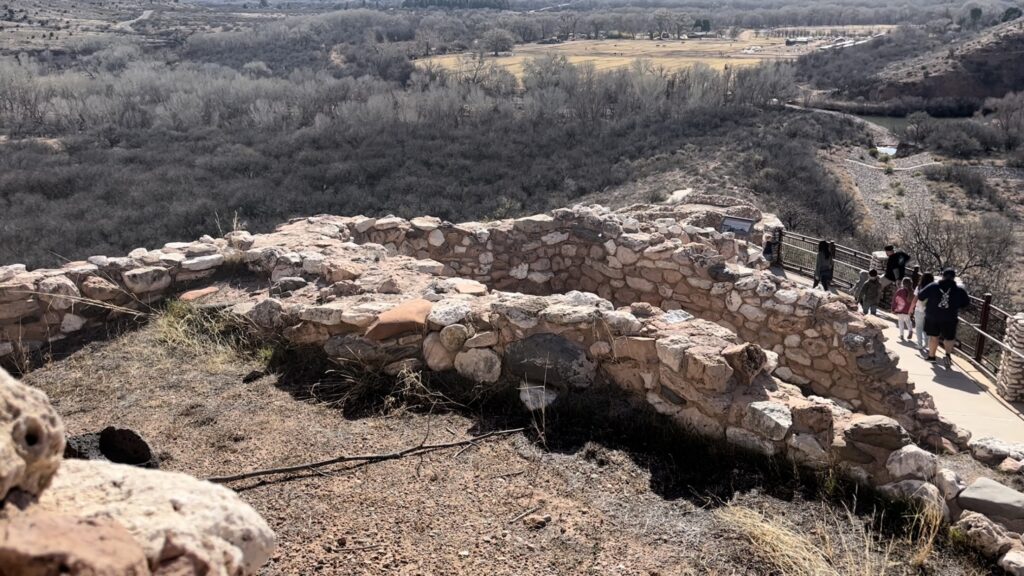
The Sinagua people started to build in the Verde Valley around 1000 AD. Over time the pueblo reportedly grew to 110 rooms include two story and three-story structures. Sinagua, which means “without water” in Spanish, were farmers and artists.
Sometime around 1450 AD the Sinagua the area, some think it was because of overcrowding in the valley. The pueblo remained empty until the early 1930s when archeologist, funded by the WPA rediscovered and began excavating the ruins.
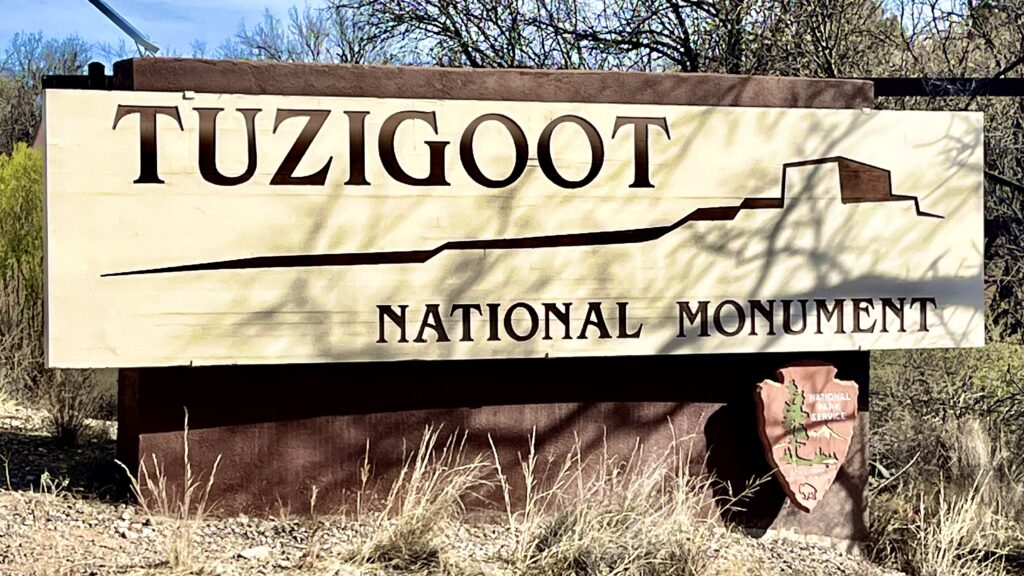
The site was given the name Tuzigoot by one of the first excavators, which means “crooked water” in Apache. The pueblo officially became the Tuzigoot National Monument when Franklin D. Roosevelt designated the site on July 25th, 1939.
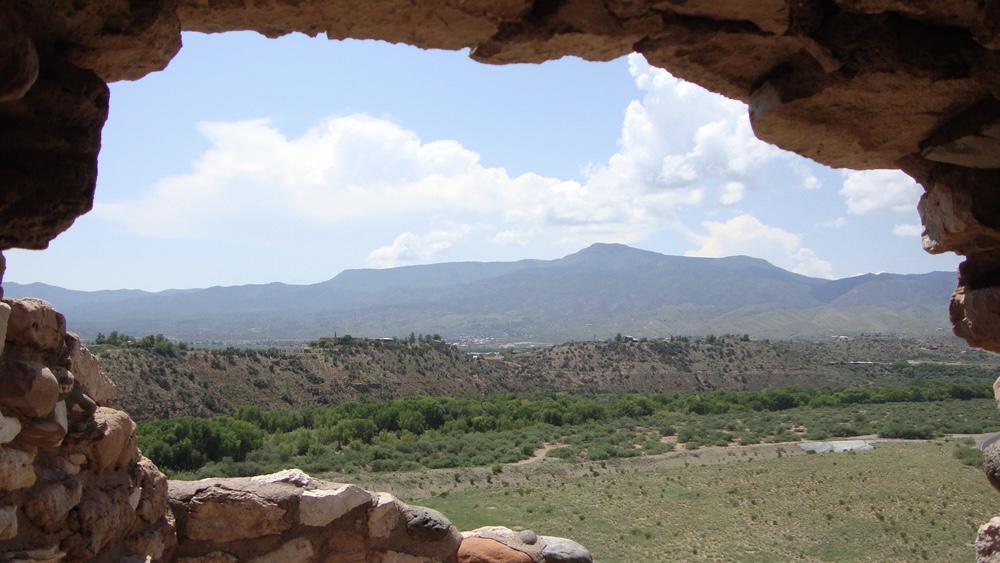
Tuzigoot was built on a limestone and sandstone ridge just east of what is now Clarkdale, Arizona. It is just above the flood zone of the Verde Valley.
The Hohokam and the Northern Sinagua also lived in the valley and greatly influenced the Sinagua. The Hohokam were well known as excellent farmers and built irrigation canals to support their communities.
Around the time that the Sinagua were settling in the Verde Valley, two other well-known pueblos, Montezuma Castle and Montezuma Well, were becoming inhabited.
Due to the similarity in construction methods, many historians believe that these groups knew each other and shared skills and information. There were established trails between the varying groups which also allowed for trade and united defense.
A few interesting facts:
- During Excavation, 429 sets of human remains were discovered – mostly found buried in the hillside with a few personal remains
- Rather than doors, most of the entrances to the rooms were by means of hatchways through the roofs.
- The interior walls were all covered by red-colored mud/plaster an inch or more in thickness.
Curious Perro – Live The Life Less Traveled. Stay Curious!