
Bisbee, Arizona, is a town with a fascinating past. Its copper-mining heritage, historic buildings, hillside neighborhoods, and colorful downtown attract visitors interested in exploring one of the Southwest’s best-known mining communities.
But behind the picturesque streets and stories of mining fortunes is a much darker chapter.
On July 12, 1917, more than a thousand men were rounded up in the Bisbee area, marched under armed guard, loaded into railroad cars, and transported approximately 200 miles into New Mexico. They were abandoned in the desert near Hermanas, far from their homes, families, and livelihoods.
The event became known as the Bisbee Deportation of 1917. It remains one of the most controversial episodes in Arizona history and an important chapter in the story of American labor.
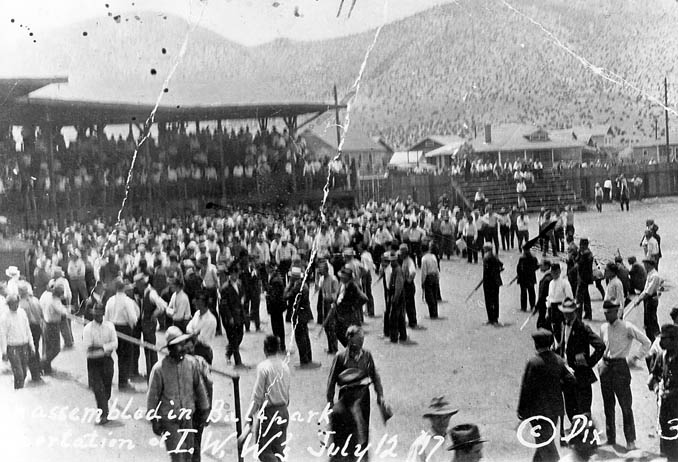
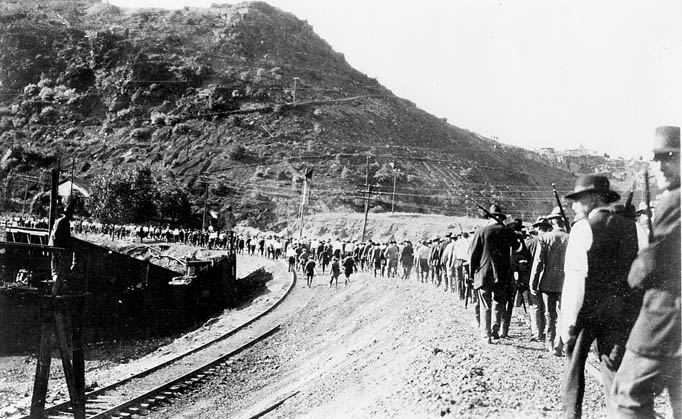
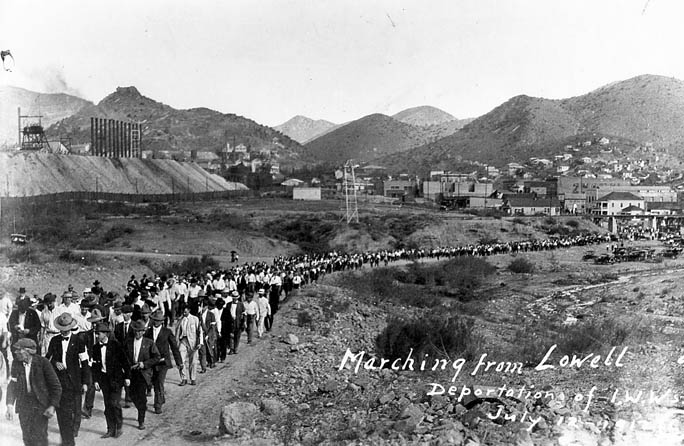
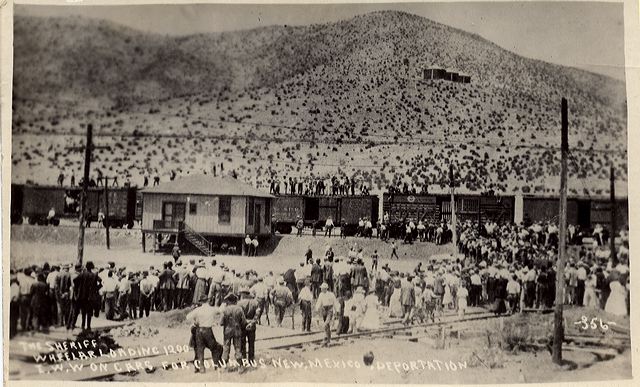
The photographs from that day are especially powerful. They show men gathered at Warren Ballpark, armed guards accompanying the roundup, long lines of deportees moving through the mining district, and the train that carried them away.
These images offer a remarkable visual record of an event that deserves to be remembered.
Bisbee and the Copper Boom
By the early twentieth century, Bisbee had become one of the most important copper-mining communities in the United States.
The discovery of rich copper deposits in the Mule Mountains during the late nineteenth century transformed the small mining settlement into a thriving industrial center. The Copper Queen Mine, operated by the Phelps Dodge Corporation, became one of the region’s major producers. Other mining companies, including the Calumet and Arizona Mining Company, also operated in the district.
Copper was essential to the growing electrical industry, manufacturing, transportation, and military production. When the United States entered World War I in 1917, demand for copper increased dramatically.
Mining operations worked around the clock to meet production needs. The industry was booming, but the men working underground faced difficult and often dangerous conditions.
Miners came to Bisbee from many parts of the world. Immigrants from Mexico, Greece, Finland, Serbia, and other countries joined workers from across the United States. They brought different languages, traditions, and experiences to a community shaped by the demands of the mines.
For many, Bisbee represented an opportunity to earn a living. But the work could be hazardous, and disagreements over wages, safety, and working conditions were becoming increasingly serious.
The Strike and the Workers’ Demands
The Industrial Workers of the World, commonly known as the IWW or the Wobblies, had been organizing workers in mining communities throughout the American West.
In June 1917, representatives of the IWW in Bisbee presented mining companies with a list of demands. These included improvements to underground safety, a more predictable wage system, and an end to discrimination against workers because of their union membership or background.
Some of the grievances concerned the use of physical examinations and employment practices that workers believed could be used to blacklist individuals. Other demands addressed staffing on mining equipment, blasting during working shifts, and the use of bonus and contract wage systems.
The companies rejected the demands.
On June 27, 1917, a strike began at major mining operations in the Bisbee district. Approximately half of the miners stopped working, although the exact participation varied among the mines and shifts.
The strike took place during wartime, when copper production was considered essential to the nation’s industrial and military needs.
Tensions quickly increased. Mining interests and many local business leaders viewed the IWW as a threat to production and community stability. Rumors of sabotage and fears of disloyalty added to an already volatile situation.
Rather than resolving the dispute through negotiations, the conflict moved toward a confrontation that would change Bisbee forever.
July 12, 1917: The Roundup Begins
In the early morning hours of July 12, Cochise County Sheriff Harry C. Wheeler led a large posse of deputized men through Bisbee and surrounding communities.
Approximately 2,000 men had assembled for the operation. Armed members of the posse rounded up suspected strikers, union members, and others considered sympathetic to the labor movement.
The operation was not limited to active striking miners. The University of Arizona’s historical records note that some of the 1,186 men ultimately deported were not even mine workers.
Men were taken from homes, boardinghouses, and other locations throughout the district. They were marched under guard to Warren Ballpark, where they were assembled before being loaded onto railroad cars.
The photographs taken that day preserve the extraordinary scale of the operation.
Warren Ballpark
One of the most striking photographs shows hundreds of men gathered inside Warren Ballpark. Armed guards can be seen around the assembly area.
The ballpark, normally associated with recreation and community activities, had become a holding area for men who were about to be forcibly removed from their homes.
The photograph provides a sobering view of the scale of the roundup. These were individuals with families, jobs, and lives in Bisbee. In a matter of hours, they were being separated from the community in which they lived and worked.
The March from Lowell
Another photograph, titled Marching from Lowell, shows a long procession of men moving along a road through the mining landscape.
Lowell was a mining community adjoining Bisbee and is now part of the larger Bisbee area. The photograph captures the scale of the deportation against a backdrop of industrial buildings and the surrounding Mule Mountains.
The men were escorted by armed members of the posse. The image is a powerful reminder that this was not a voluntary departure or an ordinary transfer of workers.
The Train to New Mexico
After the roundup, 1,186 men were loaded into railroad cars and transported east.
The train traveled approximately 200 miles before stopping near Hermanas, New Mexico. There, the deportees were left in the desert without adequate shelter.
Another railroad car eventually brought food and water. Federal troops arrived two days later and provided assistance and shelter, eventually escorting the men to Columbus, New Mexico.
The men had been removed from Bisbee, but their ordeal was not over. They faced uncertainty about their future, their employment, and whether they would ever be allowed to return home.
The Aftermath and the Search for Accountability
The deportation attracted national attention and prompted a federal investigation.
President Woodrow Wilson established a Mediation Commission to investigate the incident and the labor conditions that had led to it.
The commission’s findings were significant. It placed responsibility for the deportation on the mining companies and criticized the actions taken against the workers. However, it also concluded that existing federal law did not provide a basis for prosecuting those responsible and referred the matter to Arizona authorities.
The state took no criminal action against the mining companies or the vigilantes involved.
Lawsuits followed. Some claims brought by deportees against the mining companies were settled out of court. Most cases against individual members of the posse were dismissed, and the one case that went to trial resulted in a not-guilty verdict.
As a result, the men who had been forcibly removed from their homes never saw meaningful criminal accountability for the events of July 12.
The deportation also had a lasting effect on labor organizing in Arizona and became an important example in the national debate over workers’ rights, corporate power, and civil liberties.
Remembering the People Behind the Photographs
The photographs of the Bisbee Deportation are more than historical curiosities. They are a visual record of people caught in a conflict that extended far beyond the walls of the mines.
Some were union members. Some were striking miners. Others were simply suspected of supporting the workers or opposing the mining companies.
They came from different backgrounds and countries, but on July 12, 1917, they shared the same experience: being rounded up and forced away from the place they called home.
Today, Bisbee is known for its historic character, mining heritage, and welcoming atmosphere. Visitors can explore its old downtown, learn about the copper industry, and discover the stories that shaped southeastern Arizona.
But understanding Bisbee’s history also means remembering the difficult chapters.
The Bisbee Deportation reminds us that the history of a place is never just about its buildings, businesses, or industries. It is also about the people who lived there, the struggles they faced, and the decisions that shaped their lives.
Sometimes the most important stories are the ones that challenge us to look beyond the familiar image of a destination.
Historical photographs by George C. Dix, documenting the Bisbee Deportation, July 12, 1917.
That’s part of the journey of discovery—and another reason to stay curious.
Live the Life Less Traveled. Stay Curious.