
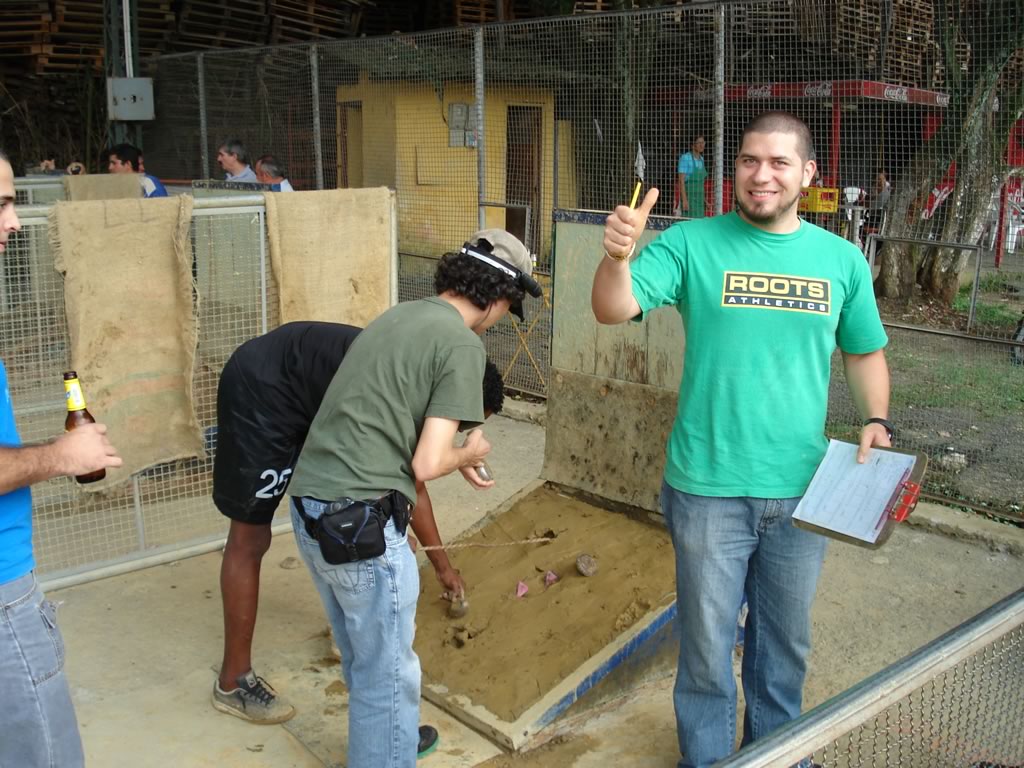
Some sports require expensive equipment, perfectly manicured fields, and a rulebook thicker than a phone book.
And then there’s tejo.
You take a heavy metal disk, throw it toward a clay-covered target, and try to make little gunpowder packets explode.
Yep. You read that correctly!
Welcome to the world of Colombian tejo, one of the country’s most distinctive sporting traditions—and something I’ve been curious to learn more about.
🏺 A Game With Ancient Roots
Tejo is also known as turmequé, a name connected to the town of Turmequé in the Colombian department of Boyacá.
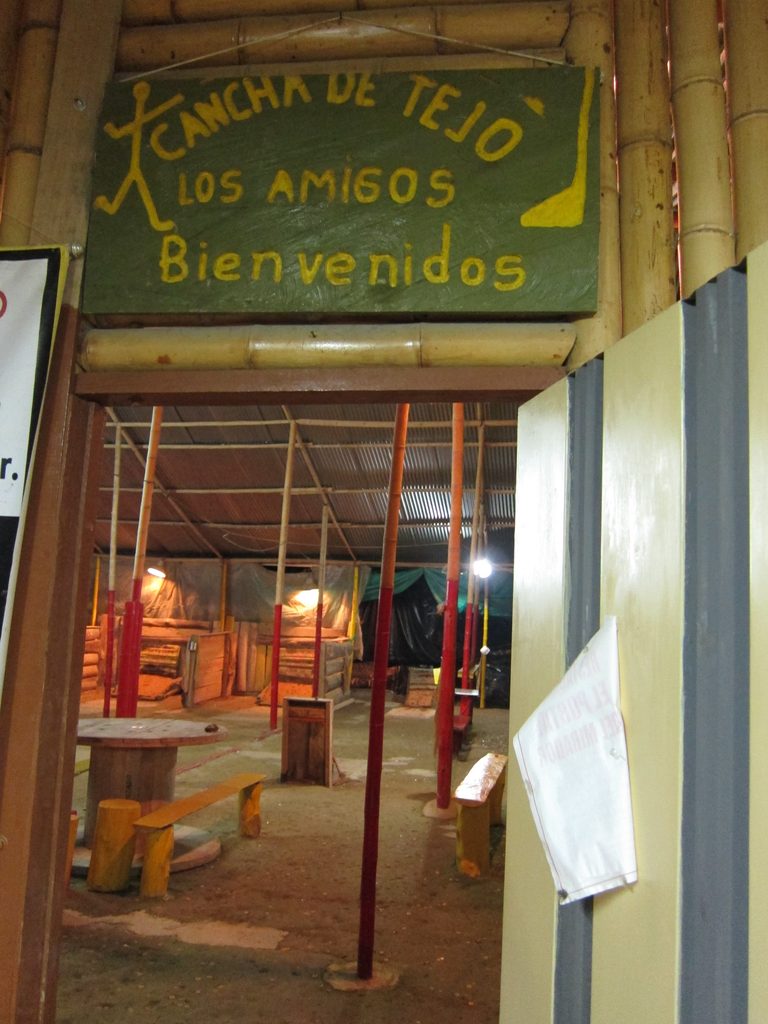
Its roots reach back centuries to the Indigenous Muisca people of the Andean region. Historical accounts describe an ancestral throwing game that evolved over time into the modern sport played throughout Colombia today. The original game and today’s version aren’t identical, but the connection to Indigenous tradition remains an important part of tejo’s story.
In 2000, Colombia officially recognized tejo as a national sport. In 2019, the country also declared the game an element of its intangible cultural heritage.
That’s a pretty impressive legacy for a sport involving a metal disk and a little gunpowder!
🎯 How Do You Play?
The basic idea sounds simple. Mastering it is another story!
Players throw a heavy metal disk called a tejo toward a clay-filled target at the opposite end of the court.
The target has a metal ring called the bocín, surrounded by small triangular packets of gunpowder known as mechas.
Hit a mecha just right, and you’ll hear a satisfying BANG!
But explosive sound effects aren’t the only way to score.
Here’s the basic scoring system:
💥 Mecha — 3 points: Hit a gunpowder packet and make it explode.
🎯 Embocinada — 6 points: Land the tejo correctly inside the metal ring.
🔥 Moñona — 9 points: Score inside the ring and explode a mecha with the same throw.
🏆 Mano — 1 point: Have the tejo closest to the ring when the round is decided, provided a higher-scoring play hasn’t taken precedence.
Official matches commonly use a 27-point target, although the format can vary by competition.
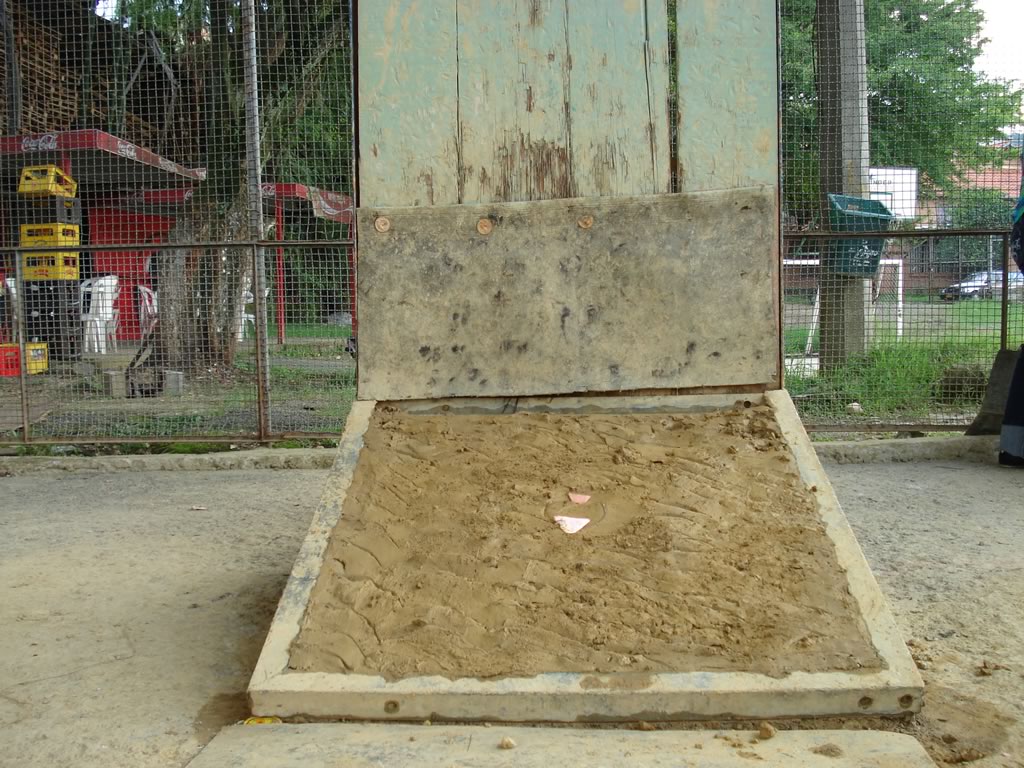
And here’s the catch: you can’t simply throw the disk as hard as possible and hope for the best. Accuracy, technique, and a feel for the target matter.
🍻 More Than a Sport
Tejo is also a social tradition.
Across Colombia, tejo courts bring together friends, families, coworkers, and competitors. In many places, the game is associated with cold beer, conversation, laughter, and a little friendly rivalry.
It’s not just about who can throw the best.
It’s about spending time together.
And that’s one of the things I love discovering when I travel. A traditional game can tell you something about how people socialize, celebrate, and connect with their communities.
🐾 Now It’s My Turn to Get Curious!
I’ve seen tejo in Colombia, and I’ve become increasingly interested in learning how to play. But I haven’t stepped up to the throwing line just yet.
So I’m turning to those of you who know this game better than I do.
Have you played tejo?
Where did you learn? What’s the secret to a good throw? Is there a particular tejo court you’d recommend visiting in Colombia? And for someone trying it for the first time, what should I know before picking up that metal disk?
I’d especially love to hear from Colombians who grew up playing the game and from anyone who knows its history in Boyacá and beyond.
Maybe the next chapter of this Curious Perro adventure will involve learning to play tejo myself.
I suspect it may take a few throws before I hear that first satisfying BANG!
And if I miss the target completely?
Well, that could make for an interesting video, too. 😂
Live the Life Less Traveled. Stay Curious. 🐾🇨🇴
Featured Image = Juego De Tejo en Envigado by Luis Pérez from Medellin, Colombia, CC BY 2.0 https: creativecommons.org licenses by 2.0, via Wikimedia Commons
Second Photo = Tejo entrada fabulousfabs, CC BY 2.0 http: screativecommons.org licenses by 2.0, via Wikimedia Commons
Third Photo = Tejo Cancha Flickr User luis perez, CC BY 2.0 https: creativecommons.org licenses by 2.0, via Wikimedia Commons