
Mention “black velvet painting” today and many people immediately think of Elvis, dogs playing poker, or colorful paintings hanging in roadside shops.
But there was a time when black velvet was something very different.
From the 1930s through the postwar era, artists working in Hawaii and the South Pacific transformed velvet into a distinctive and technically demanding art form. Among the most important names were Edgar Leeteg and Ralph Burke Tyree, artists whose work helped define the romantic visual image of the South Seas for American audiences.
And the key to their work was the velvet itself.
Painting on black velvet was anything but easy. The fabric’s dense pile could absorb paint and ruin a brushstroke. Instead of simply painting shadows, artists could use the deep black of the velvet as the darkest part of the image, carefully brushing color onto the raised fibers to make faces, flowers, landscapes and tropical scenes appear to glow from the darkness.
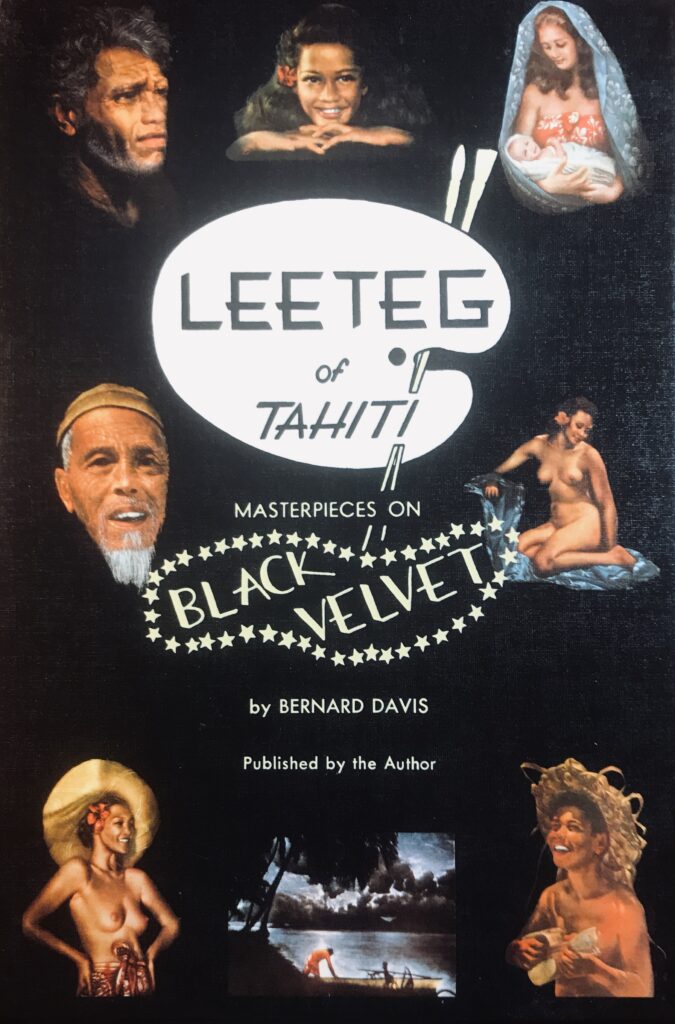
Edgar Leeteg became the best-known pioneer of the style. A former sign painter, Leeteg moved to Tahiti in 1933 and eventually made the islands his home. His paintings of Polynesian women and tropical life became enormously popular with visitors and collectors. Honolulu art dealer Barney Davis helped promote his work and famously marketed Leeteg as the “American Gauguin.” His paintings eventually sold for thousands of dollars.
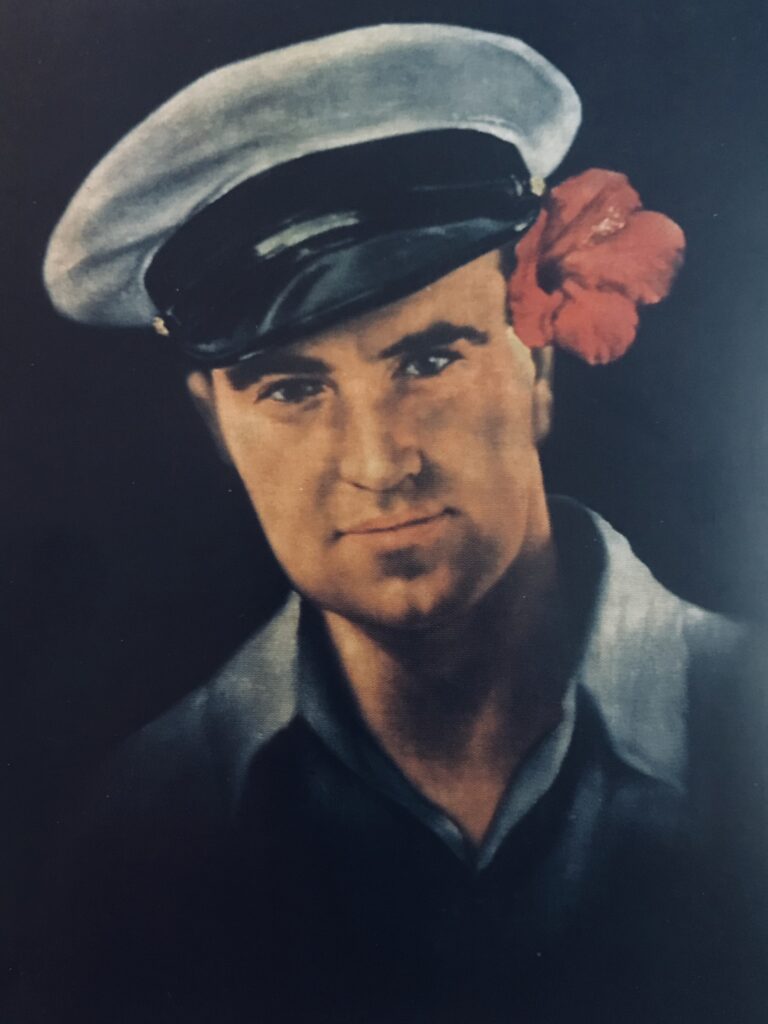
Another important figure was Ralph Burke Tyree, a U.S. Marine veteran whose wartime experience in the Pacific inspired a lifelong fascination with the islands. His paintings expanded beyond portraits into dramatic tropical landscapes and scenes of South Pacific life.
Then came Joy Caros, a Canadian artist who became part of the later history of the medium. After encountering Leeteg’s work in Hawaii, Caros was hired by Barney Davis to retouch some of Leeteg’s paintings and developed her own successful career painting on velvet. In 1964, she even created a famous velvet portrait of The Beatles.
Eventually, mass production and the rise of inexpensive commercial velvet paintings changed the public perception of the medium. By the 1970s, the sophisticated South Seas paintings of an earlier generation had largely been overshadowed by the kitsch that made “black velvet” a punchline.

But look closely at an original Leeteg or Tyree.
The black isn’t simply a background.
It’s part of the painting.
The darkness becomes the shadow, while carefully applied color creates the light—and that is what gives these works their remarkable glow.
That’s what I find fascinating about historic art.
Sometimes a medium that has become associated with kitsch has a much more interesting story hiding underneath.
Before there was Velvet Elvis, there was Leeteg of Tahiti.
And that’s definitely something worth getting curious about.
🐾 Curious Perro — Stay Curious.