
Some buildings tell you what a city used to be. Others remind you how much history a city has lived through. In Austin, Texas, few places do both quite like the Driskill Hotel.
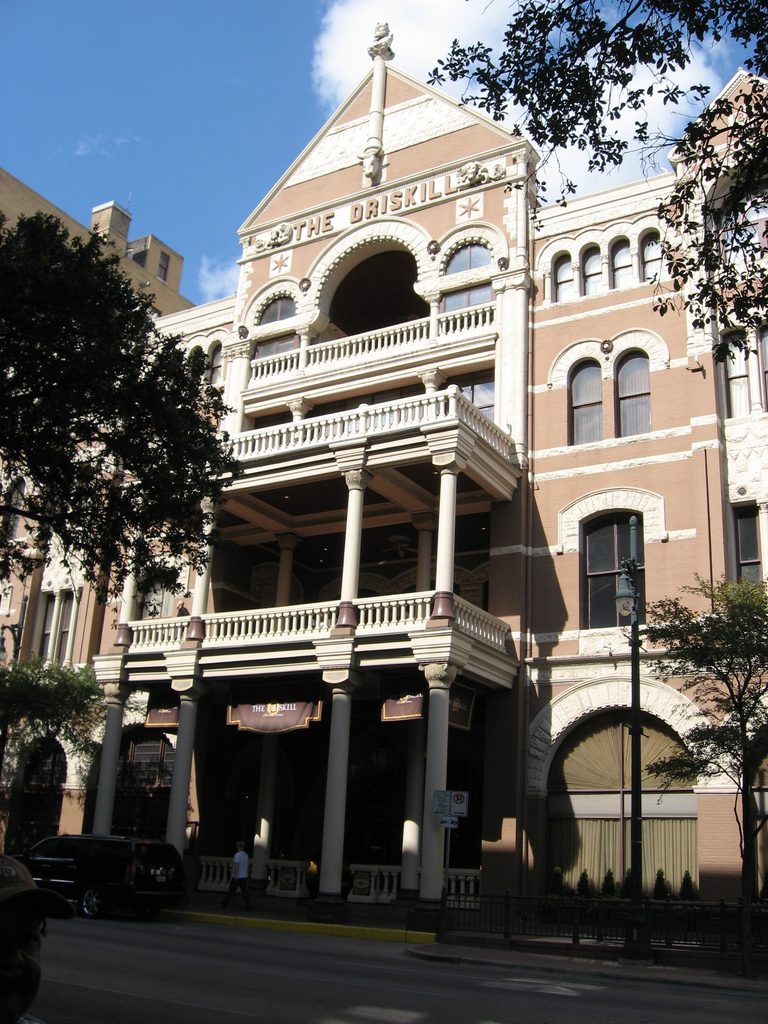
Standing at the corner of East Sixth and Brazos streets, the Driskill has welcomed cattle barons, politicians, business leaders, travelers, and curious visitors since 1886. Its grand stone-and-brick exterior, elaborate interior, and unmistakable old-Texas character make it one of downtown Austin’s most recognizable historic landmarks.
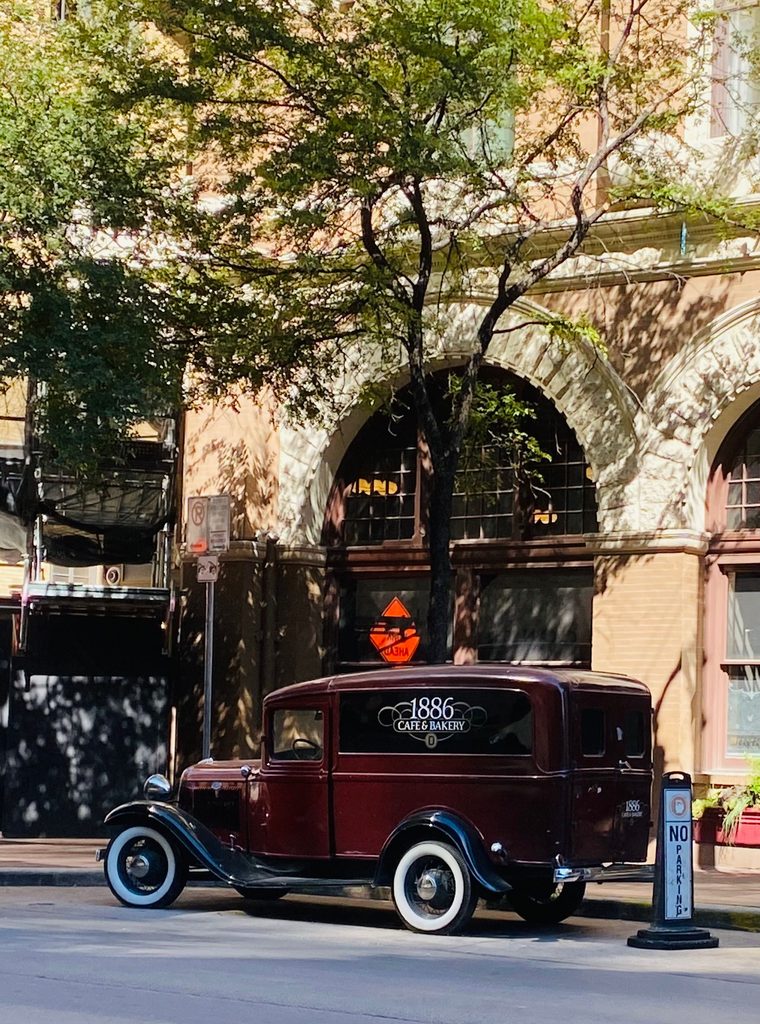
And if you happen to spot a classic automobile parked outside, as I did, the scene feels like a little time travel. The car might belong to another era, but it fits right in beside a hotel that has spent nearly 140 years watching Austin change.
So, what’s the story behind this Texas icon? Pull up a chair, and let’s take a look.
A Cattle Baron Dreams Big
The Driskill Hotel began with the ambitions of Colonel Jesse Lincoln Driskill, a successful Texas cattleman who wanted to build a hotel worthy of Austin’s growing importance.
In 1884, Driskill purchased property at the corner of Brazos and Pecan Street, now East Sixth Street, for $7,500. He envisioned a luxurious establishment that could compete with the grand hotels of larger American cities. At a time when Austin was still developing into the capital city we know today, this was no modest undertaking.
The result was a magnificent hotel built with brick and limestone, featuring imposing arched entrances, decorative stonework, and a style known as Richardsonian Romanesque. The construction cost was estimated at $400,000—a staggering investment for the era.
The Driskill officially opened on December 20, 1886, promising a level of luxury that set it apart from ordinary frontier accommodations. Its early amenities included steam heating, gas lighting, and sixty guest rooms. For visitors accustomed to simpler lodging, the hotel represented a bold new vision of Texas hospitality.
But building a grand hotel and keeping it profitable turned out to be two very different challenges.
A Rocky Start for a Texas Landmark
Despite the excitement surrounding its opening, the Driskill encountered financial trouble almost immediately. By May 1887, the hotel had closed after its general manager and much of the staff departed for another hotel in Galveston.
The story of the hotel’s early struggles is sometimes tied to the financial misfortunes of its cattle-bar on founder. Whatever the full mix of circumstances, the ambitious project proved difficult to sustain, and ownership soon changed hands.
Fortunately, the hotel’s story did not end there. Driskill’s brother-in-law, known as “Doc” Day, took over and continued promoting the property as a premier destination for important social and political gatherings.
The hotel hosted its first gubernatorial inaugural ball in January 1887, beginning a long association with Texas political life. Over the decades, governors, legislators, business leaders, and visiting dignitaries would pass through its doors.
The Driskill had found a role that would help keep it relevant: it was not merely somewhere to sleep. It was somewhere to meet, celebrate, negotiate, and be seen.
Where Texas Politics Checked In
Few stories connect the Driskill to American political history more memorably than its relationship with Lyndon Baines Johnson and Lady Bird Johnson.
In September 1934, the future president and first lady had their first date over breakfast in the hotel’s dining room. At the time, Johnson was a young politician beginning his rise, not yet the occupant of the White House.
Their connection to the hotel continued for decades.
In 1948, Johnson awaited the results of his closely contested U.S. Senate election from a suite at the Driskill. Sixteen years later, he returned to watch the results of his presidential election campaign. The hotel also became an important base for journalists covering Johnson’s presidency.
Imagine the conversations that must have taken place in those rooms and hallways. Political strategies, election-night celebrations, private discussions, and decisions affecting the state and nation all unfolded in a building originally conceived as a cattle baron’s grand hotel.
That is one of the things I love about historic places: sometimes the walls themselves are the most fascinating part of the story—not because they literally talk, but because we know who once stood behind them.
The Architecture Is Part of the Attraction
Even without knowing its history, the Driskill makes an impression.
Its original building is a striking example of Richardsonian Romanesque architecture, with heavy masonry, rounded arches, decorative details, and a substantial presence on the street. It was designed to look permanent and impressive, a fitting statement for a city establishing itself as an important center of Texas government and commerce.
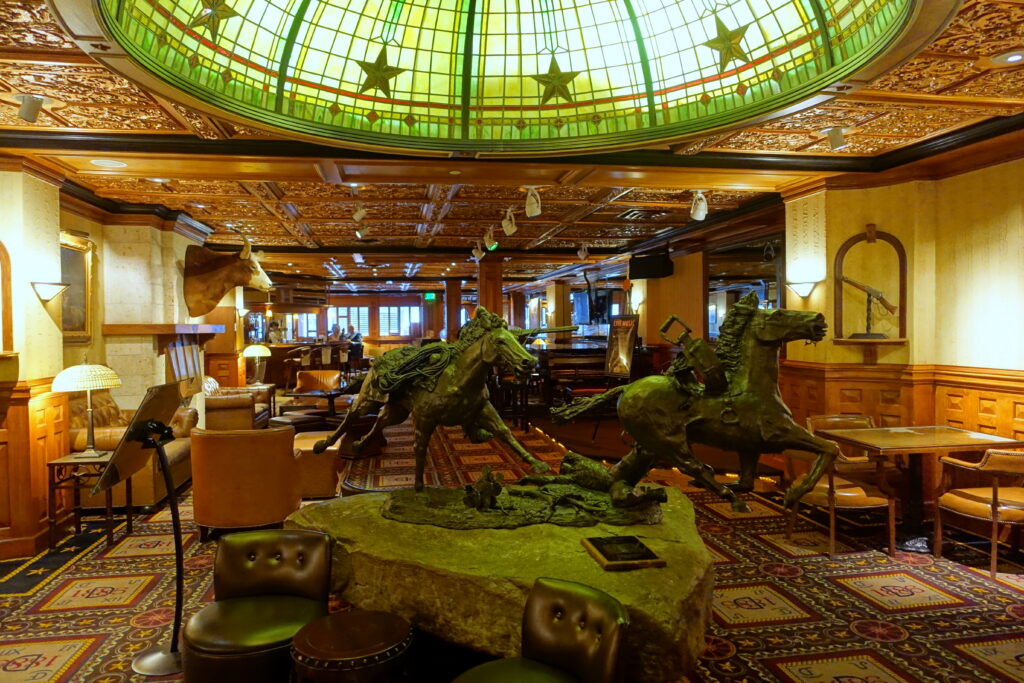
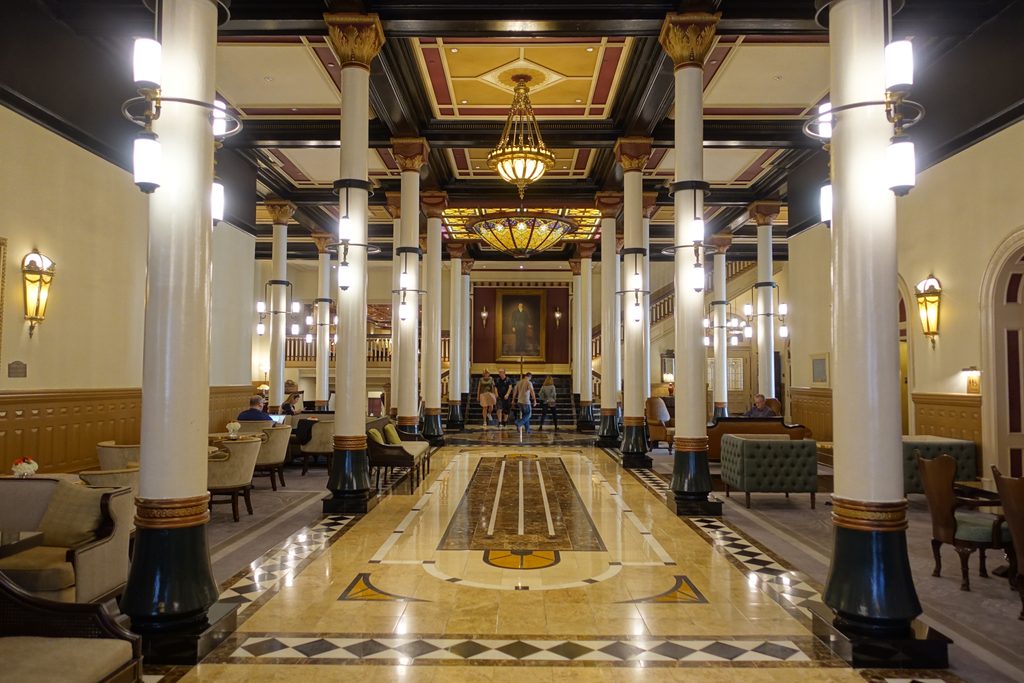
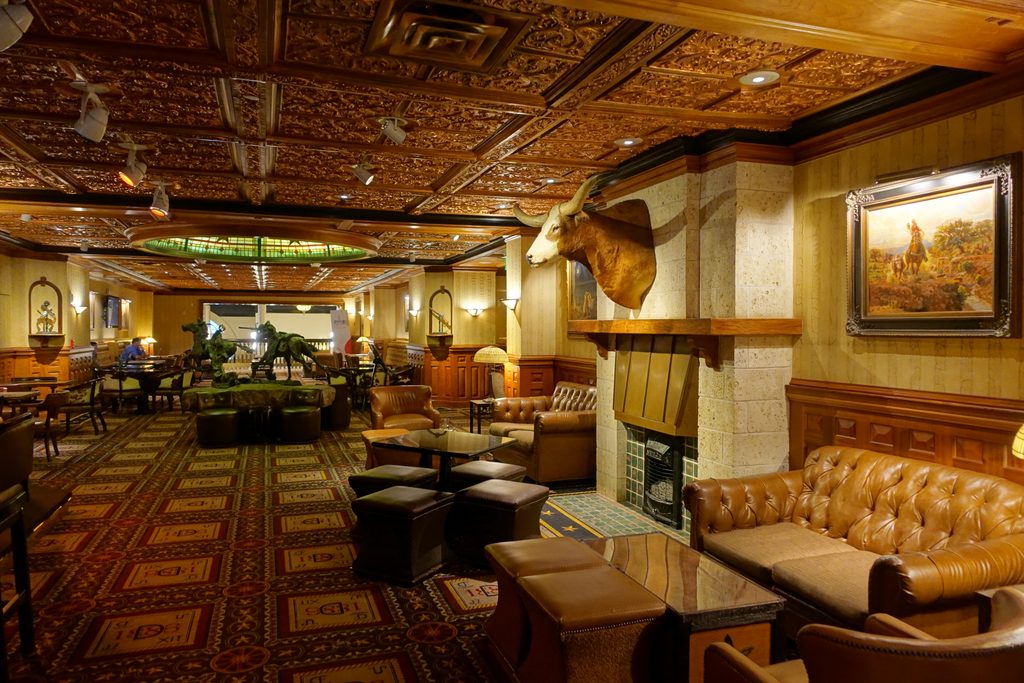
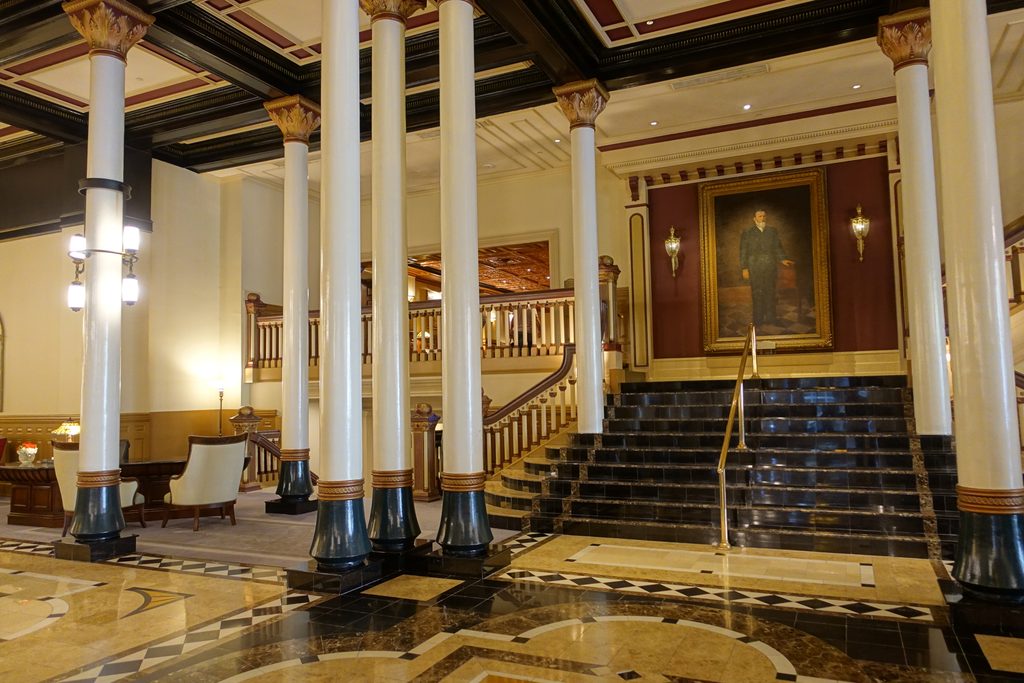
Step inside, and the atmosphere changes from busy downtown Austin to something more intimate and elaborate. The grand lobby, marble floors, decorative finishes, artwork, and historic gathering spaces offer a different experience from the modern glass-and-steel buildings surrounding it.
The hotel also grew over time. A major annex was completed in 1930, expanding the property and giving it a new architectural chapter.
My exterior and interior photographs capture two sides of the Driskill: the imposing landmark that greets you from the street and the detailed craftsmanship that rewards a closer look once you are inside.
And then there’s that classic car out front. It is a reminder that a historic setting doesn’t have to feel frozen in time. Sometimes a little vintage metal and chrome are all it takes to make the past feel surprisingly close.
Saved from the Wrecking Ball
Perhaps the most remarkable chapter in the Driskill’s history came in the late 1960s.
By then, downtown Austin was changing, and the hotel faced an uncertain future. In 1969, it closed for a proposed remodeling project that included plans for a modern tower. When that plan fell through, demolition became a real possibility.
The Driskill might easily have become another lost landmark—remembered only in old photographs and stories.
Instead, local preservation supporters rallied to save it. The Save-the-Driskill campaign raised more than $700,000 through the sale of shares in a new hotel corporation, with additional financing helping fund the redevelopment.
The hotel reopened in 1973 after restoration work, demonstrating that Austin residents valued more than progress measured in new construction. They also wanted to preserve the places that connected them to their past.
Today, the Driskill stands as a reminder that historic preservation often depends on people who are willing to speak up before a beloved building disappears.
A Historic Hotel for a Changing Austin
Austin has transformed dramatically since 1886. The city has grown, its economy has evolved, and its downtown streets now mix historic buildings with contemporary offices, restaurants, music venues, and nightlife.
Yet the Driskill remains part of the scene.
In 2026, the hotel announced the completion of a major renovation that refreshed its guest rooms, public spaces, ballroom, and dining experiences while retaining its historic character. The property continues to operate as part of Hyatt’s Unbound Collection.
The renovation is a reminder that preserving history does not necessarily mean leaving everything untouched. Historic buildings can continue serving new generations when thoughtful restoration respects the features that make them special.
And that brings us back to the car parked outside.
Whether it is a vintage Ford, another classic automobile, or simply an unexpected detail in a busy downtown scene, it adds personality to a photograph of a place that has never stopped being part of Austin’s life.
The car may come and go. The city will keep changing. But the Driskill’s story continues.
Why the Driskill Is Worth a Closer Look
You don’t have to book a room to appreciate the Driskill’s place in Texas history. Its architecture, political connections, and near-loss make it an especially rewarding stop for anyone who enjoys exploring the stories behind familiar places.
For me, the appeal of a historic landmark is not just how old it is or how beautiful it looks in a photograph. It is the opportunity to imagine the lives, celebrations, worries, and ambitions that unfolded there—and to understand how a building became part of a city’s identity.
The next time you find yourself in downtown Austin, look beyond the traffic and the crowds on Sixth Street. Take a moment to appreciate the Driskill. Look at the stonework, step inside if you can, and imagine the very different Austin that greeted its first guests in 1886.
You might even find a classic car waiting out front to complete the picture.
Special Photo Credit to: Daderot, CC0, via Wikimedia Commons
Live the Life Less Traveled. Stay Curious!