
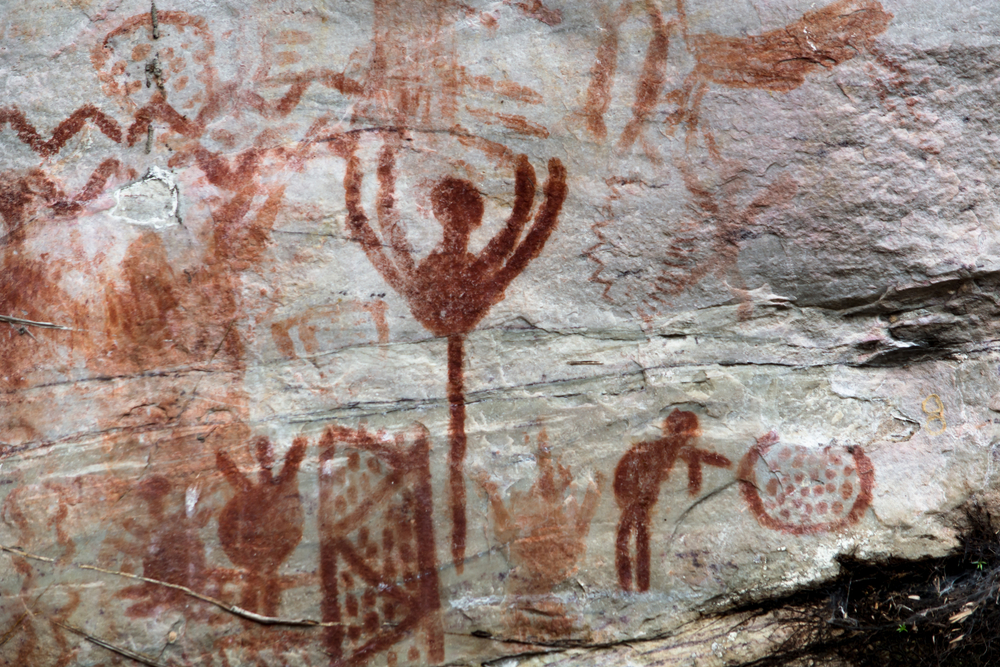
Imagine standing beneath a towering rock wall in the Colombian rainforest. Above you, hundreds of ancient paintings cover the stone. Animals, human figures, and mysterious symbols offer clues about people who lived here thousands of years ago.
Welcome to Guaviare, Colombia, a destination filled with ancient rock art, unusual landscapes, and stories waiting to be discovered.
Located south of Bogotá, Guaviare is one of Colombia’s lesser-known travel destinations. Its forests, rivers, caves, and massive rock formations create a remarkable setting for exploration.
But the region’s greatest treasure may be its ancient paintings. These images connect us to the people who lived here long before modern Colombia existed.
For Curious Perro, this is the kind of place that makes research and adventure come together. The more you learn about Guaviare, the more questions you want to answer.
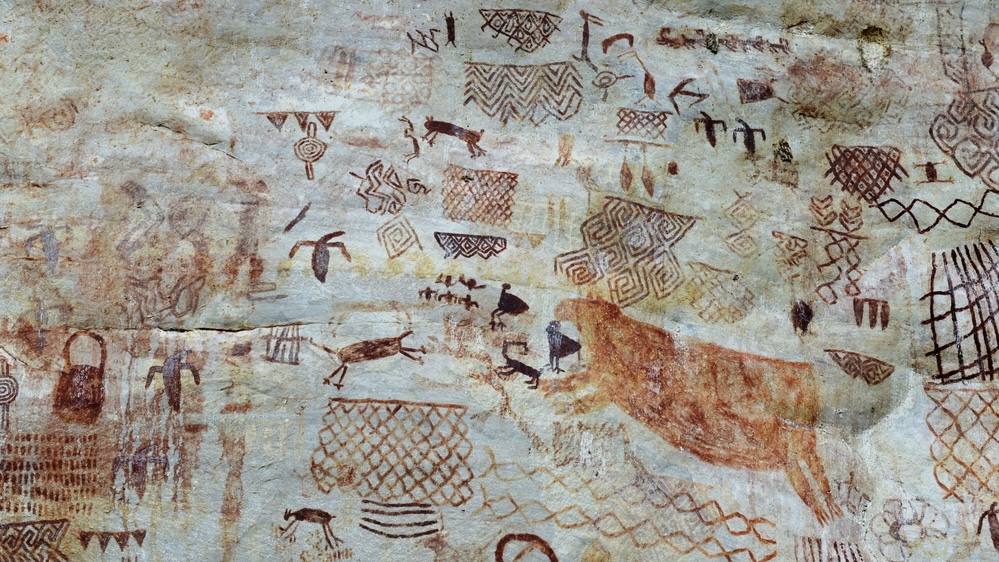
Discovering the Ancient Rock Art of Guaviare
One of the region’s most fascinating attractions is the collection of ancient paintings found in Serranía de La Lindosa. This rugged area features enormous rock formations and natural shelters near the town of San José del Guaviare.
Among its best-known archaeological sites is Cerro Azul. Here, painted figures cover large sections of exposed rock.
The artwork includes animals, human figures, geometric designs, and other mysterious images. Together, they offer a glimpse into the lives and beliefs of people who once inhabited this landscape.
These images are known as pictographs. Unlike carvings, pictographs are created by applying pigments to a surface.
The paintings raise some intriguing questions. Who created them? What did the images mean? And how did these artists share their stories with future generations?
Researchers continue to study the artwork to learn more about its origins and meaning.
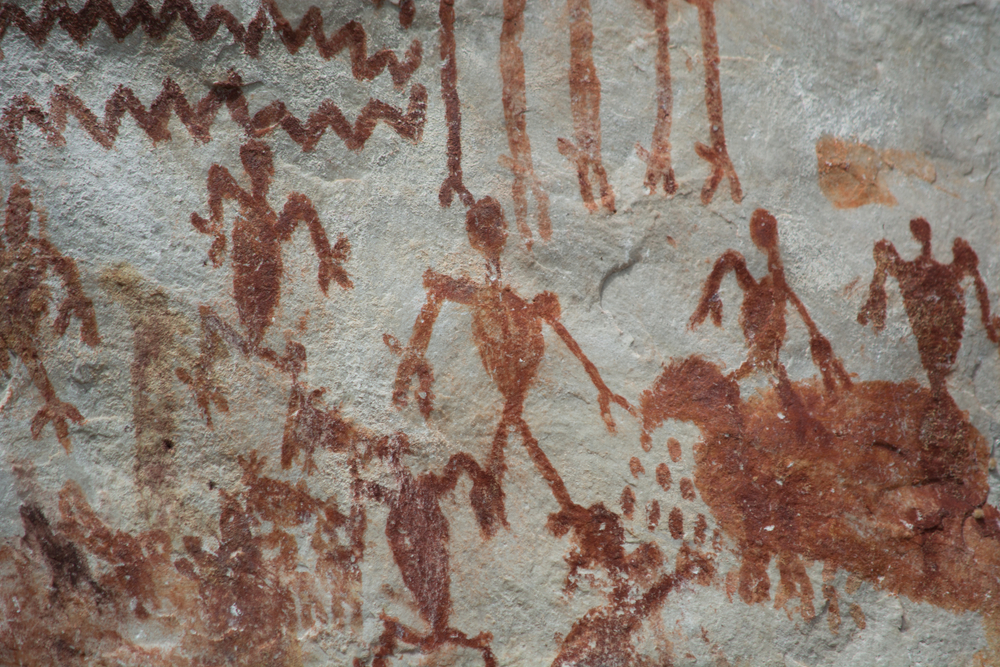
How Old Are the Guaviare Rock Paintings?
The age of the paintings is one of the most intriguing aspects of Guaviare’s archaeological history.
Research in the La Lindosa region has identified evidence of human activity dating back approximately 12,000 years. Some estimates suggest that certain rock paintings could be thousands of years old.
However, dating individual paintings is difficult. Researchers cannot assume that every image on a rock wall was created at the same time.
That distinction is important when exploring ancient history. The archaeological evidence tells us that people lived in this region far back in time, but the precise age of each painting remains uncertain.
Even so, the artwork is extraordinary.
The images provide a lasting connection to people who lived in a world very different from ours. They also remind us that the history of the Americas reaches much further into the past than many people realize.
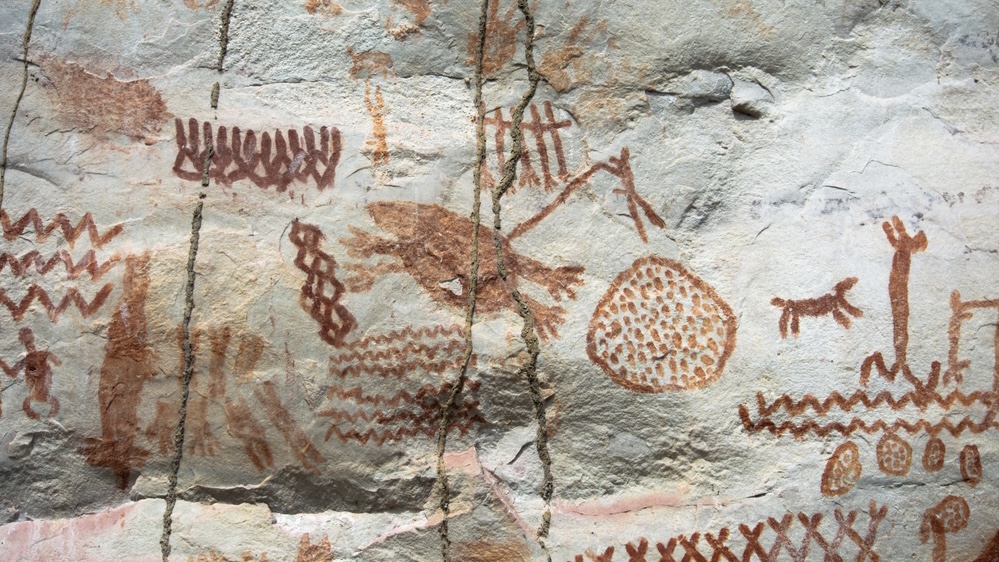
What Stories Do the Ancient Paintings Tell?
Look closely at the paintings, and you’ll find images that invite interpretation.
Some appear to depict animals and human figures. Others feature patterns whose meanings remain uncertain.
The artwork may offer clues about the natural environment, cultural traditions, and beliefs of the people who created it. Yet we should be careful about claiming to know exactly what every image represents.
Without written explanations from the artists, some questions may never have definite answers.
And that’s part of what makes this place so fascinating.
These paintings are more than colorful marks on stone. They are evidence of human creativity and cultural expression across generations.
Standing before a wall covered in ancient images must make you wonder what the artists were thinking. Were they recording events, sharing stories, expressing spiritual beliefs, or doing something we haven’t yet understood?
Those questions make Guaviare a compelling destination for anyone interested in archaeology, history, and the mysteries of the past.

San José del Guaviare: Your Starting Point
For travelers exploring Guaviare, the town of San José del Guaviare provides a practical base.
It is the capital of the department of Guaviare and a regional center for exploring the surrounding countryside. From here, visitors can arrange guided excursions to rock art sites, caves, rivers, and unusual geological formations.
Getting to San José is part of the adventure.
SATENA operates flights between Bogotá and San José del Guaviare. Flying offers a convenient way to reach this remote region without spending a long time traveling overland.
When planning a trip, check current schedules, fares, baggage rules, and availability directly with SATENA.
Once you arrive, transportation depends on which attractions you want to visit. Some excursions involve road travel and hiking. Others may require different transportation arrangements based on the destination and local conditions.
This isn’t a place where you should assume every attraction is easy to reach independently.
A knowledgeable local guide can help arrange transportation, explain the region’s history, and make the most of your time.
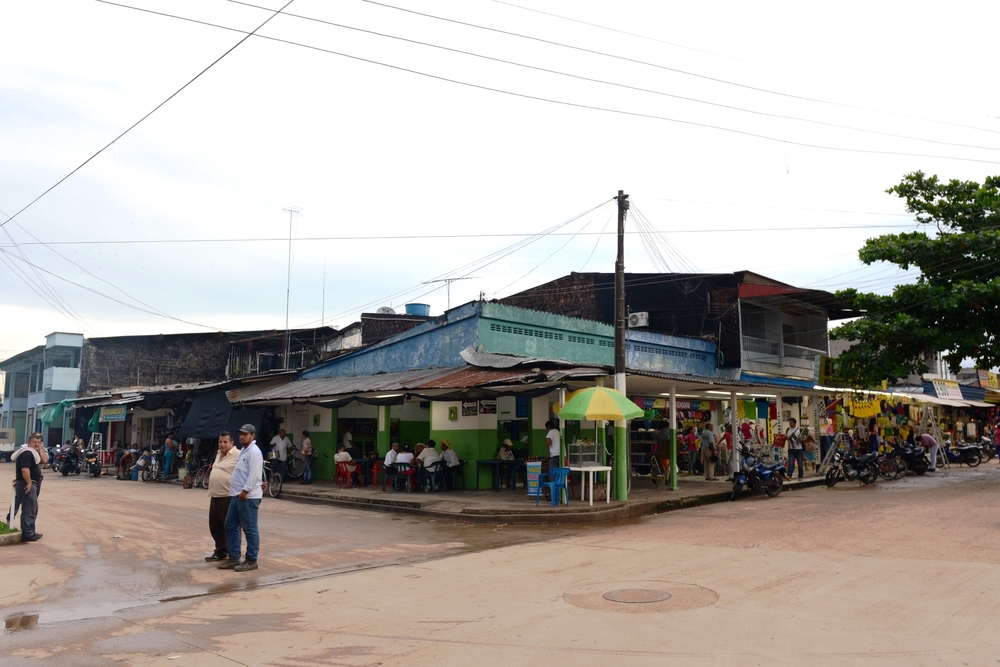
Where to Stay in San José del Guaviare
When researching accommodations, one property that caught my attention was Hotel Quinto Nivel.
The hotel offers several room types, making it worth considering as a base for exploring the region.
Room prices vary depending on the season, room category, and availability. Before booking, check the hotel’s current rates, amenities, and policies directly.
You can learn more through the Hotel Quinto Nivel website.
My preferred approach to a destination like Guaviare would be to stay in San José for several nights and plan guided day trips into the surrounding countryside.
That allows more time to explore without rushing from one attraction to another. It also provides some flexibility if weather or transportation conditions affect your plans.
After a day exploring ancient paintings and dramatic rock formations, a comfortable room back in town sounds pretty good.
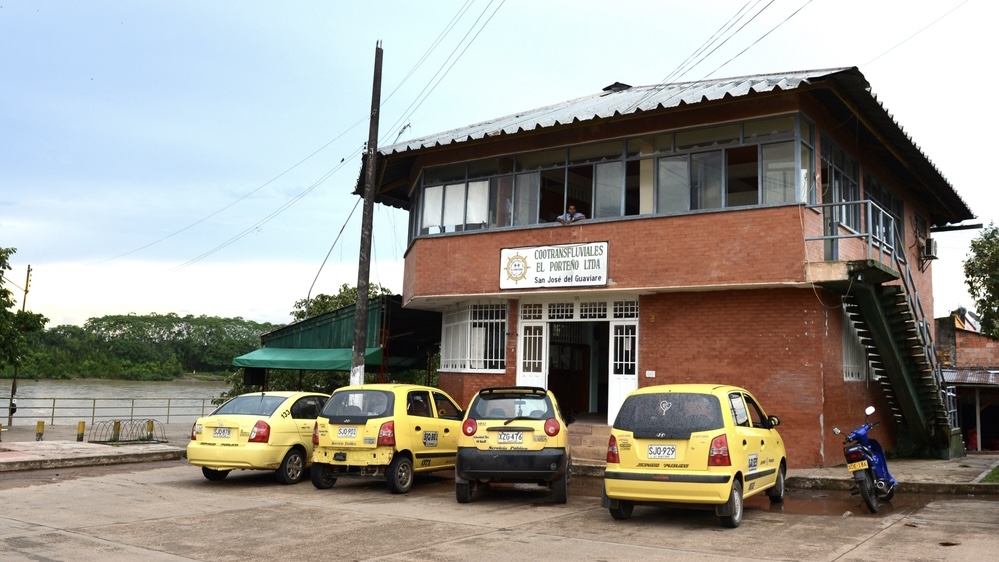
The City of Stones: A Remarkable Natural Landscape
Ancient rock art isn’t the only reason to explore Guaviare.
The region is also known for unusual rock formations that rise above the surrounding vegetation. Some create natural corridors, sheltered spaces, and shapes that look almost like buildings.
One well-known attraction is called the City of Stones, or Ciudad de Piedra.
Here, weathering and erosion have shaped the rock into formations that resemble walls, passageways, and the remains of a natural city.
Of course, nature doesn’t need an architect to create something remarkable.
Walking among these formations offers a different experience from viewing the paintings. Instead of studying the work of ancient artists, you can appreciate the geological forces that shaped the landscape over vast periods of time.
The result is an unusual combination of rock, forest, caves, and natural pathways.
For photographers and curious travelers, there are plenty of opportunities to capture the details of this remarkable environment.
And you never know what might catch your eye around the next bend.
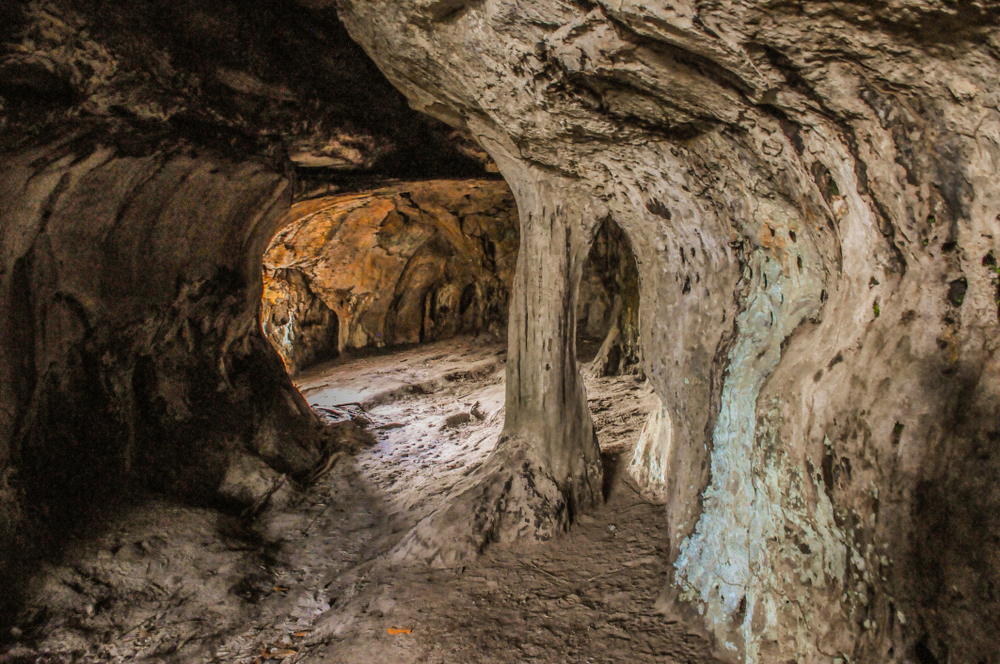
Exploring Guaviare: What Travelers Should Know
Travel in Guaviare requires some planning.
Road conditions, rainfall, river levels, and access restrictions can affect excursions. Depending on the destination, transportation may involve four-wheel-drive vehicles, motorcycles, boats, or walking.
The rainy season can make some routes more difficult to navigate. Conditions also vary by location, so check with local operators before setting out.
For archaeological sites such as Cerro Azul, arranging a local guide is a sensible choice. Guides can help visitors reach authorized areas and understand the cultural significance of what they’re seeing.
It’s also important to protect the artwork.
Avoid touching or marking the painted surfaces. Stay on authorized paths and follow local guidance. These paintings are irreplaceable cultural treasures, and preserving them helps ensure that future generations can experience them, too.
With a little preparation, visitors can enjoy the region while respecting its history and environment.
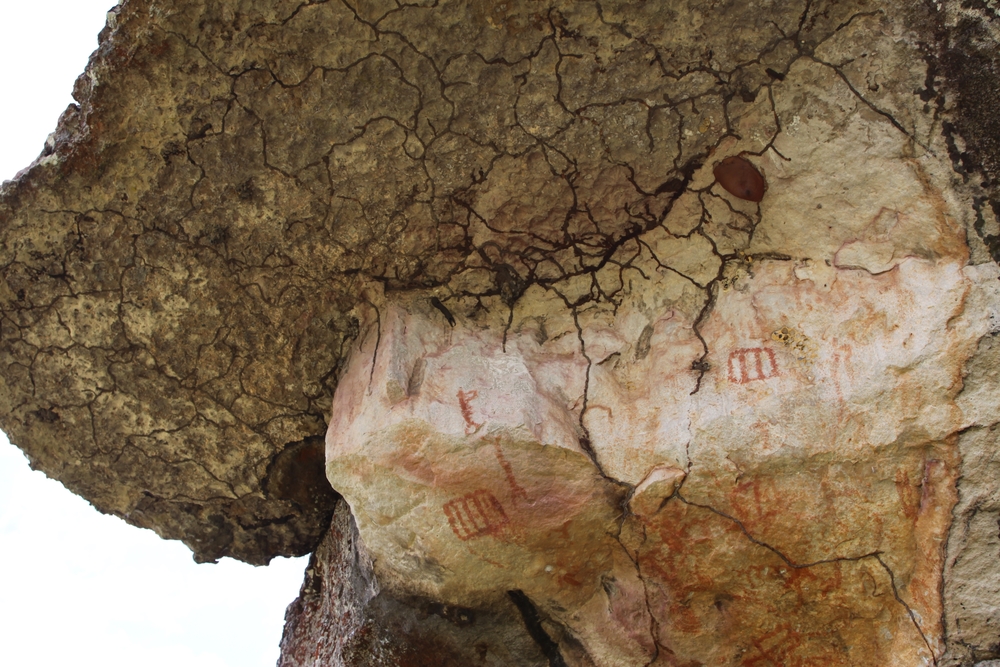
Why Guaviare Belongs on Your Travel List
What makes Guaviare so interesting is the combination of history, nature, and adventure.
The ancient paintings connect us to people who lived thousands of years ago. The rock formations reveal the power of natural forces. The rivers and forests create a landscape that feels far removed from Colombia’s larger cities.
Local communities also play an important role in helping visitors understand the region and experience its attractions.
Guaviare offers something different from a typical sightseeing trip. It invites you to slow down, look closely, and ask questions.
You might arrive wanting to know the age of the paintings. Along the way, you could find yourself wondering about the people who created them, the animals they encountered, and the world they inhabited.
Sometimes, the most interesting part of travel isn’t finding every answer. It’s discovering questions you never thought to ask.

A Journey Into the Unknown
Guaviare, Colombia, is a destination where ancient rock art and extraordinary natural landscapes come together. Its paintings offer a connection to the distant past, while its forests, caves, and stone formations invite exploration.
The region may not be as familiar to international travelers as Cartagena, Bogotá, or Medellín. But for those willing to look beyond Colombia’s best-known destinations, Guaviare offers a fascinating journey into the country’s history and natural beauty.
It’s the kind of place that rewards curiosity.
Research it before you go. Experience it for yourself if you can. And when you discover a story worth sharing, pass it along.
That’s what Curious Perro is all about.
Research it. Visit it. Experience it. Share it.
Live the Life Less Traveled. Stay Curious. 🐾🌎