
Some buildings are more than bricks and mortar. They become part of a city’s identity.
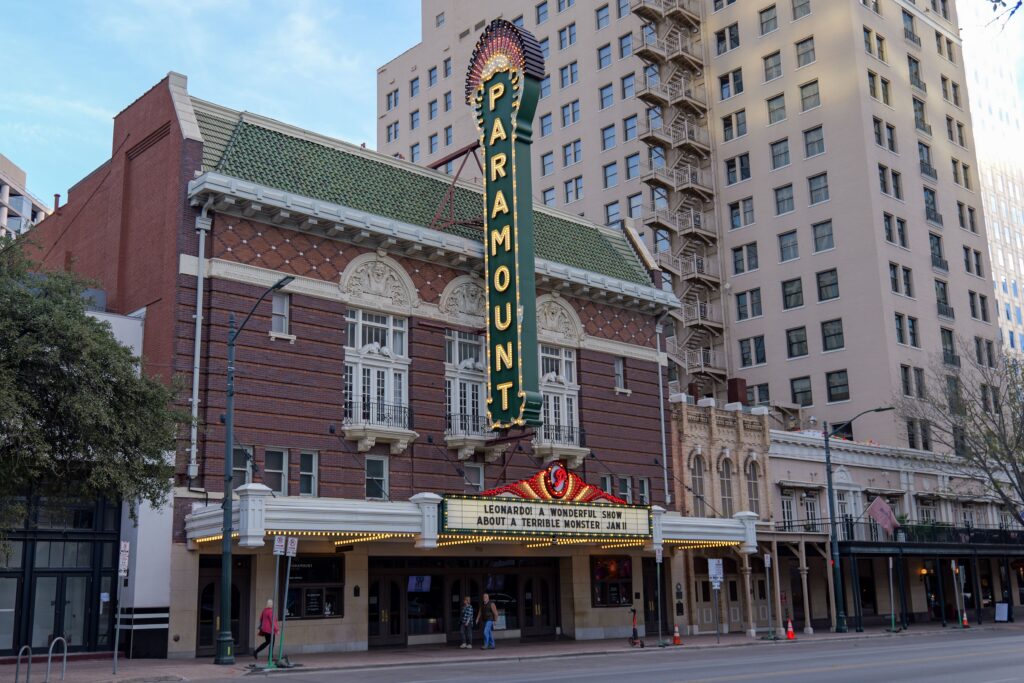
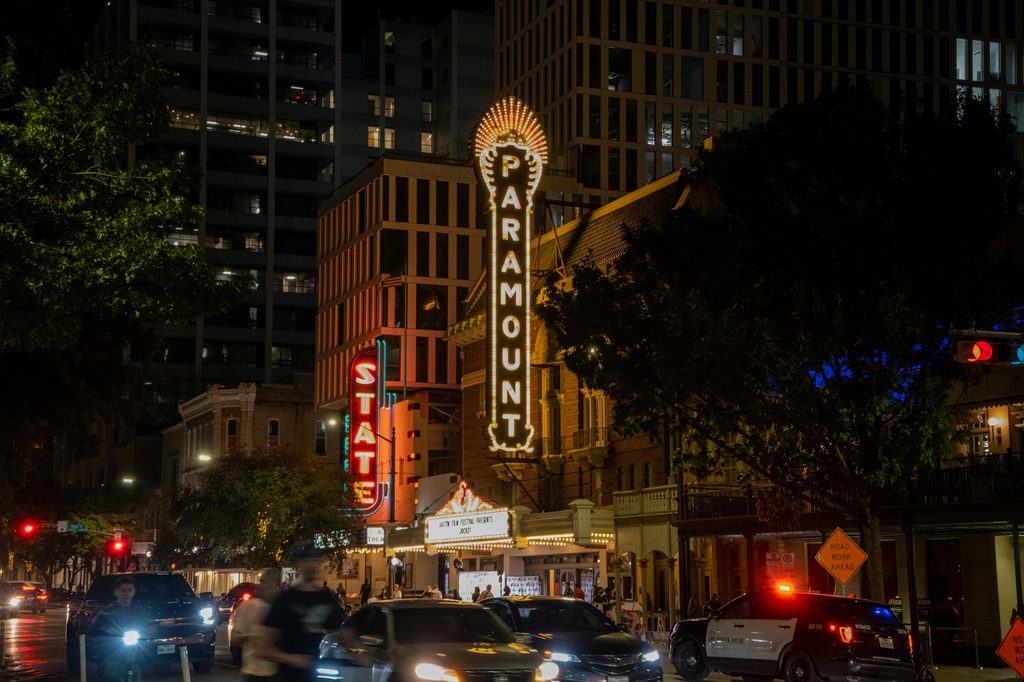
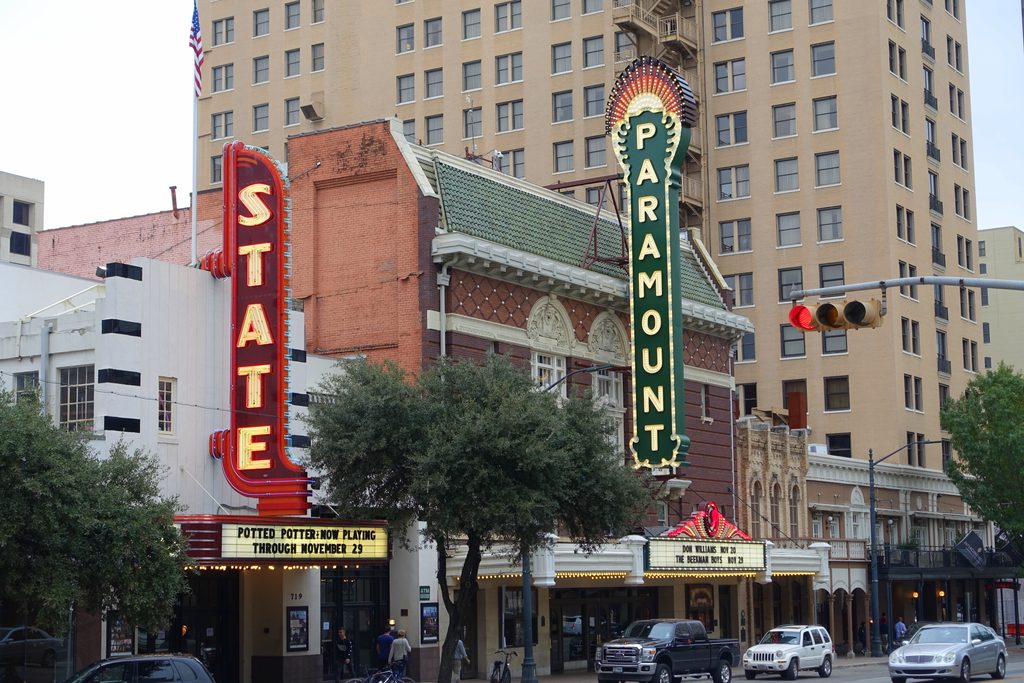
In downtown Austin, the historic Paramount Theatre is one of those places. And if you’ve ever walked along Congress Avenue and looked up at that iconic theatre sign, you’re looking at a piece of Texas entertainment history.
But the story behind that sign is even more interesting than you might imagine.
It Started as the Majestic
On October 11, 1915, the doors opened at 713 Congress Avenue to a new entertainment venue called the Majestic Theatre.
Austin was a much smaller city then. The theatre offered something special: a place where audiences could experience live performances, comedy, music, dance, and the latest films.
Designed by renowned theatre architect John Eberson and built for Austin businessman Ernest Nalle, the Majestic could seat more than 1,300 people. Most opening-night tickets cost just 25 cents!
Imagine getting an evening of entertainment in a beautiful downtown theatre for a quarter.
Those were different times!
Houdini, the Marx Brothers, and a New Name
The Majestic attracted performers from across the country. In 1916, the legendary escape artist Harry Houdini performed eight shows there. The Marx Brothers also appeared on its stage.
Silent movies joined the live entertainment, giving Austinites even more reasons to visit.
Then, in 1930, the theatre underwent a major renovation and received its now-famous name: the Paramount Theatre.
As movies grew in popularity, the Paramount adapted. It became a downtown destination for Hollywood films while continuing to welcome live performers.
More Than Entertainment
During World War II, the Paramount took on another role.
From 1942 through 1945, the theatre helped promote the sale of war bonds. It sold an impressive $8.4 million worth, supporting the national effort during wartime.
That’s a remarkable chapter in the history of a building best known for entertaining audiences.
A Theatre Worth Saving
By the 1970s, downtown theatres across America were struggling. Television, suburban growth, and changing entertainment habits threatened their future.
The Paramount came close to being lost.
But a determined group of preservationists, with support from the community and public funding, worked to save the historic theatre. The Paramount Summer Classic Film Series began in 1975, helping bring audiences back and support the venue.
Major restoration work followed, preserving a landmark that might otherwise have disappeared.
And thank goodness it did.
Over the decades, the Paramount has welcomed celebrated performers such as Katharine Hepburn, Willie Nelson, and Ray Charles. It has remained an important part of Austin’s live entertainment scene and a gathering place for generations of Texans.
Why the Paramount Still Matters
Today, the Paramount represents something increasingly valuable: a connection between a city’s past and its future.
The theatre has witnessed Austin’s transformation from a smaller state capital into a nationally recognized center for music, film, and culture.
Its history includes vaudeville performers, silent movies, Hollywood classics, wartime service, legendary musicians, and a community that refused to let an important landmark disappear.
That’s quite a show for one building!
And that’s what I love about exploring places like Austin. A familiar sign can lead to a much bigger story about the people, traditions, and events that helped shape a city.
So the next time you’re walking along Congress Avenue, take a moment to look at the Paramount Theatre.
You’re not just looking at a theatre sign.
You’re looking at more than a century of Austin history.
🐾 Everything has a story. Sometimes, you just have to look up.
Live the Life Less Traveled. Stay Curious.